
John Barthel
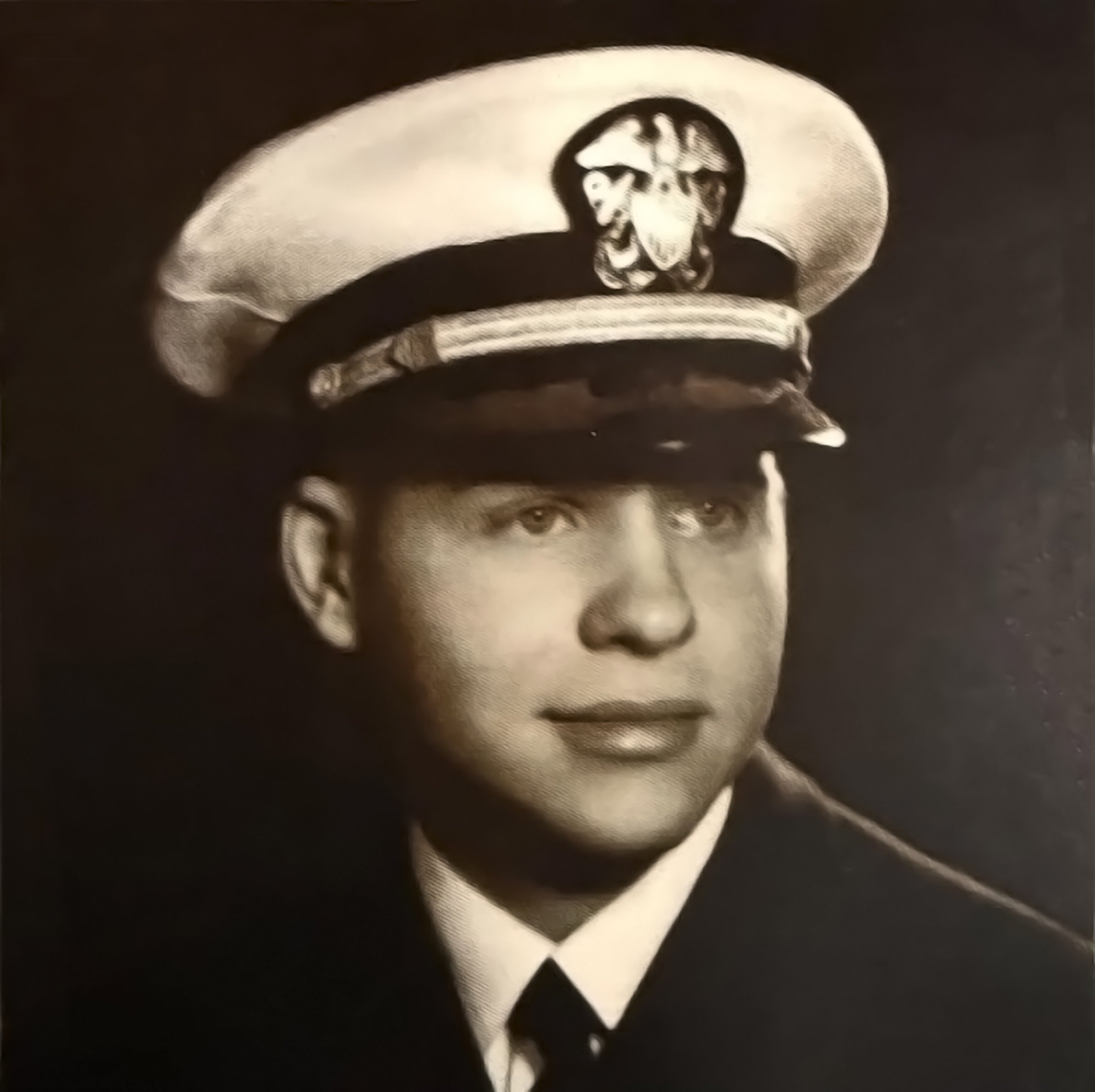
John Barthel was born in Oak Park, Illinois on December 16, 1922. He attended the University of Illinois, where in 1942 he received the Allerton Traveling Fellowship for the study of New England architecture. During his studies, he joined the V-12 Navy College Training Program and later served as an engineering officer from 1944 - 1946.
After WWII, Barthel completed a Bachelor of Architecture from the University of Illinois. In 1947, he was awarded the Paris Prize, which provided for 18 months of stud at the Ecole des Beaux-Artes and travel throughout Europe. A design drawing by Barthel associated with this award is held by the Metropolitan Museum of Art. He later returned to the University of Illinois, where he earned a B.S. in Architectural Engineering. In 190, he received a masters degree in Architecture and City Planning from the Cranbrook Academy of Art where he studied under architect Eliel Saarinen.
Barthel began his architectural career in Chicago, working for firms including Skidmore, Owings & Merrill and Belli & Belli. He relocated to Dallas in 1952 to work with George Dahl before establishing his own practice. Significant works by Barthel include Saint Pius X Catholic Church as well as his personal home on Capri Court.
Photograph: John Barthel, Midshipman, 1945, Courtesy of Origami House - Highland Meadows Preservation Foundation
Jack Yardley
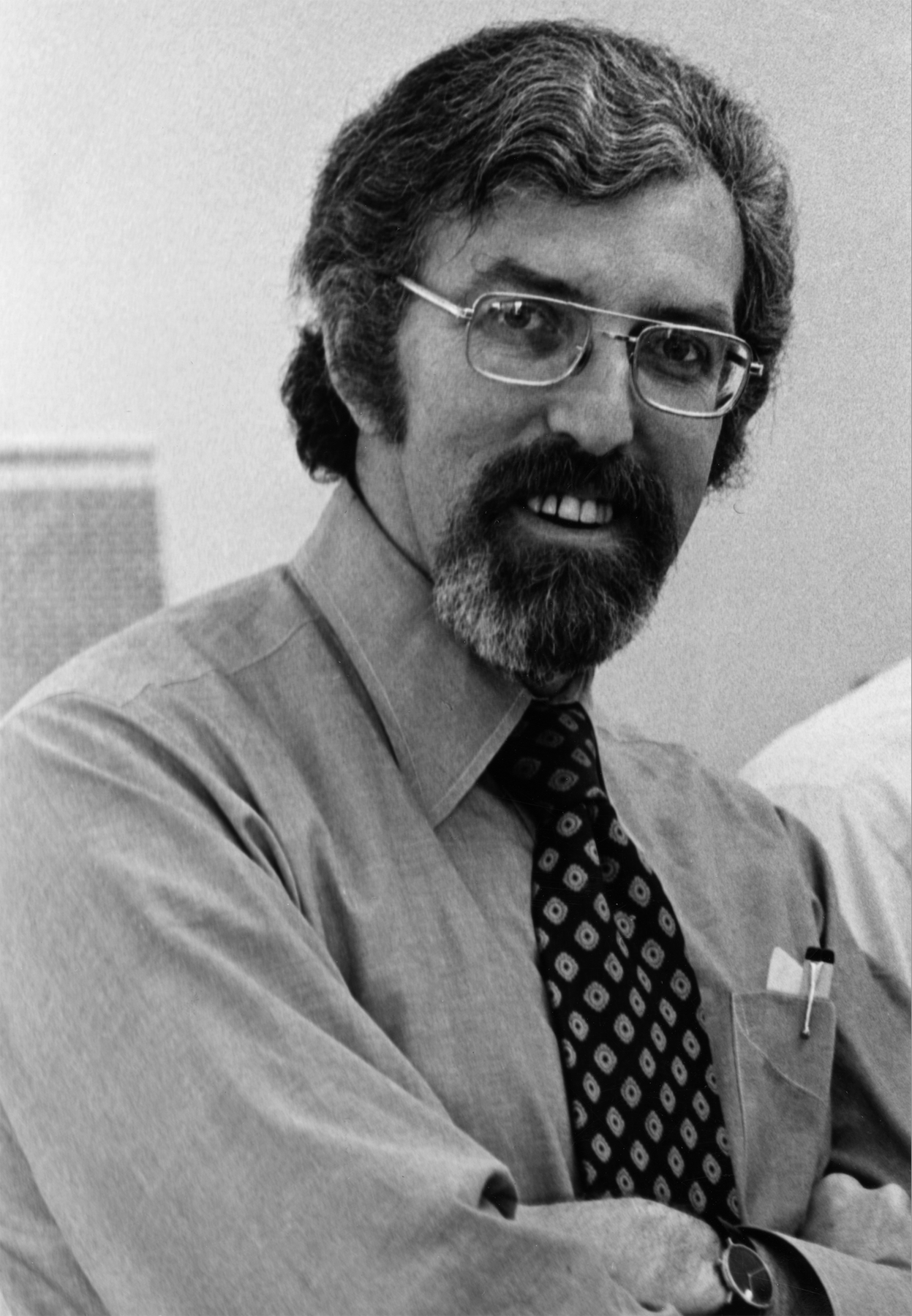
Jack Yardley is a prominent American architect who was born in Bryan, Texas, he graduated from Texas A&M University in 1958.
From 1966 - 1968 he was part of a team that established the first school of architecture in Bangladesh, which is now known as the Bangladesh University of Engineering and Technology.
Yardley joined the firm of HKS Architects (founded by Harwood K Smith in 1939) as its head of design in May 1971 and served in that position until his retirement in 2009. During his time at HKS he helped expand the firms global footprint and oversaw projects around world.
He is widely recognized for his contributions to architecture including Langford Architecture Building at Texas A&M, 197, Plaza of the Americas, Dallas, 1980, Reunion Arena, Dallas, 1980, and Brooke Army Medical Center, San Antonio, 1996. Yardley is a member of the American Institute of Architects College of Fellows.
Jack Yardley designed and built the “Yardley Home” on Plano Parkway in Mediterranean Gardens + Sylvania Dells in 1974. In 1976 he designed and built the “Mother In Law House” on Langdale Circle on an adjacent property to the “Yardley Home”.
Photograph of Jack Yardley , 1978, courtesy of HKS - Highland Meadows Preservation Foundation
John Preston Travis III
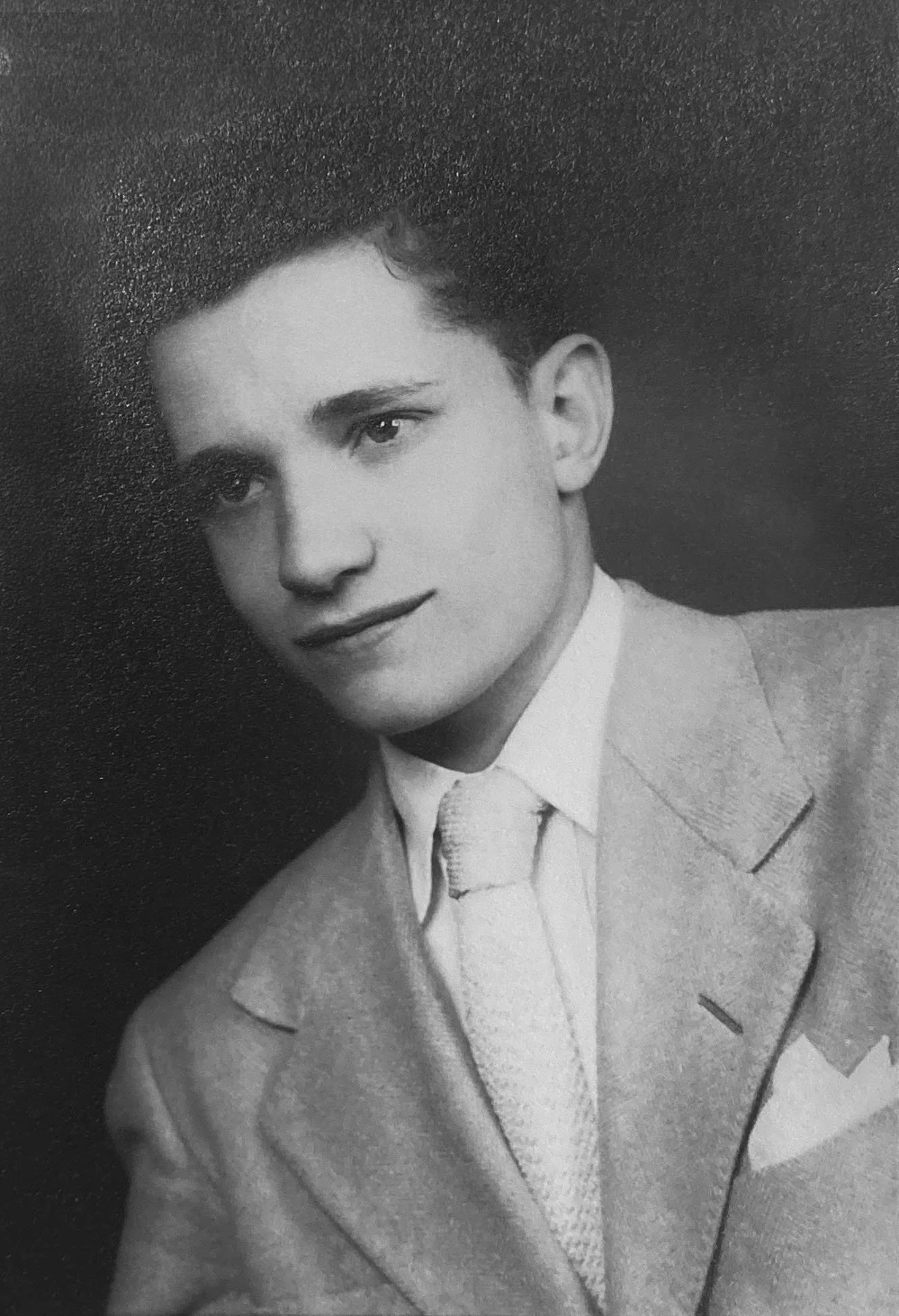
John Preston Travis III was born in Dallas, Texas on November 10, 1933 to J.P. Travis II and Dovie “Bunnie” Dowd Travis. John was a precocious child who excelled at science, math, and art. John along with his brother Bill began work with their father at an early age and were included on the team that surveyed the Mediterranean Gardens + Sylvania Dells development in 1951. John worked in Universal Corporation as a teenager in various capacities learning from experts in engineering, manufacturing and design.
He graduated from North Dallas High School where he served as President of his Senior Class. Inspired by his father’s work with leading architects of the day, John pursued a career in architecture and attended the University of Texas where he received a BS in Architecture. John received his Masters in Architecture from the University of Oklahoma under the guidance of Bruce Goff, Herb Greene and Mendel Glickman. While at the University of Oklahoma John was encouraged to explore his individual creativity, organic forms, and experimentation and this period had a profound influence on his work as an architect.
After graduation in 1956 John returned to Dallas and resumed work with his father at Universal Corporation and Development Engineering Corporation on the Mediterranean Gardens Development. He also began accepting commissions as an architect. His first home in Mediterranean Gardens, The Round House, opened on May 2, 1957 to much fanfare. More commissions for homes in Mediterranean Gardens + Sylvania Dells followed including the Innocenti Home, 1959, Moore Home, 1959 (Langdale House), Brown Home, 1963.
After J.P. Travis II retirement in 1959, John took over the sales and development of Mediterranean Gardens + Sylvania Dells which continued until 1976. In 1969 John began developing Meadowbrook Village from a section of land that had been reserved by J.P. Travis II just North of Sylvania Dells along East Prong Dixon Branch.
Travis would later develop significant projects including El Dorado at Lake Cypress Springs and Holiday Harbor at Lake Ray Hubbard. He continued to design homes along with headquarters for Fortune 500 companies.
Photograph of John Preston Travis III, 1956, courtesy of Bill and Jane Travis - Highland Meadows Preservation Foundation
William Krisel
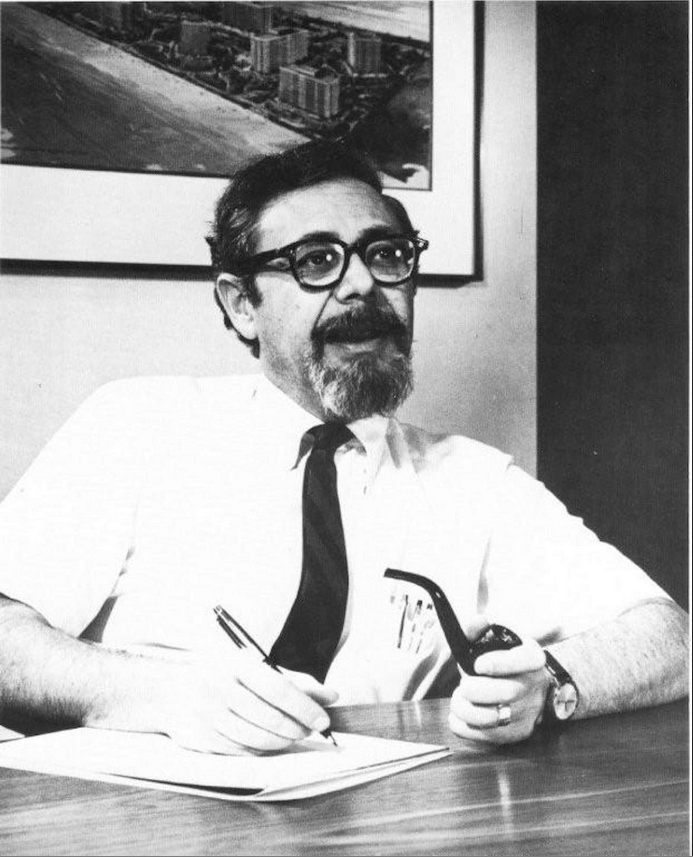
William Krisel was born in Shanghai in 1924 where his father had moved to with his work for the State Department. In 1937, the family returned to California where a young William would learn of Lillian Rice and Frank Lloyd Wright to name a few influential architects of the era.
Krisel entered University of Southern California’s School of Architecture at the age of 16 only to be interrupted by the United States entry into World War II. During the war Krisel worked in Army Intelligence, served as the Chinese language interpreter for General Stillwell, and earned the Bronze Star for Valorous Service.
Following the war,in 1946 Krisel returned to his studies on the GI Bill. Alongside his studies he apprenticed in the offices of Paul Lazlo and Victor Gruen and joined in partnership with Dan Saxon Palmer.
He graduated from USC in 1949 and opened the firm Palmer & Krisel (1949-1966) the same year, designing custom homes and commercial projects. Palmer & Krisel’s system of modular post and beam construction proved popular and effective, and led to years of success in Los Angeles, Palm Springs, and Borrego Springs.
William Krisel’s experience in design and construction included nearly every kind of structure, including high and low rise office and apartment buildings, shopping centers, factories, schools, religious buildings, hotels, motels, and restaurants.
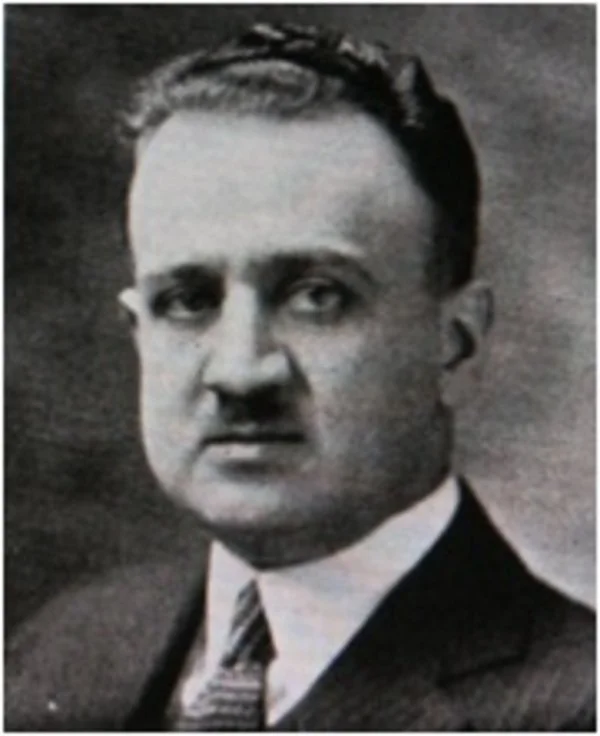
Walter W Ahlschlager
Walter W. Ahlschlager was born in Chicago in 1887. His father, John and his uncle Fredrick were well known architects. Walter studied at the Lewis Institute of Technology and later the Armour Institute of Chicago.
In 1912, he began working alongside his father. But when the elder Ahlschlager died three years later, Walter joined forces with hotel and real estate developers Louis H. Stafford and W.C.D. Trinkle. Among his list of significant designs during this period include the Davis Theater, Chicago (1918), Sheridan Plaza Hotel, Chicago (1921), Peabody Hotel, Memphis (1926), Roxy Theater, New York (1927),
After decades of successful work based in Chicago, Ahlschlager came to Dallas in 1938 to work on the Mercantile National Bank Building and in 1943, during its construction, he decided to stay, entering into partnerships with local architect James McCammon and later with his son Walter W Ahlschlager Jr.
Other important works include Mercantile National Bank, Witchita (1962), The Wedgewood Apartments, Dallas (1965), The Wedgewood, Castle Hills (1964). Ahlschlager is listed as consulting architect on Lincoln Research House, Dallas (1952) in the Mediterranean Gardens + Sylvania Dells section of Highland Meadows.
Ahlschlager died in Dallas in 1965.
Photograph: Walter W. Ahlschlager, 1935 - Highland Meadows Preservation Foundation
Arch B Swank Jr
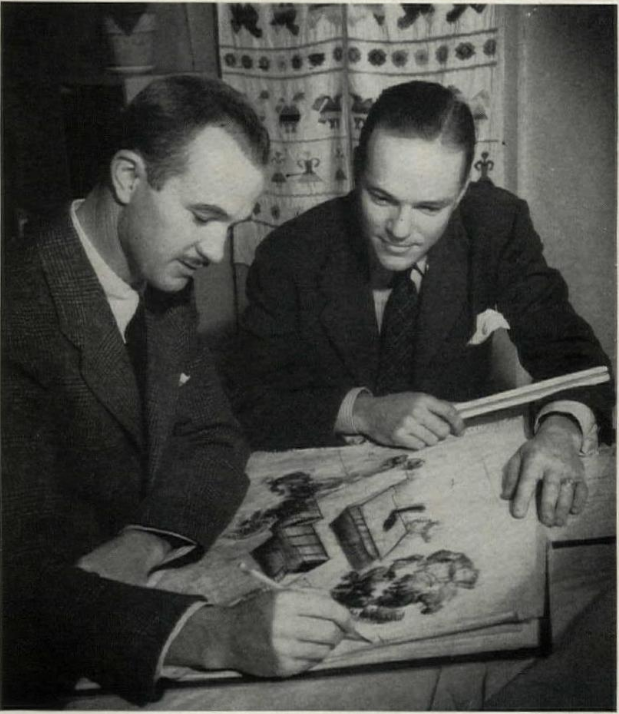
Arch B. Swank Jr. was one of the great innovative figures of Texas architecture. He was born in Wills Point, Texas. He graduated in 1936 as a member of the first class to complete Texas A&M’s five year architecture program. Upon graduation he moved to Dallas, where his professional career flourished when he entered into a parntership with O’Neil Ford. The two men worked and lived together in a creative workshop on Cedar Springs Rd with a small group of artisans, mostly designing residences and researching various aspects of construction. In 1939 he and Ford designed the "Chapel In The Woods at Texas State College for Women (now Texas Women’s University). The building, known for its embodiment of Regional Modernism, was the team’s first significant nonresidential commission.
The partnership with Ford dissolved in 1941 when the Army required Swank’s service as a commissioned officer in WWII. One year after his discharge, he entered a partnership with Roscoe DeWitt. The architecture firm of DeWitt and Swank emerged as one of the most successful in Texas after the war. Among their most prestigious jobs was the Preston Center Neiman Marcus store (1952). In 1951 Swank was elected president of the Dallas Chapter of the American Institute of Architects, promoting the importance of urban design and environmental causes. He returned to individual practice in 1952.
Throughout his career Swank consistently sought out opportunities for innovation and collaboration with others. He worked frequently with O’Neil Ford in the 1950’s and 60’s. Under the name Associated Architects and Land Planners, Swank, Ford, Richard Colley, and planner Sam Zisman designed the semiconductor complex in Richardson (1958) for Texas Instruments. The same team, joined by Mexican architect Felix Candela, also secured the project of the Great Southwest Corporation’s industrial park in Arlington (1958).
Swank challenged city authorities and fought to preserve Turtle Creek Blvd when the city proposed to turn it into a 6 lane throughfare. He criticized the city for lack of city planning. When designing Parkland Hospital he refused to design seperate “white and negro” entrances. This was seen a controversial and led to Swank being denied many important contracts.
From 1955 to 1967, Swank oversaw the design and construction of a complex of buildings, United Presbyterian Homes, in Waxahatchie, TX, a housing program of care for needy children and the elderly. It was in this period that Swank formed A B Swank and Associates, a firm that focused on largely on residential projects including the Hughes Home, Arch B Swank Jr, 1957, Lakeland Hills.
Photograph of O’Neil Ford and Arch B. Swank Jr., by Polly Smith, 1940 - Highland Meadows Preservation Foundation
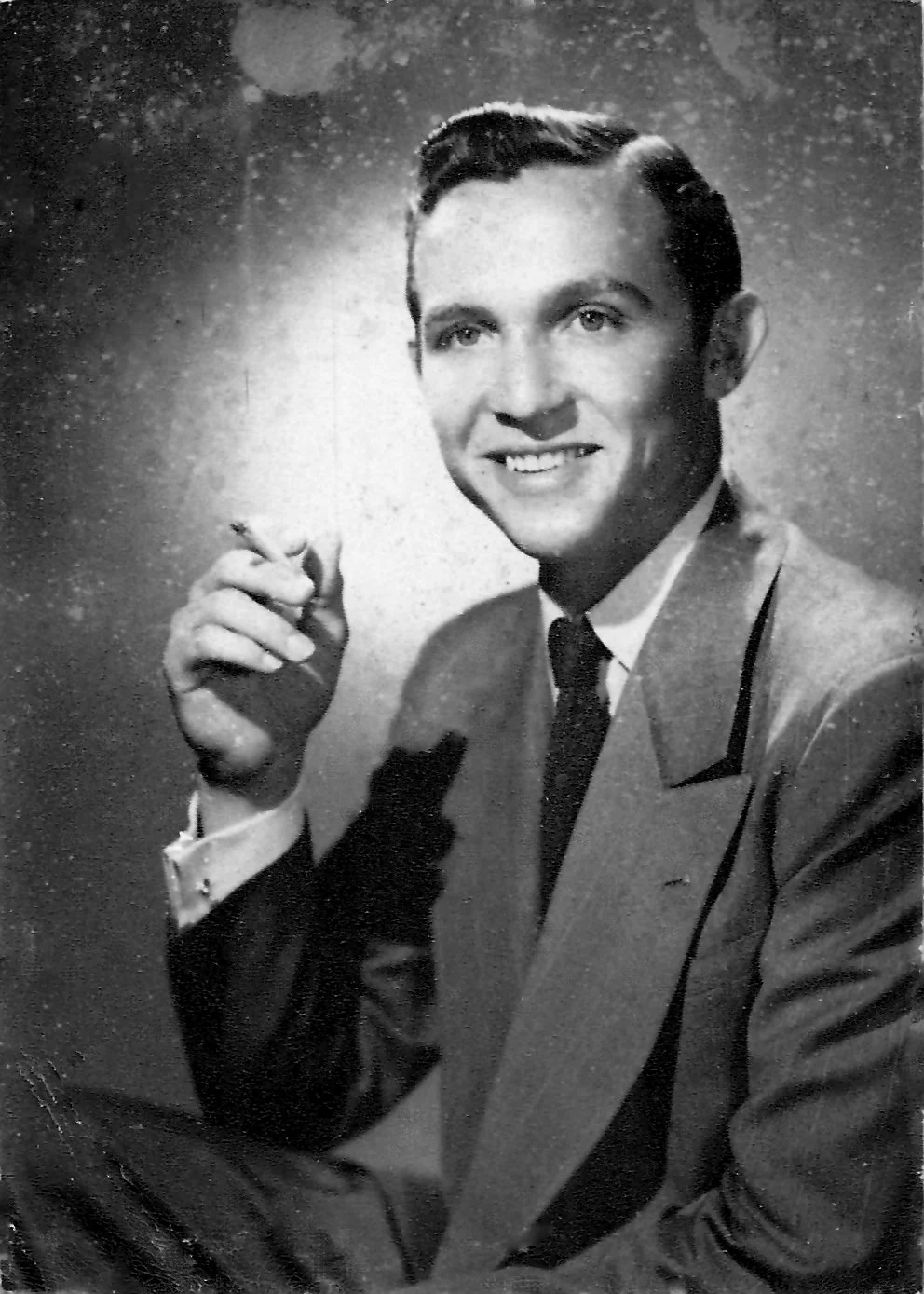
E. Dow Davidson Sr.
Edwin Dow Davidson, Sr., a prolific architect and design visionary, shaped landmark spaces from Texas to the Pacific Rim. Born during the Great Depression in Navo, Denton County, Texas, Davidson rose from humble beginnings to become a transformative figure in American Architecture.
During his World War Ii service as a sergeant in the U.S. Army Air Force, Davidson’s talent in drafting and design earned recognition beyond the battlefield, foreshadowing a career marked by innovation and artistry. He pursued architectural studies at North Texas State College, Texas Christian University, and Texas A&M, later earning his Architectural License in 1966.
Davidson’s early work in Fort Worth and Dallas included contributions to the Ridgelea Country Club and a series of Mid-Century Modern residences - most notably a barrel vaulted home in Bryan, Texas. His friendship with O’Neil Ford enriched his approach to organic form and regional expression. By the late 1960’s, Davidson had established his firm at 2910 McKinney Ave, placing him at the epicenter of Dallas’ creative community alongside sculptor Bill Jameson.
In 1970, Davidson relocated to Honolulu, Hawaii, where his architectural reach expanded globally. His firm, Architectural Group LTD, consulted on high-profile projects such as the King Kamehammeha Hotel in Kailua-Kona and the Wailea Intercontinental Resort in Maui under architect Richard J. Shelley. His international contributions include resort designs in Nusa Dua, Bali, commissioned by the IMF and World Bank. Closer to home, he designed the east wing of the Hyatt Regency DFW Airport in 1978.
Davidson’s imprint continued in residential development across Oahu, including Castle Hills and Nuuanu Woods. His 1988 commission for Wally Amos - a Mediterranean style home in Lanikai - exemplified his commitment to individualism in design.
Davidson passed away in 2007, leaving behind a legacy marked by creative excellence and a fearless drive to shape space across cultures and continents.
Photograph: E. Dow Davidson Sr., 1955, courtesy of E. Dow Davidson Sr. Archive - Highland Meadows Preservation Foundation
Carl H. Rooth
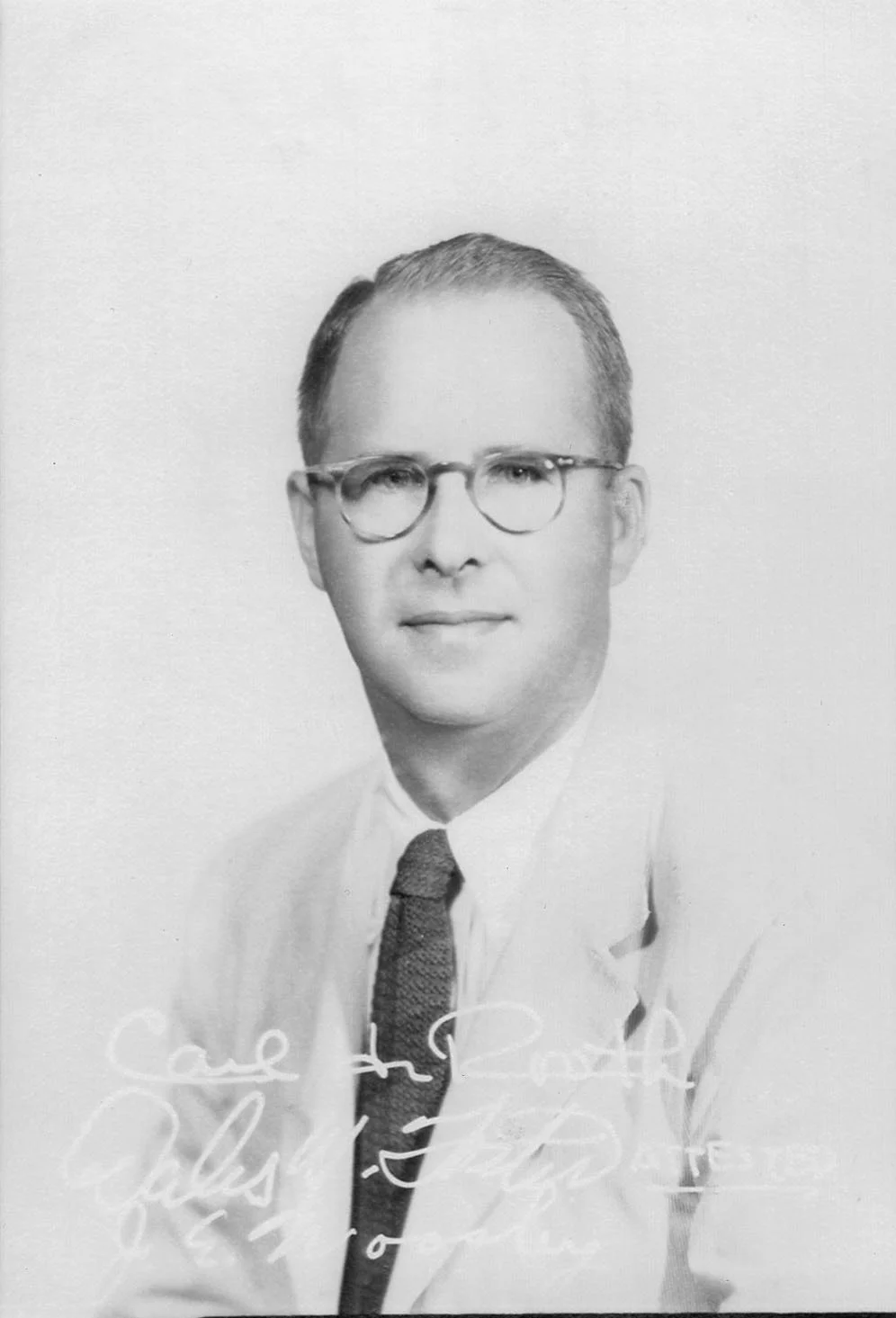
Carl Harry Rooth was born on February 1, 1917 in Concord, New Hampshire to immigrant parents from Scandinavia, Fritjiof Rooth and Ida Irene Skoog. He attended Concord High School.
Carl attended the University of New Hampshire, graduating with a degree in Architecture in 1941. While in school, he served as President of Alpha Sigma, Vice President and Treasurer of Sigma Beta, and played ice hockey. He played saxaphone with Frank Mardini and his Society Orchestra in the Swing Era of the early 1930’s
Rooth attended the Massachusetts Institute for graduate studies and received the Chicago Tribune Prize in 1946 and the National of Home Builders Prize in 191.
He served in the United States Air Force as a communications officer with the 9th Airdrome Squadron serving in France, England, Belgium, Holland, Luxembourg and the 18th Air Force Headquarters, Donaldson Air Force Base, South Carolina. Rooth retired with the rank of Major.
In 1951, Carl Rooth joined his friend Dales Foster to open an architectural firm in Highland Park Village in Dallas. That year they won the “Kitchen Planning Award by the Home Builders Association of Dallas.
With his arrival in Dallas. Carl worked with many notable architects; Board & Nelson, Charles Freeberg, Arch B. Swank Jr., and Roscoe DeWitt. He was chief architect for Collins Radio in 1959 which was central to development projects for NASA’s Mercury, Gemini, and Apollo missions. In 1965 he joined the firm of Clutts & Parker Architects as Senior Associate, Production & Specifications. His architectural career focused on commercial structures including Love Field Terminal Building, Mercantile Building, Tracey Locke Advertising Home Offices, First United Methodist Church Richardson (Belt Line), Collins Radio 277 acre industrial complex, administration, manufacturing and warehousing, University of North Texas: Language Building, Art Building, and Coliseum, and Temple Shalom.
In 1966 Rooth designed a residence for his family on Eden Roc Drive in the Sylvania Dells section of Highland Meadows. He was a member of American Institute of Architects, Construction Specifications Institute, and the Texas Society of Architects.
Carl Rooth passed away on October 13, 1978 in Dallas, Texas.
Photograph: Carl Rooth, 1957, courtesy of Linda Rooth Bass - Highland Meadows Preservation Foundation
Ju-Nel
The partnership of Lyle Rowley and Jack Wilson originated in their work with architect Howard Meyer on Temple Emanu-El and the luxury apartment tower at 3525 Turtle Creek. The duo founded Ju-Nel Homes in 1958 - the name derived from from a contraction of their wives’ names, Julie and Nelda. Similarities between the work of iconic California architects Joseph Eochler and Cliff may can be made in Ju-Nel’s designs. Primarily all three designed with large expanses of glass to maximize the relationship between indoor and outdoor spaces. Ju-Nel and May’s home designs bear even more resemblance in that they both incorporated vertical wood siding with low pitched roofs and extended soffits.
Ju-Nel’s were widely welcomed by Dallas’ creative class - including Kim Dawson, Stan Richards, and a conductor of the Dallas Symphony Orchestra, Walter Hendl, who undoubtedly appreciated custom homes that were built in concert (no pun intended) with hilly terrain and natural vegetation.
Ju-Nel interiors promoted open floor plans and clerestory windows to provide expansive interior spaces. Rooms were often divided with custom made Japanese screens, while accent walls were dressed with smooth South African wood paneling that created a subtle glow. The team fervently believed in preserving existing trees on building sites - often notching out soffits to allow them room to flourish. - Kerry Adams
Mediterranean Gardens + Sylvania Dells counts 11 homes that were either designed or built by Ju-Nel.
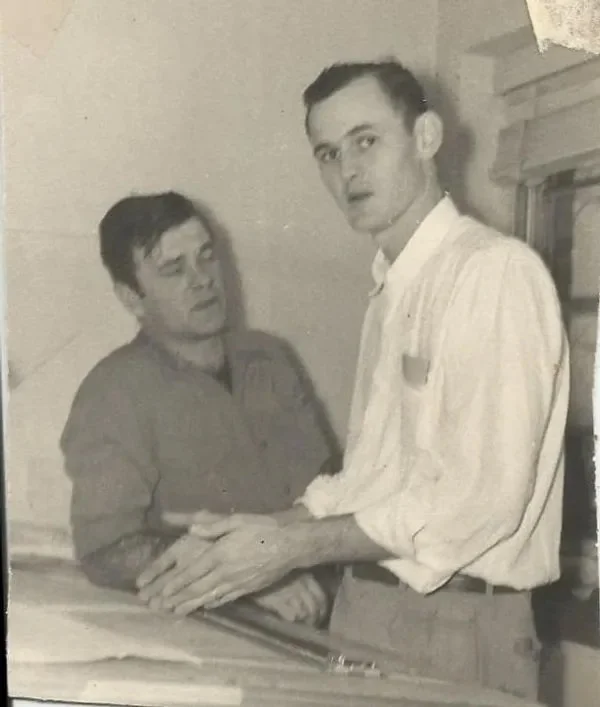
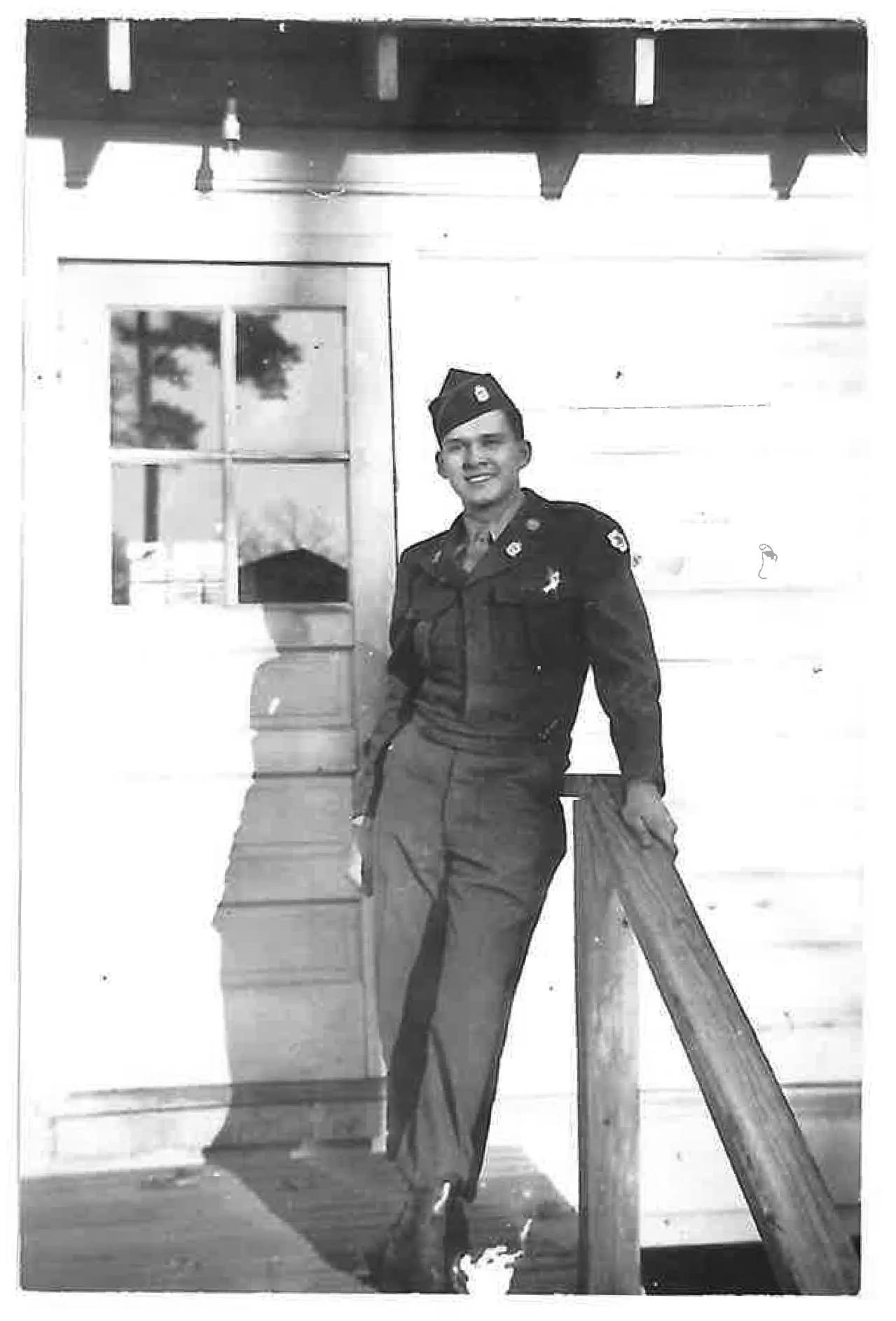
Photograph of Lyle Rowley & Jack Wilson courtesy of the Wilson Family - Highland Meadows Preservation Foundation
Harry E. Matthies
Harry Matthies was born on July 17, 1928 in Buffalo, New York. He was fourth child of five children born to Fred. C Matthies and Marian Foster Matthies.
Harry was described as always happy and very smart with a daredevil spirit which was demonstrated in his passion for racing bicycles.
A high school drafting class sparked his interest in how things were built. His talent for engineering and architecture would become his lifelong passion and career.
After graduating from high school he entered the United States Army and served for four years. He was stationed in Japan with the Army Corp of Engineers where he was instrumental in rebuilding Japan post World War II, and it was in Japan that he developed an appreciation for Japanese culture and architecture.
Matthies returned to the United States in 1950 and enrolled at the Rensselaer Polytechnic Institute, Troy, New York. Known for its strong programs in science, technology, engineering and math; Matthies pursued a degree in architecture. After graduation from RPI in 1954, Matthies made the move to Dallas, Texas where he would live and work for the rest of his life with the exception for a three year period spent in Los Angeles.
Upon his arrival in Dallas, Matthies began working with celebrated architect George Dahl. During this period Matthies contributed to many significant residential projects including ones in University Manor on Walling Drive. Striking out on his own he designed homes that were built by Harry Marlow in Merriman Park on Blackwood Drive.
In 1959, Matthies designed his personal home, that was built by Harry Marlow, on Capri Drive in Mediterranean Gardens + Sylvania Dells. Inspired by his years in Japan and passion for Japanese architecture, he designed a home using a 4 × 8 grid format that fused traditional Japanese design with Mid-Century Modern aesthetics.
Later in his career Matthies worked with the Dallas architecture firms JPJ and HKS; he was also a certified spec writer in commercial construction.
Photograph: Harry E. Matthies, 1950, courtesy of Susie Matthies - Highland Meadows Preservation Foundation
J. Stuart Todd
J Stuart Todd was born on February 28, 1927 in Unionville, Michigan. Todd graduated from the University of Michigan with a degree of Architecture in 1949 where he embraced progressive new ideas in architecture and design. He moved to Dallas with his wife Doris Owens Todd in 1950 where he began work with the firm DeWitt and Swank. Todd’s work with Arch B Swank and Associates in the late 1950’s saw a productive period in innovative residential design which earned a steady stream of publicity. Todd’s own private residence which cantilevered precariously over a creek on South Shore Dr was featured in the Dallas Times Herald as “The House The Couldn’t Be Built.” His design for the home of W.B. Handley at 4223 Bordeaux in Highland Park demonstrated his ability to work across various design esthetics.
In the early 1960’s Todd began working with E.G. Hamilton and George Harrell (later Omniplan) where he later became a partner and served as Chief Financial Officer. There his worked turned from residential projects to larger projects including the award winning NorthPark Center in 1965.
Todd established his own firm J Stuart Todd Architects in the 1970’s.
J Stuart Todd served on numerous boards including American Institute of Architects Dallas as Secretary, and the City of Dallas Board of Urban Rehabilitation. He also taught at Southern Methodist University School of Real Estate.
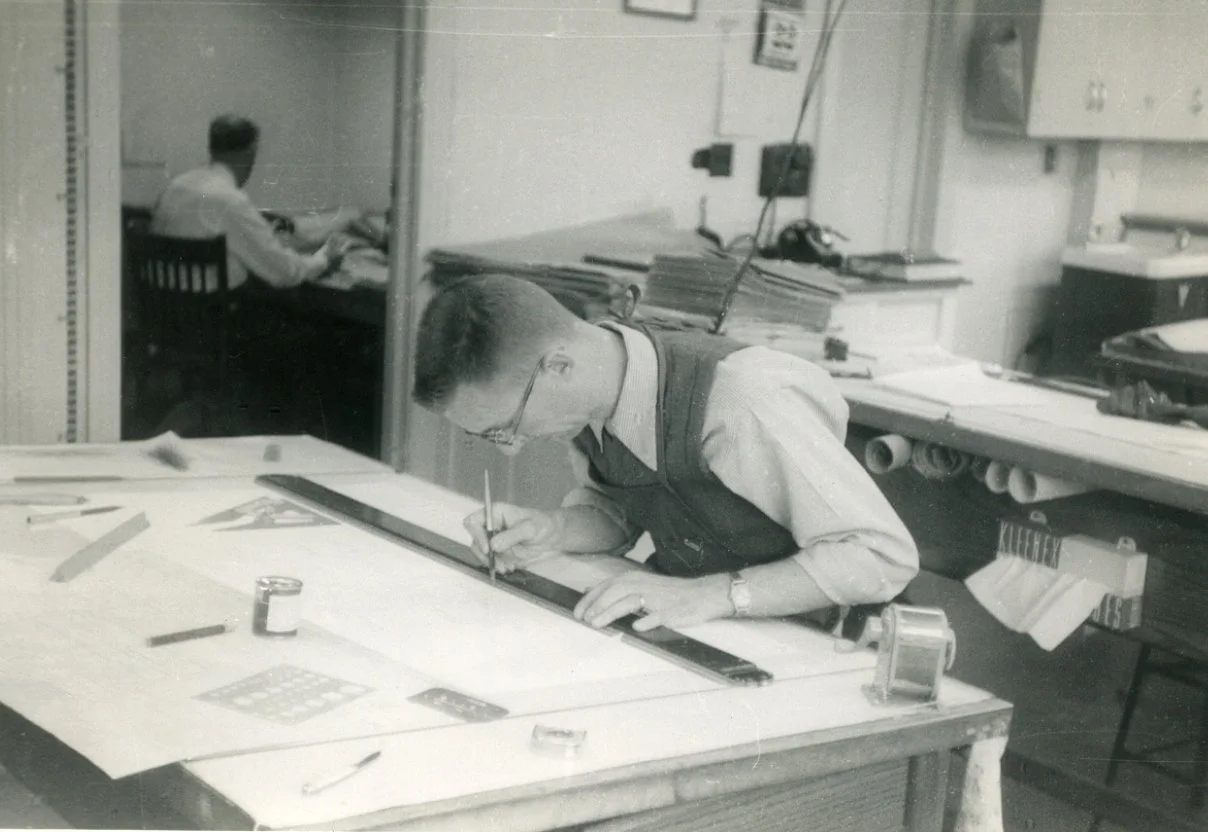
Photograph J Stuart Todd, 1953, Courtesy of Duncan Todd - Highland Meadows Preservation Foundation
Kent Broyhill
Kent Broyhill was born in Greenville, North Carolina in 1931 and raised in the Dallas suburb of Highland Park where he attended Highland Park High School. Broyhill went on to study architecture at the University of Texas and graduated in 1951, soon after he began working as a draftsman for the influential firms of Richard E Benson Architects and later Benson Nelson Architects.
Kent began his own architecture firm in the 1960’s working with both commercial and residential clients. His design forthe sanctuary at Highlands Christian Church in the Lake Highlands neighborhood demonstrates his ingenuity and vision in this period. In 1966 Broyhill designed and built a home for his family on Capri Drive in the Sylvania Dells section of Highland Meadows.
In the early 1970’s Kent Broyhill accepted an offer from Wong Tung Group to manage construction of a new project in Hong Kong. The project, Taikoo Shing, is built on reclaimed land and includes 61 residential towers from 22-30 storeys. The 12,649 apartment units are complemented with commercial, recreational, educational, and cultural facilities.
Broyhill returned to the United States in the 1980’s where he continued his work on significant projects like John Wayne Airport, Burbank, California and the Disneyland Hotel, Anaheim, California.
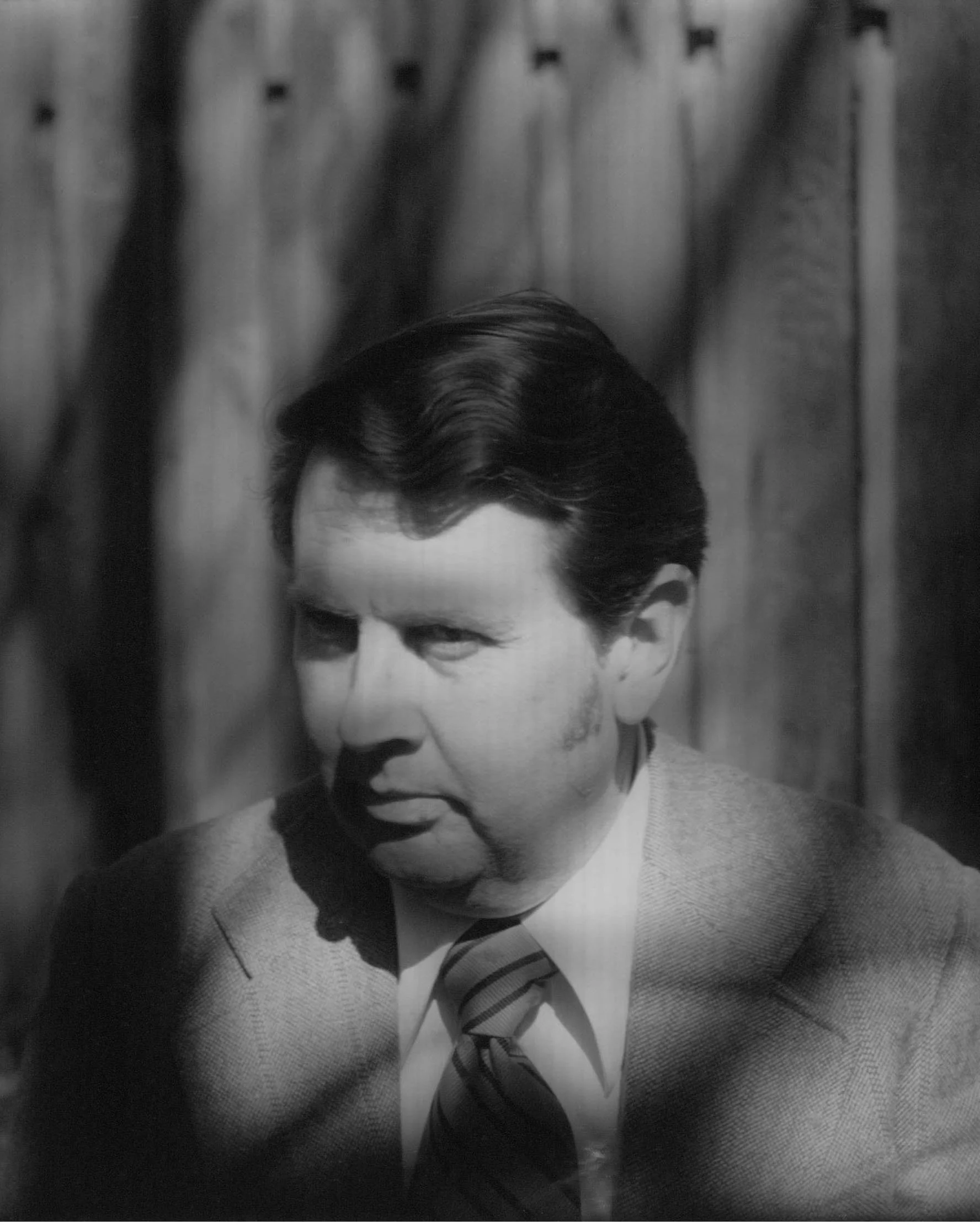
Photograph, Kent Broyhill, Self Portrait, 1969, Courtesy of Broyhill Family - Highland Meadows Preservation Foundation
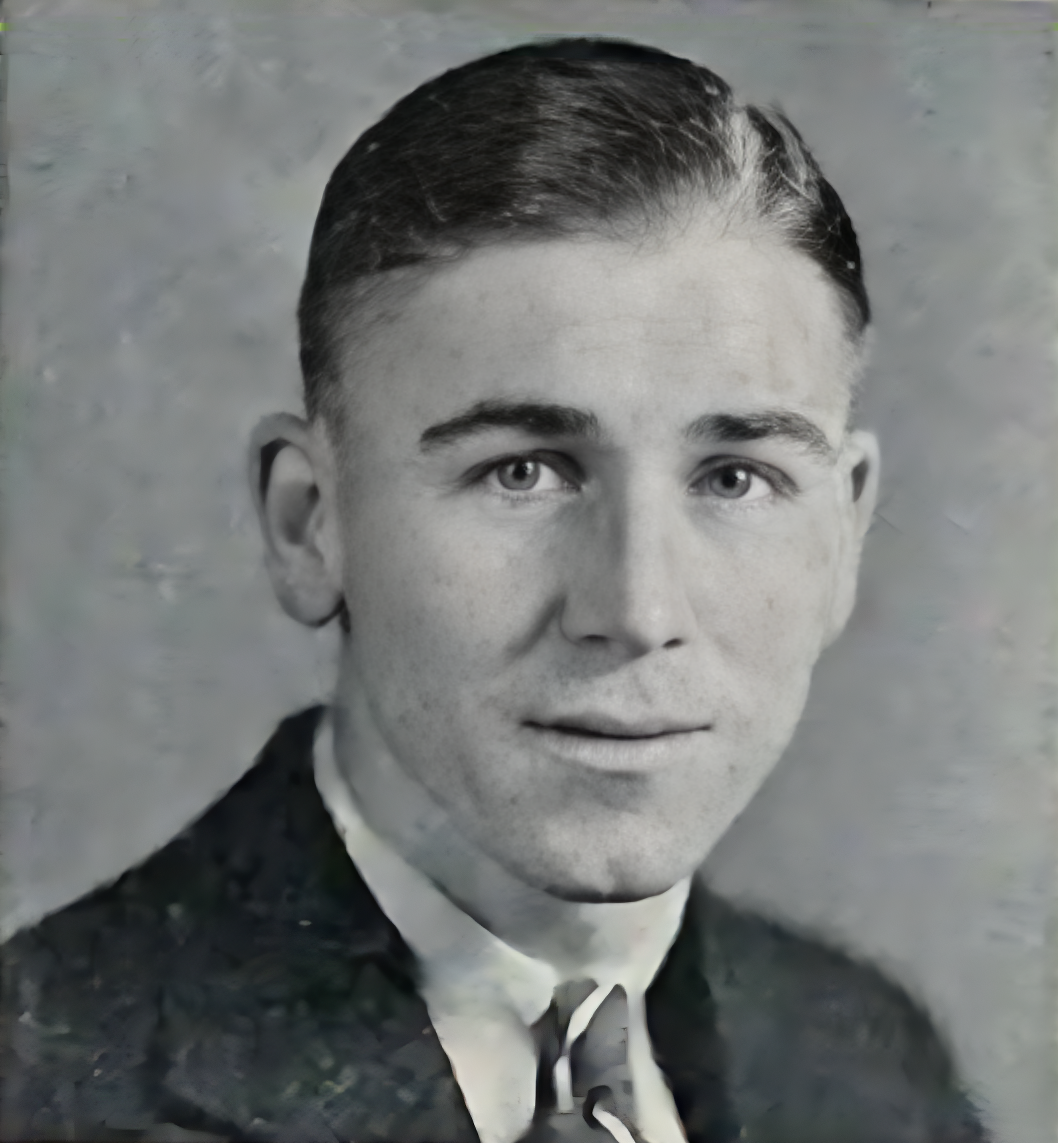
E Kelly Gaffney
Edward Kelly Gaffney was born in Austin, Texas on May 11, 1913 and attended the University of Texas. After graduating in 193 with a degree in architecture he began work as a draftsman with the firm of John F. Staub in Houston. Staub was widely regarded for his luxury residential designs and his attention to detail and planning. Staub’s discipline and vision would inspire Gaffney and inform his approach to residential design throughout his career.
After World War II Gaffney entered private practice. One of his early significant works was the “Parent’s Magazine Home, 1956, Houston,” a collaboration with builder D.D. Hutchison. In 1958 Gaffney entered partnership with influential developers and builders Malcolm McCulloch and Roy E Davidson of Fairview Homes, Houston that would lead him to design an entire neighborhood of homes in Dallas’ Lakeland Hills Addition.
Photograph: E. Kelly Gaffney - Highland meadows Preservation Foundation
Glenn Arden
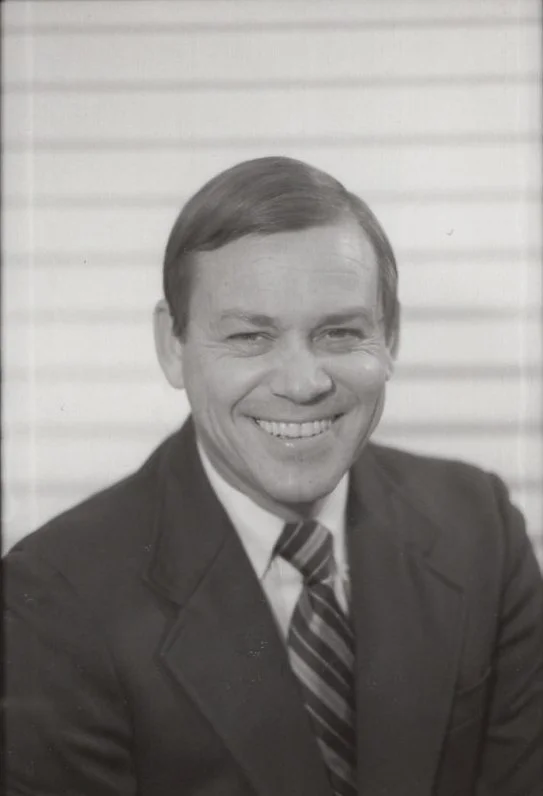
Glenn Arden was born in Amarillo, Texas in 1936. He attended the University of Texas and graduated in 1960 with a degree in Architecture. Glenn worked with architecture firms in Austin, Amarillo, and Dallas. In 1972 he joined HKS Architects, where he would eventually become a project manager and Associate Partner.
During his career Glenn’s work largely focused on commercial projects ranging from hospitality, health, sports, and education. In 1971 Glenn designed and built a home for his family on Medaowcliff Drive in the Meadowbrook Village section of Highland Meadows.
Photograph: Glenn Arden, Courtesy of Kathryn Arden - Highland Meadows Preservation Foundation
Thomas Knowles
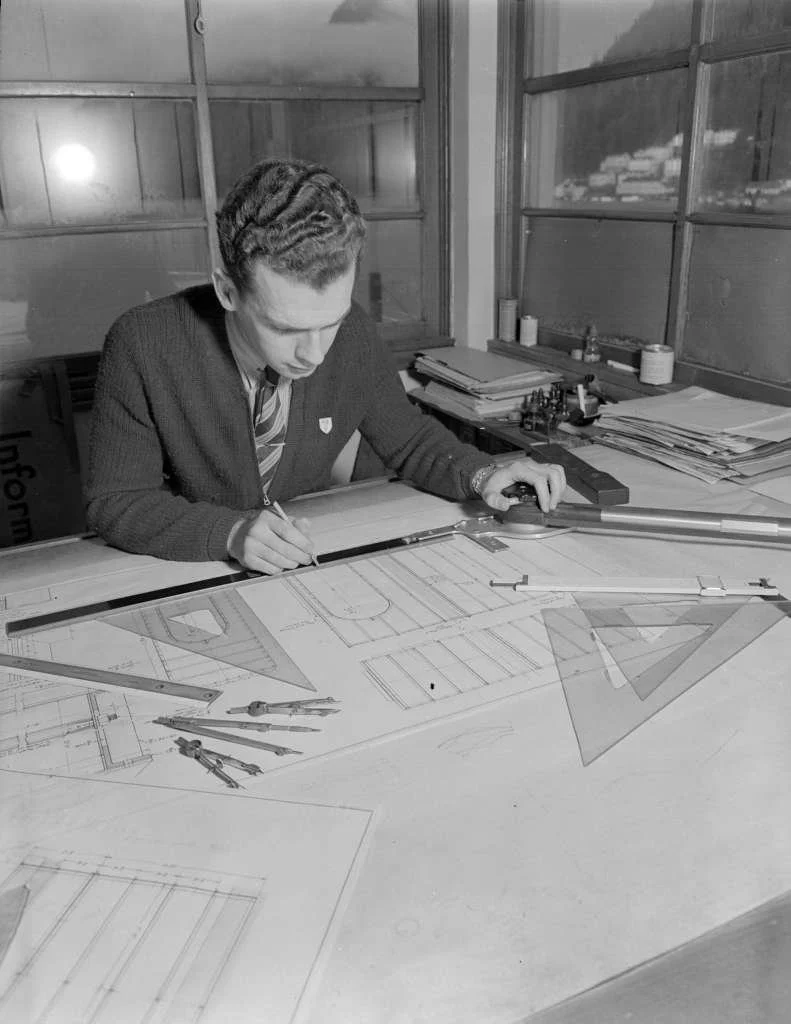
Tommie Knowles was born in 1928 in Ft Worth, Texas. He graduated from Crozier Tech High School and attended Texas AM before joining the U.S. Navy in which he served as a photographer and lab manager in Washington, DC and the USS Leyte.
After World War II Knowles returned to Texas A&M and then attended the University of Houston, majoring in architecture. Thomas worked as a draftsman for cotton gin makers and the firms B.M. Smith (1952-1953), George Marble (1953-1954), and Stanley Brown Architect (1954-1958) to qualify to take the state exam, which he passed in 1958. He served as Chief architect at the firm of Roper & Vance Architects (1958-1959), and as an Associate architect at Harper & Kemp Architects (1959-1960).
Knowles established his own practice Thomas Knowles Architect, in 1960. During this period Knowles designed what is considered to be one of his most significant homes, The Shortes Home, 1964 on Capri Dr. in the Mediterranean Gardens +Slvania Dells section of Highland Meadows.
Thomas Knowles moved to Tyler, Texas in 1965 to work with the firm Simons Associates. In 1973 he went back into practice for himself, Thomas Knowles Associates, and later in partnership with his son, Knowles, Knowles & Westmorland.
Niles F. Resch
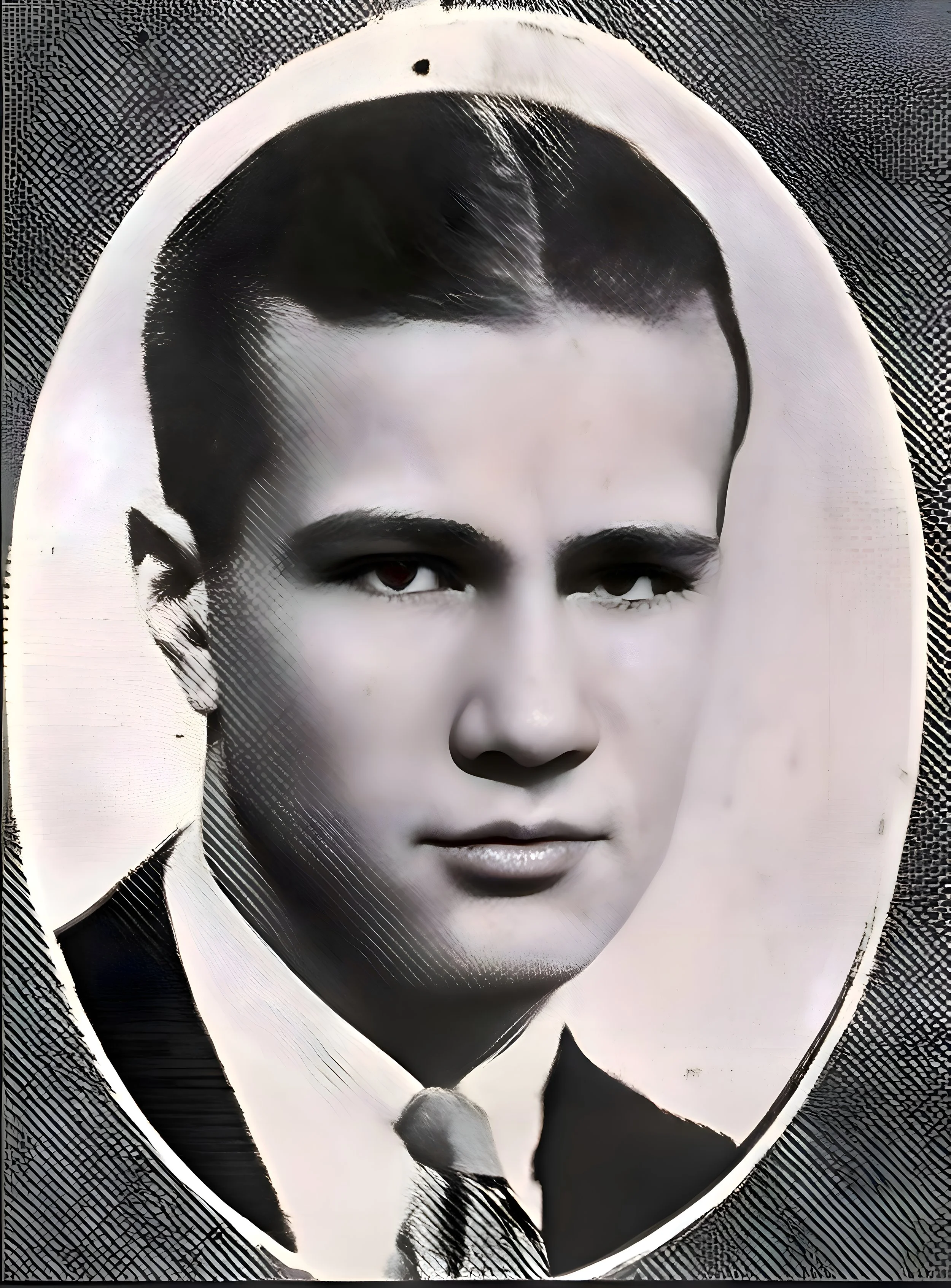
Born December 21, 1906 in Independence Missouri, Niles F Resch attended William Chrisman High School and Kansas State University where he received a Bachelor and Master of Arts Degrees in Architecture in 1933.
1927 at the age of 21 he enlisted in the Missouri National Guard where he served three years in the 110th Engineering Batallion specializing in building roads and bridges.
Resch worked for architecture firms in Independence, Omaha, and Tulsa before moving to Dallas after World War II. He joined the architecture firm of Dewitt and Swank in 1949. At DeWitt and Swank he contributed to significant projects including Parkland Memorial Hospital, renovations to Neiman Marcus flagship store in downtown Dallas, and Neiman Marcus’ second store at Preston Center.
In 1956 Niles F Resch designed the sanctuary and fellowship hall of the Church of Jesus Christ of Latter Day Saints on Hume Drive, Dallas where he was also a member. That same year he designed and built a 10 room home on Sealuxe Dr (Eden Roc) for he and his wife Jeannette. Resch served on the 1957 Committee for Texas Architecture.
Resch died unexpectedly in 1958 at the age of 51. At the time of his death he was chief draftsman for Roscoe DeWitt and project manager for the remodeling of the Old House Office Building in Washington DC.
Photograph: Niles F. Resch - Highland Meadows preservation Foundation
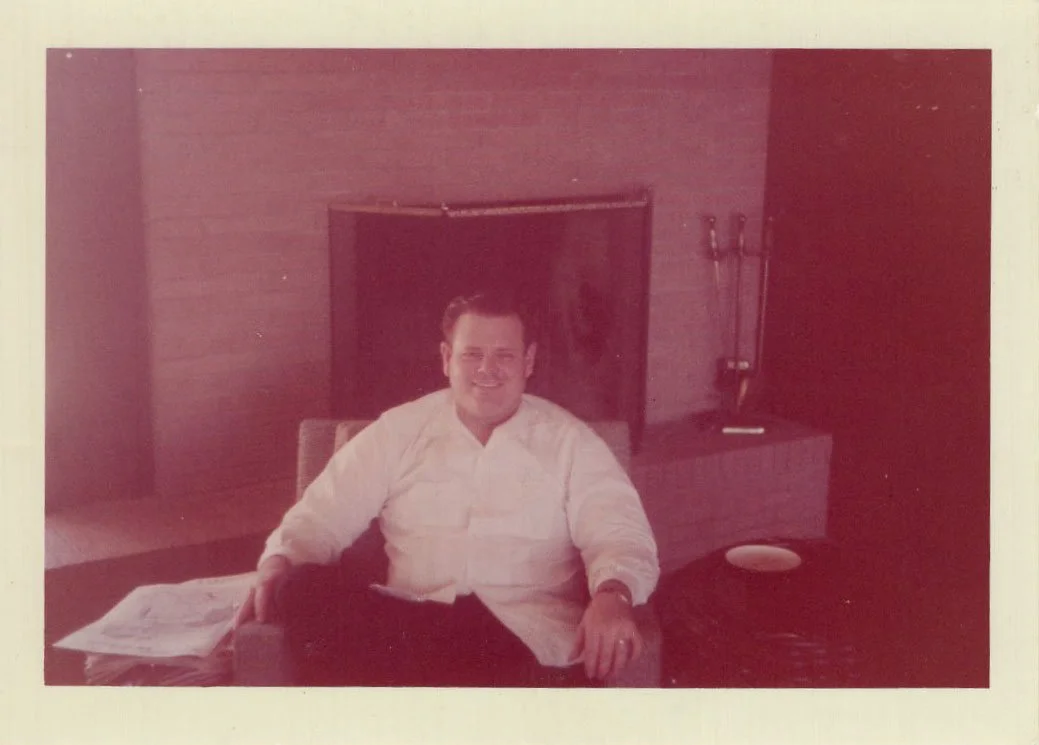
Fred Talmadge Towne III
Fred Towne was born in Connecticut in 1925. He graduated from the Florida Military Academy in 1942 and immediately enrolled in the University of Alabama whereupon the outbreak of World War II he left to serve in the United States Navy. After the war Fred returned to the United States and the University of Alabama to finish his degree in Aeronautical Engineering in 1948 and his Masters in Business Administration in 1950. Fred soon moved to Dallas where he worked designing manufacturing production lines. He met Patricia Marilyn Reeme in the early 1950’s, and they were married in 1953.
In 1956, Fred and Patricia purchased a lot in Mediterranean Gardens + Sylvania Dells along the banks of East Prong Dixon Branch. Although he was not trained as an architect, Fred began to design the home on Capri where he and Patricia would live and raise their family. Inspired by Frank Lloyd Wright, and other modernist architects of the day, Fred designed a home that embraced nature with large expanses of glass overlooking the creek and he went to great lengths to plan his home doing very little damage to existing trees.
Photograph: Fred Talmadge Towne III, 1958, courtesy of Mary Towne Wade - Highland Meadows Preservation Foundation
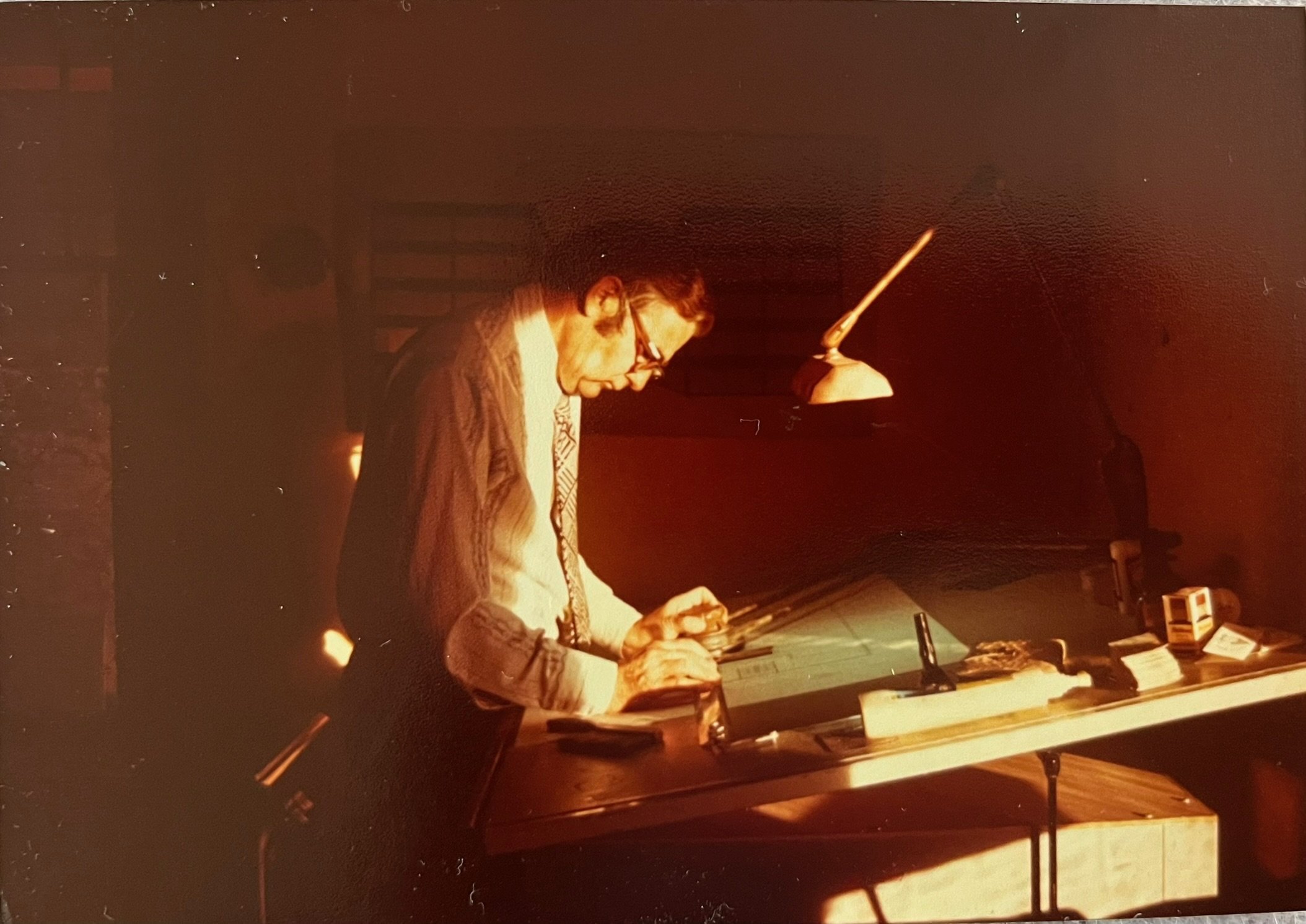
Harry E. Marlow
Harry Earl Marlow’s path to designing houses was not traditional. He was born on October 1, 1918, on a farm outside a very small town called Harmony in Jefferson County, Illinois. He was the second of six children. For the first ten years the family lived at various locations around Southern Illinois as his parents moved often as tenant farmers, with the brothers and sisters helping as they could.
In 1928 the family settled in an area near Mt. Vernon, Illinois but struggled through the lean years of the Great Depression, as did most rural folks. Life was mostly church, hard work, and school. Even so, as a child Harry was constantly drawing, and was known as the “super salesman” of the school set, selling Cloverine Salve for a few pennies of profit. This passion for entrepreneurship and his interest in artistic endeavors developed early for Harry, and remained a focus for him throughout his life. He was a creative dreamer, always looking for something better, or new, or different.
Harry only attended school until 1935 when, at age 17, he quit and went to work in Evansville, Indiana, at a concrete block factory, anxious to get on with his life. During World War II, unable to serve, he moved to Pocatello, Idaho, where he worked in the poultry business before moving back to Illinois. He briefly attended Washington University in Saint Louis to study business and soon set up Marlow’s Business College in Southern Illinois for a short time.
In 1950 Harry moved to Dallas, Texas, which was booming in the post-war period and held promise for a fresh start. There he began to focus on real estate as a broker and opened Marlow Real Estate Company. Over time he moved beyond sales, and envisioned a career that combined his artistic skills, his business acumen and his penchant for new designs of the post war period. He became a contractor and although he had no formal training as an architect, he began designing distinctive homes with a modern edge. Harry Marlow designed homes were state of the art and had a grace, proportion, and flow that made them very livable. He was soon winning awards for his designs and garnering press across the region.
In 1955, Harry began working with Longhorn Construction’s Lakeland Hills development of custom contemporary homes. As project coordinator, Harry oversaw construction, worked with interior designers and architects, and also designed homes. Harry’s office during this period was in the Lakeland Hills model home at 8506 Rolling Rock.
In addition to his successful design / build business, Harry also had a showroom at the Trade Mart called Objects of Art in Dallas in the 1960’s
In the late 1960’s Harry moved to Houston where he continued to design and owned an antique reproduction company.
Photograph of Harry E Marlow, circa 1970, courtesy of Modell Marlow Andersen and Deborah Marlow Mejia - Highland Meadows Preservation Foundation
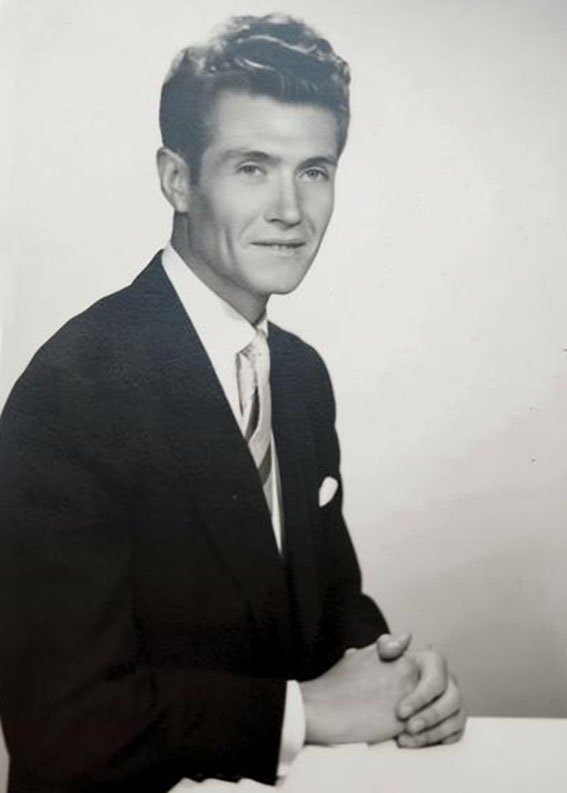
Max Wieland
Max Wieland was born in 1927 in Dietingen, a small farming community outside of Ulm, Germany. He spent his childhood there and as a teeneager began an apprenticeship to learn carpentry and cabinetmaking. Shortly after he turned 17, in 1944, he was drafted into Hitler’s army and trained as a paratrooper. Not long after, he was captured by the Americans and was an American prisoner of war in France for two years. He was always thankful that he was captured by the Americans because they treated their prisoners better than others did.
After he was released, he went back to Dietingen, completed his apprenticeship and worked as a cabinet maker until deciding in 1956 to followtwo of his cousins to the United States, specifically Richardson, Texas to work building homes in this booming area. His fiance, Hennriette (Henny) juined him the following year and they were married.
Within a few years he started his own company, Max Wieland Construction Company, and built many homes primarily in North Dallas, Richardson, and Richland Park. Perhaps Wieland’s most noted home is the one he built for Euel and Betty Box, in 1961 on Capri Drive in the Sylvania Dells section of Highland Meadows.
Photograph of Max Wieland, 1957, courtesy of Bettina Wieland - Highland Meadows Preservation Foundation