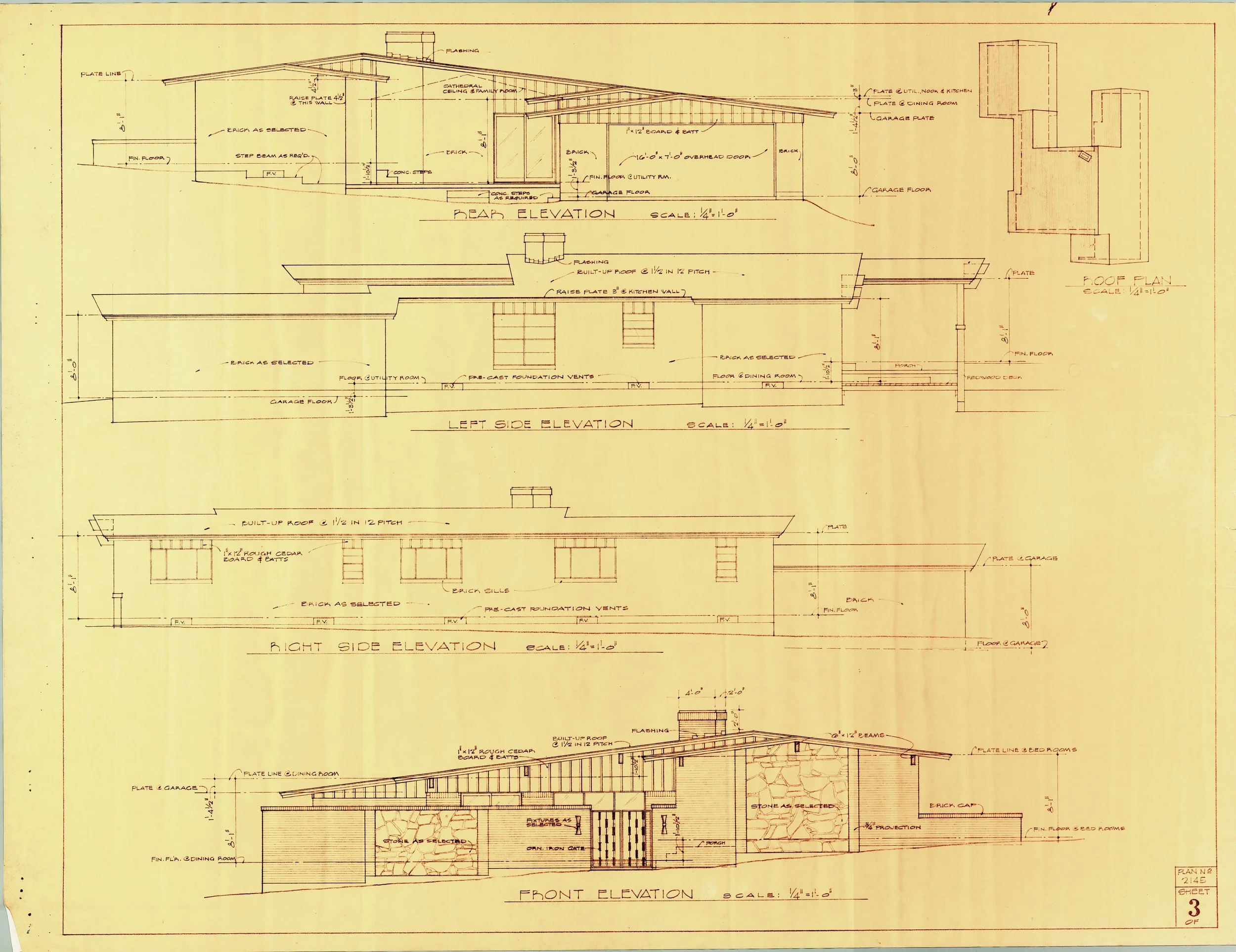
Mediterranean Gardens + Sylvania Dells
Mediterranean Gardens is a pioneering Mid-Century development that lies along the wooded banks of Dixon Branch and East Prong Dixon Branch and was developed in 1950 by John Preston Travis II (Universal Corporation) with consulting architects Viktor Olgyay and Aladar Olgyay. The collection of 100 architecturally significant homes in Mediterranean Gardens + Sylvania Dells includes works by Olgyay + Olgyay, John Barthel, John Preston Travis III, Ju-Nel, W E Richardson & R E Bennett, Emil Fretz Jr, Niles F Resch, William Krisel, Thomas Knowles, Harry Matthies, Kent Broyhill, Walter W Ahlschlager, Harry E Marlow, Carl H Rooth, Wade Driver, Jack Yardley, J.M. Zollicoffer, and Bayard M Smith Sr among others.
Mediterranean Gardens + Sylvania Dells is lovingly known as “the architects neighborhood” because so many prominent architects chose to build homes her for their clients and their own families in the development that embraced the post war design philosophy of “living with nature.” Plans for homes in Mediterranean Gardens + Sylvania Dells were subject to an approval process that included review by a panel of architects as well as review by a committee of owners. This process has rightfully been compared to a juried art show where only the best works are accepted.
The first home in Mediterranean Gardens, the Lincoln Research House by Olgyay + Olgyay was completed in 1952. Development of Mediterranean Gardens + Sylvania Dells continued for the next two decades with the last home, The Mother-In-Law Home, by Jack Yardley was completed in 1976.

John Preston Travis II
The Visionary Who Created Mediterranean Gardens
J P Travis was a pioneer in the manufacturing of windows and non-ferrous metals, particularly aluminum, and was instrumental in the development of the Mid-Century curtain wall which revolutionized the skyline in post-war America. Travis is notable for his work with prominent Mid-Century architects including Mies Van Der Rohe, George Dahl, Emil Fretz Jr, Walter W Ahlschlager, Alfred C Flinn, Pietro Belluschi, Igor Polevitzky, Roscoe Dewitt, and Arch B Swank Jr. Many of the public buildings, hotels, corporate headquarters, residences, and sky scrapers that collaborated on are listed on the National Historic Register of Places.
Born in 1899 in Dyle, Texas to share croppers, J P was a self made man who moved to Dallas after the end of World War I. For the next six years J P worked days and attended night school where he studied engineering , drafting, and public speaking. In 1925, he founded Universal Corporation (Brown) and soon began manufacturing windows under the name of Sealuxe. At the outset of World War II, J P converted his facilities for the war effort and began manufacturing precision rockets and pre-fabricated mobile air hangers. His work was recognized for excellence by both the Army and Navy.
After World War II J P and Universal Corporation resumed production of Brown and Sealuxe materials for the post-war building boom. Architects were promising nothing short of utopia as a wave of modernism swept the nation. J P Travis II, Universal Corporation, and Sealuxe were there to meet the needs of Mid-Century Modern. Soon buildings across the nation and the world were going up with precision materials made by J P Travis II and his companies.
In 1950, J P Travis II added real estate developer to his list of job titles when he purchased 74 rolling acres at Northwest Highway and Plano Road from Frank C Jones. J P Travis II imagined a development of modern homes designed by leading architects in a natural setting that would be “more beautiful than Turtle Creek.” The development, in two sections, was named Mediterranean Gardens +Sylvania Dells.
Illustration: John Preston Travis II by Dmitir Vail, Highland Meadows Preservation Foundation
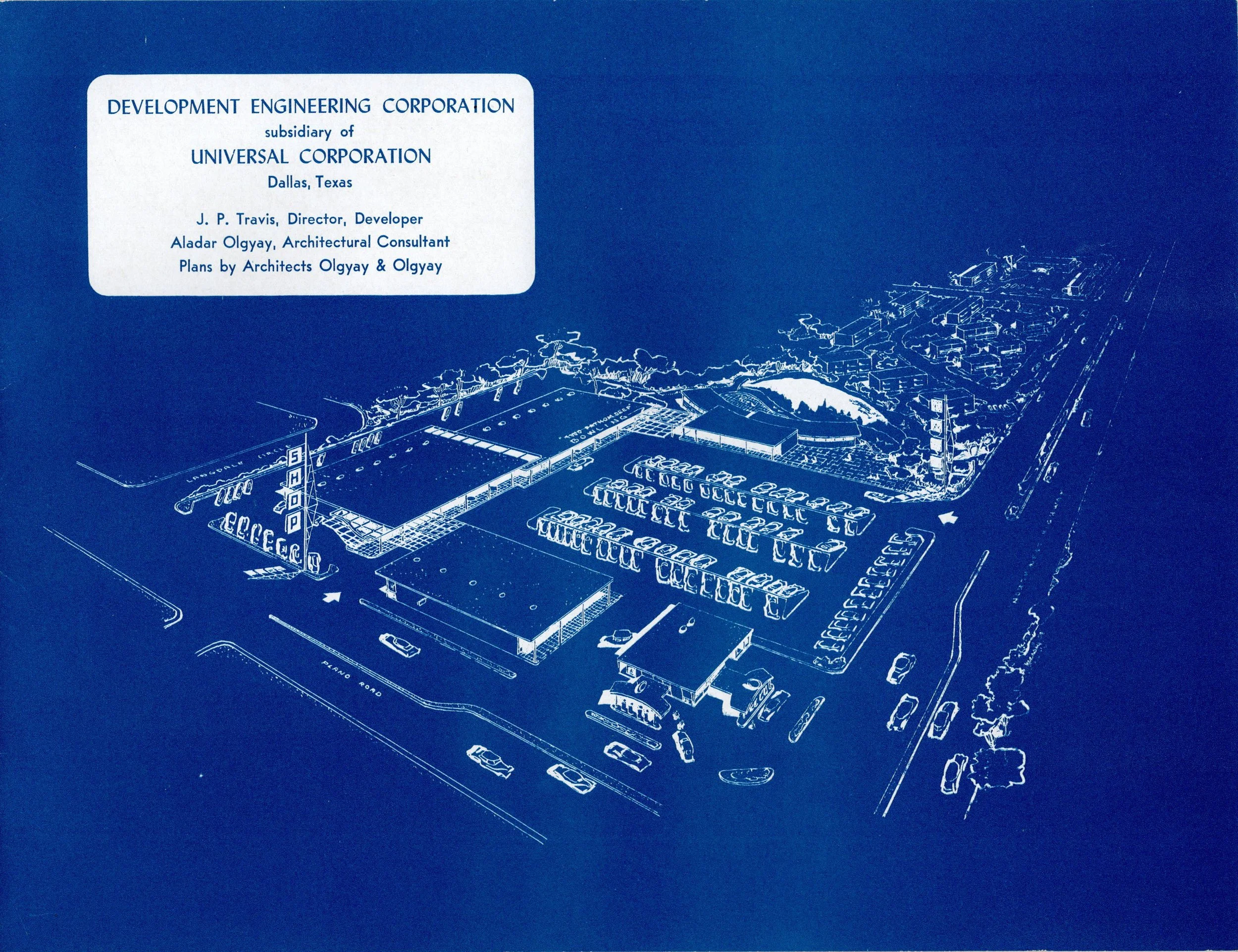
Viktor Olgyay & Aladar Olgyay
Mediterranean Gardens Consulting Architects and Planners
The Olgyay brothers, Viktor and his identical twin brother Aladar were Hungarian born American architects and city planners, who formalized bio-climatic or passive solar design as a disicipline in the firm Olgyay + Olgyay Architects and designed residential, commercial, and exhibition structures. Viktor and Aladar had an academic career as well and taught at several U.S. universities including the University of Notre Dame, Massachusetts Institute of Technology, Harvard University, and the School of Architecture and Planning at Princeton University.
Viktor and Aladar are widely known as the authors of Design with Climate: A Bioclimatic Approach to Architectural Regionalism (1963), Solar Control & Shading Devices (1957, and Architectural Album of the Olgyay Brothers (1946). authored As leaders in the field of bioclimatic architecture from the early 1950’s and the 1960’s, the Olgyay Brothers could be considered the father’s of contemporary environmental building design.
Olgyay + Olgyay began collaborating with J.P. Travis II soon after they immigrated to the United States in 1947, Travis was inspired by their work in the field of bioclimatic architecture and he and his firm Universal Corporation manufactured and distributed numerous solar shading devices designed by the brothers. Travis also manufactured and sold a solar protractor invented by the Olgyay brothers that was a pre-computer device for calculating the suns position and its effects on a building.
It was during this period that J.P. Travis asked Viktor and Aladar to become consulting architects on Mediterranean Gardens + Sylvania Dells. Their original plans for Mediterranean Gardens + Sylvania Dells include plat maps, street plans, as well as plans for a shopping center, and a boutique hotel at the corner of Northwest Highway and Plano Rd.
Photo of Viktor and Aladar Olgyay, Highland Meadows Preservation Foundation
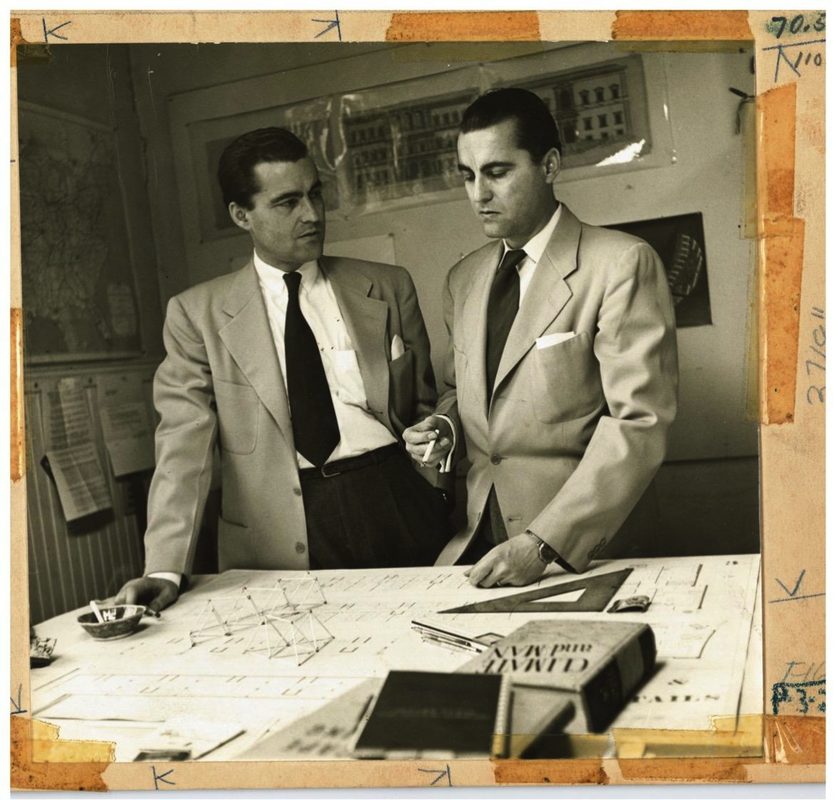
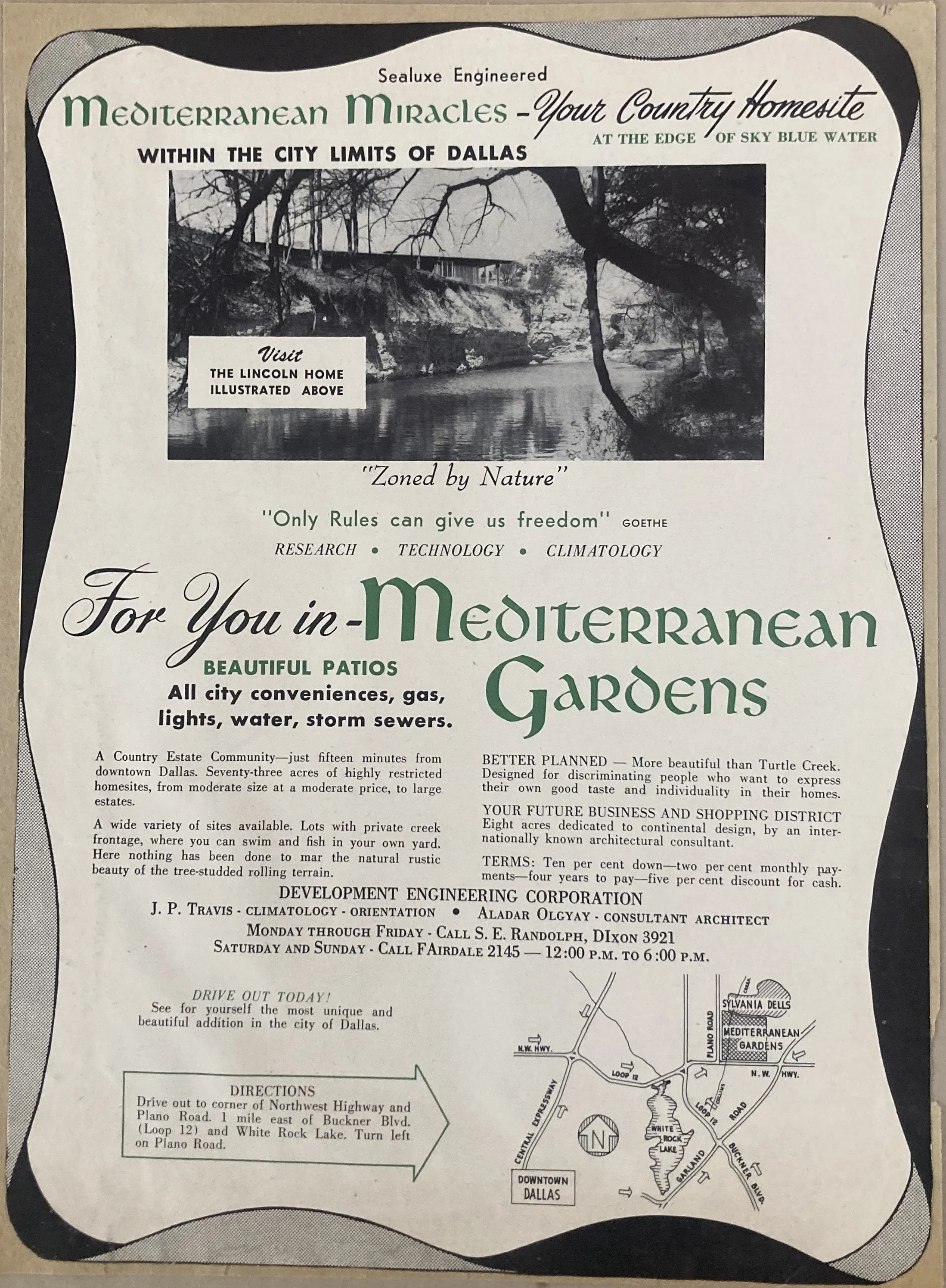
Advertisement for Mediterranean Gardens, 1953
Sealuxe Engineered
Mediterranean Miracles - Your Country Homesite - At the Edge of Sky Blue Water
Within the City Limits of Dallas
“Zoned by Nature”
“Only Rules Can Give Us Freedom” - Goethe
Research - Technology - Climatology
For You in Mediterranean Gardens
Beautiful Patios
All city conveniences, gas, lights, water, storm sewers.
A country estate community - just fifteen minutes from Downtown Dallas. Seventy-three acres of highly restricted homesites, from moderate size at a moderate price, to large estates.
A wide variety of sites available. Lots with private creek frontage, where you can swim and fish in your own back yard. Here nothing has been done to mar the natural rustic beauty of the tree studded rolling terrain.
Better Planned - More beautiful than Turtle Creek
Designed for discriminating people who want to express their own good taste and individuality in their homes…
J.P. Travis - Climatology - Orientation + Aladar Olgyay - Consultant Architect
Call Fairdale 215
Original Advertisement Mediterranean Gardens, 1953, Highland Meadows preservation Foundation
Lincoln Research House
Completed in 1952, the Lincoln Research House is positioned along a gentle curve in Dixon Branch and was the first home built in the historically significant Mediterranean Gardens + Sylvania Dells development. It is the vision of developer J.P. Travis II with consulting architect Walter W. Ahlschlager and consulting climatologist R. L. Biesele Jr. The Lincoln Reserach House demonstrates al of the advancements in bio-climatic architecture that were developed by Viktor Olgyay and Aladar Olgyay, consulting architects of Mediterranean Gardens + Sylvania Dells, during their time as researchers at Massachusetts Institute of Technology.
The Lincoln Research House was heralded as “a revolution of design for tropical housing and building” and “the house of tomorrow” by J.P. Travis and was written about extensively in newspapers and magazines of the day. It was designed to meet the wide variations of the Dallas climate and was said to be a thirty year advancement in building technology over conventional construction. Incorporated in the design are provisions for solar shades, weather controls, fins, canopies, overhangs, natural breeze ventilation, and double roof construction. It was equipped with forced washed air cooling, radiant panel heating, forced circulation warm air heating, and ventilating picture windows. It also boasted a gymnasium swimming pool, sun deck, arrangements for massage, and violet and red ray light spa treatments.
The Lincoln Research House’s first occupants were bio-climatic researchers who measured the effectiveness of the house, it also served as field headquarters for Engineering Development Corporation during the construction of Mediterranean Gardens and was a second home for J.P. Travis II until it was purchased by Dr. Stanley L. Seaton and Mildred Seaton.
Photo: Lincoln Research House, 1952, courtesy of Lawrence Bonanno - Highland Meadows preservation Foundation
Round House
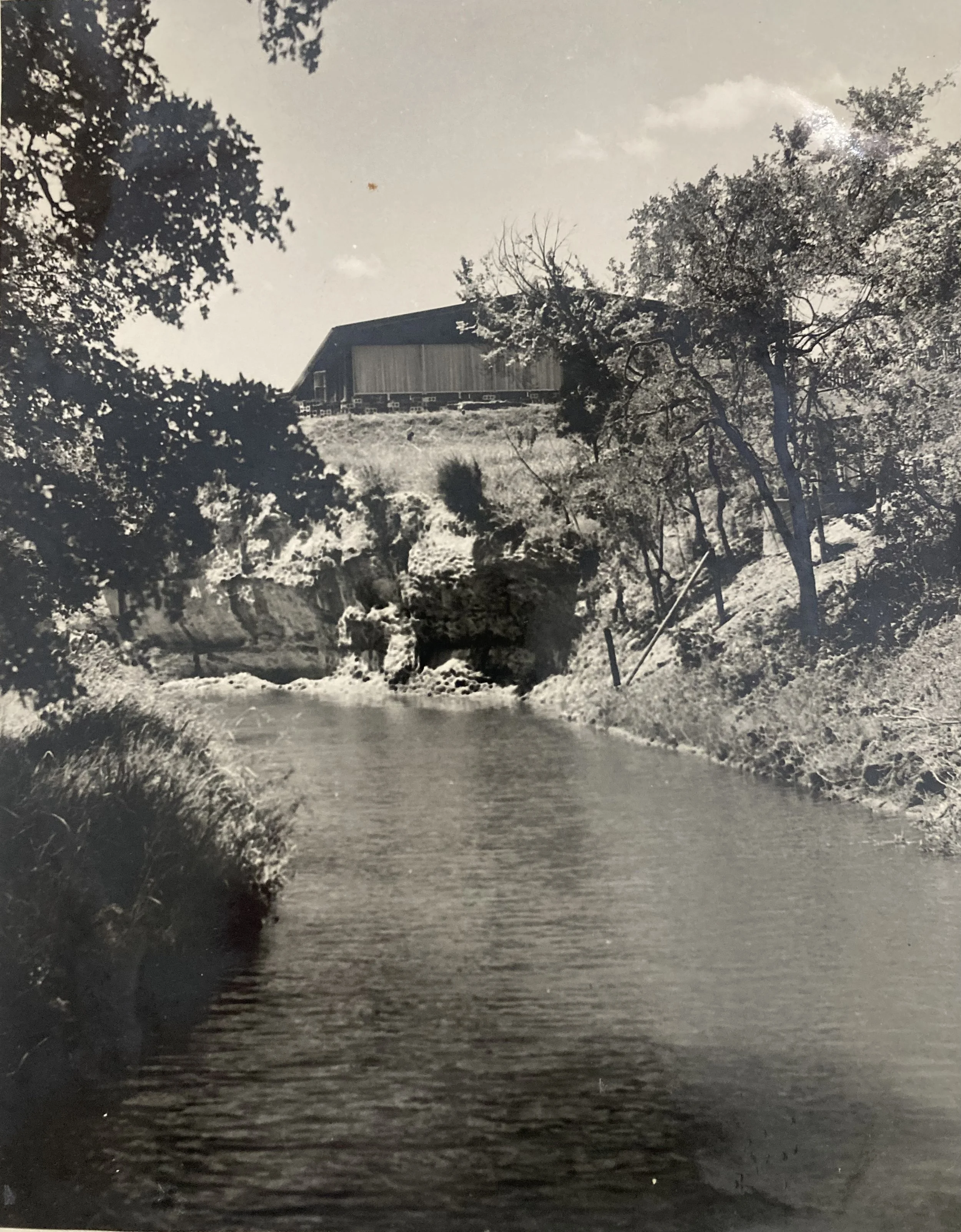
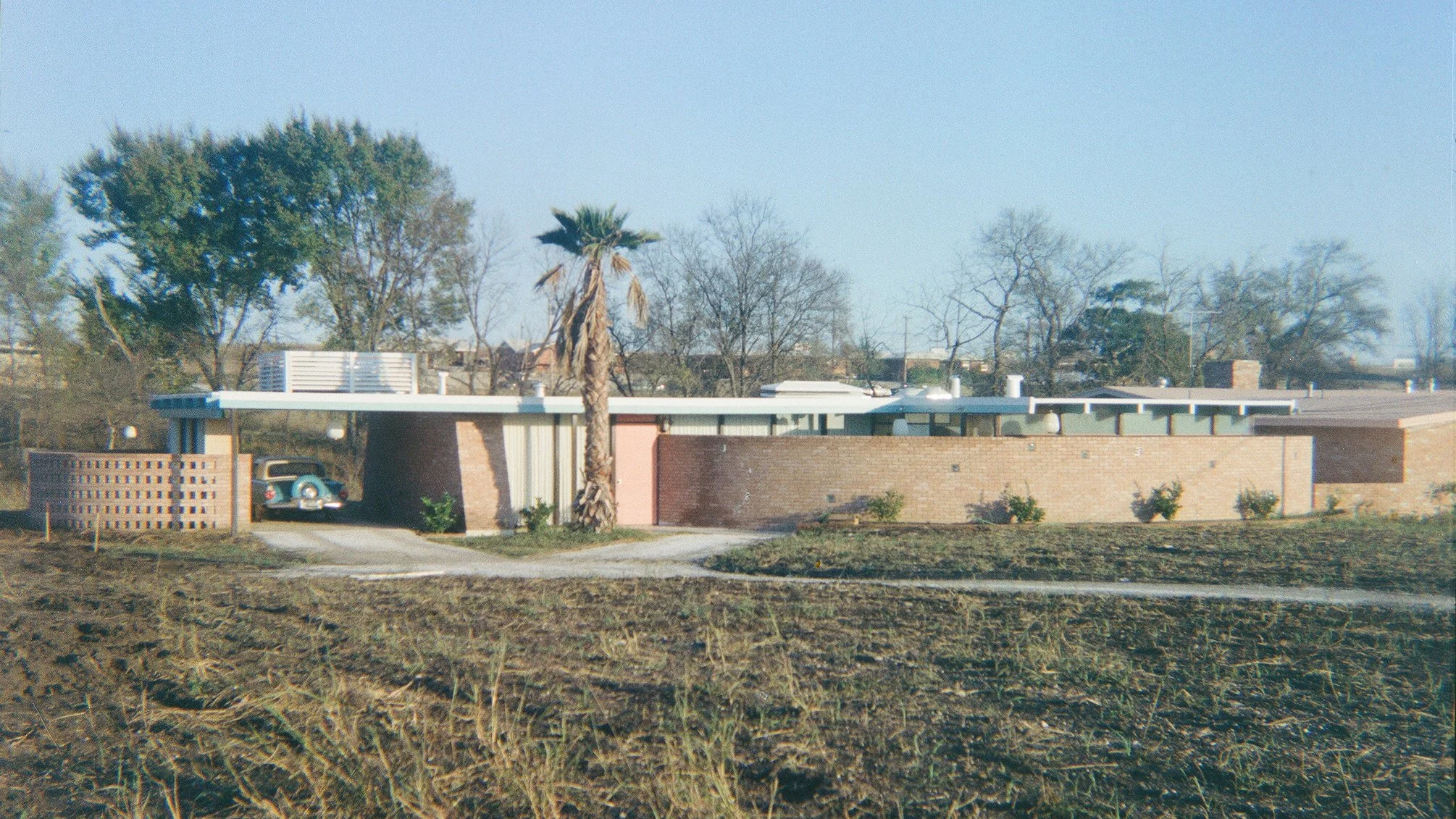
“The Round House, architect John Preston Travis III, 1957, Mediterranean Gardens” opened to much fanfare on May 25, 1957. Designed by John Preston Travis III, who had recently graduated from the University of Oklahoma under the watchful eye of Bruce Goff AIA, the Round House was built on Langdale Circle along the banks of Dixon Branch. It was featured in the press and invitations for the opening went out to a who’s who of Dallas’ artists, architects, and intellectuals. It was widely praised for its innovative design that incorporated a sunken living room, interior / exterior masonary, interior / exterior reflection pool, interior / exterior courtyards and palm trees.
Sadly, the Round House was demolished in 2019.
Photo: The Round House, 1957 by John Preston Travis III, courtesy of Elaine Travis - Highland Meadows preservation Foundation
Origami House
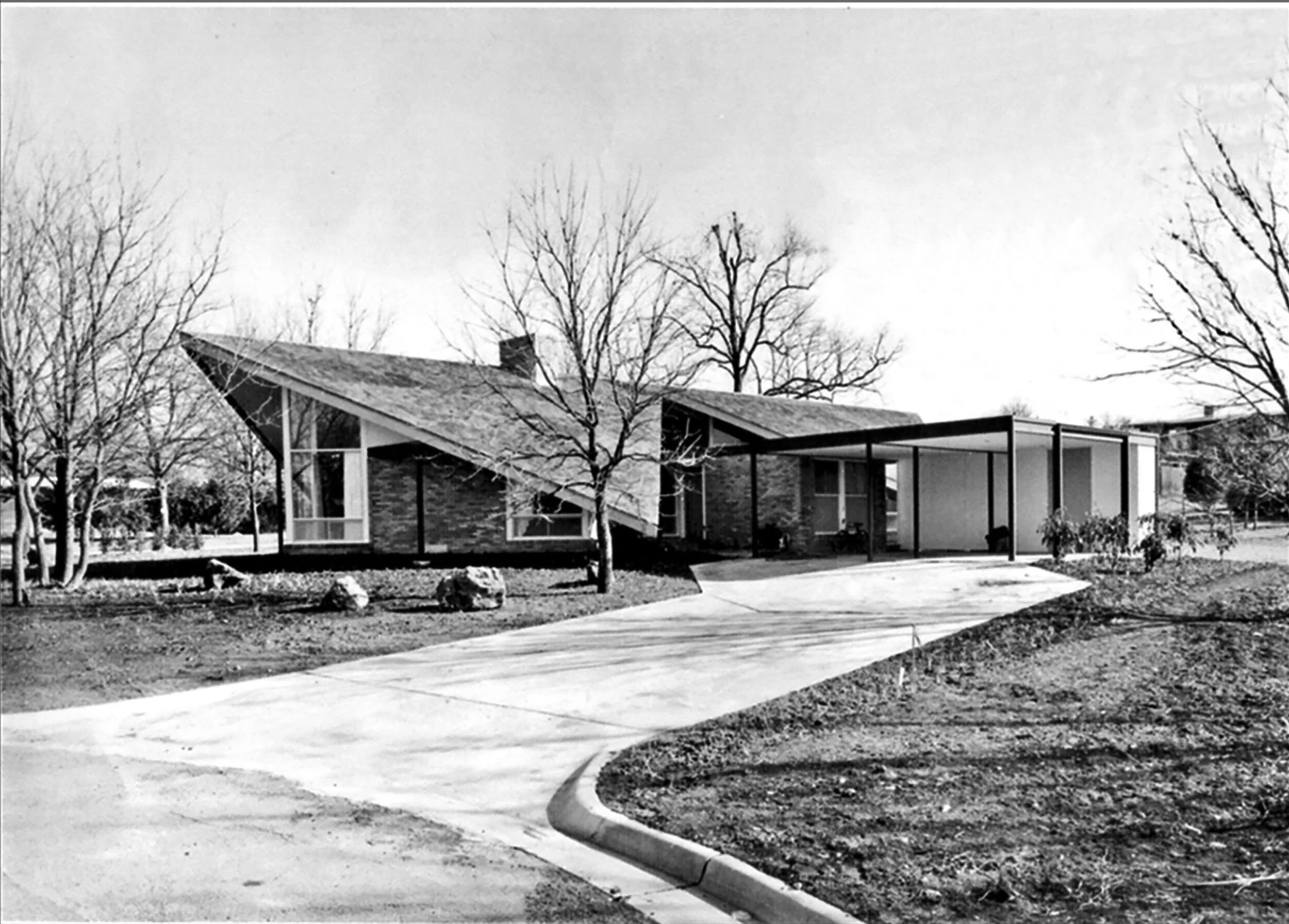
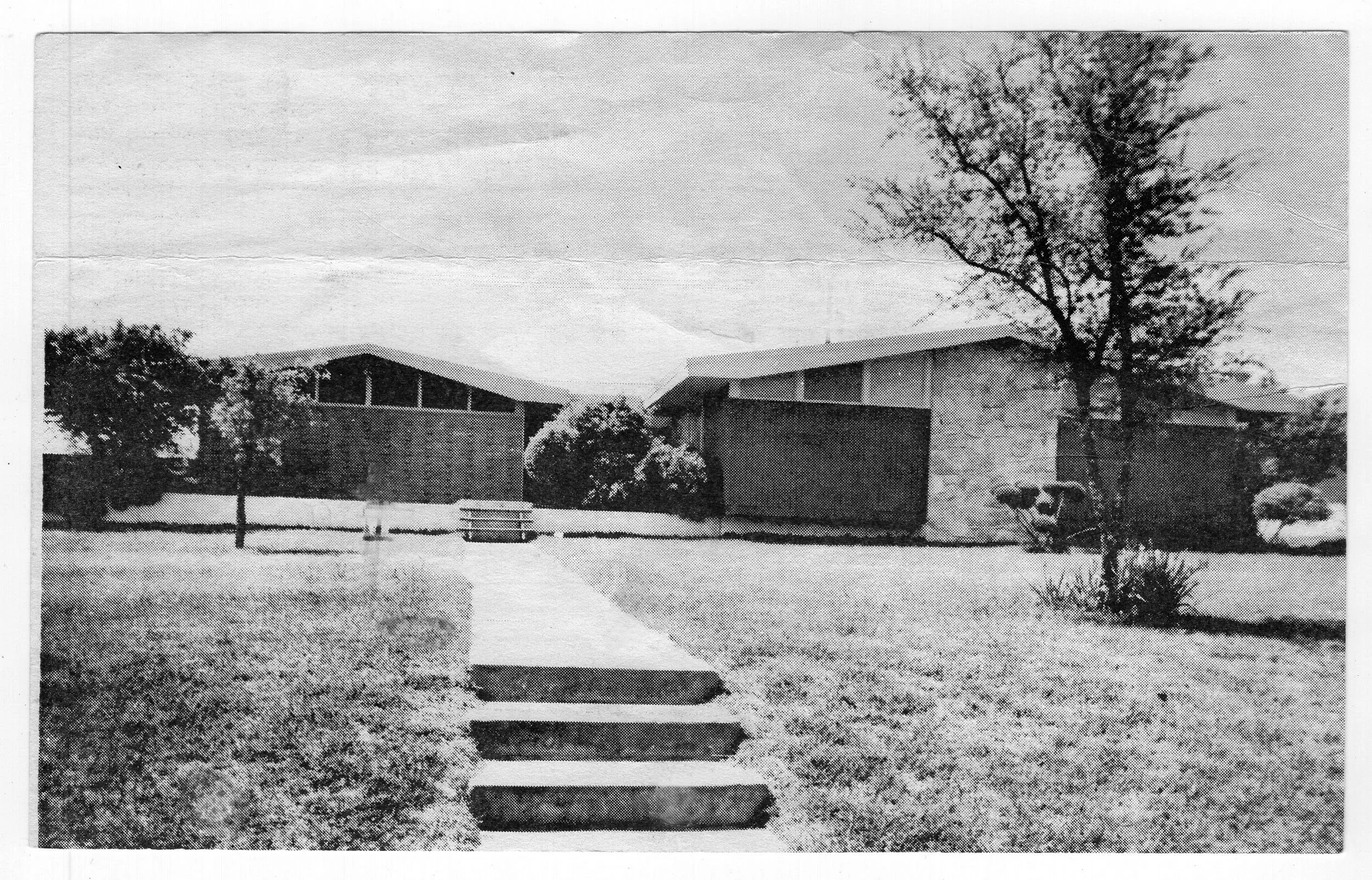
“Barthel Home, architect John Barthel, 1959, Sylvania Dells” is considered by many to be John Barthel’s masterpiece. Created as his personal home it has inspired generations of architects and mid-century enthusiasts. It has been praised for its relationship of material, landscape, planning.
Architectural historian Edward Avila praised “playful and poetic” and “expressionistic from every angle.” He went on to say, “The architectural harmony of Barthel’s home, which he lived in until his death, contains the fervent embrace of the modern age fueled by the dramatic change of the time.”
Photo: Barthel House, 1960, courtesy of Rowland Jackson - Highland Meadows Preservation Foundation
Brown Home
“Brown Home, architect John Preston Travis III, 1963, Mediterranean Gardens” was built on Langdale Circle for W.E. Brown and his wife Eddie Jo Brown in 1965. Designed by John Preston Travis III,
Photo: Brown Home, 1969, courtesy of Susanne Rosulana - Highland Meadows Preservation Foundation
Hoierman Home
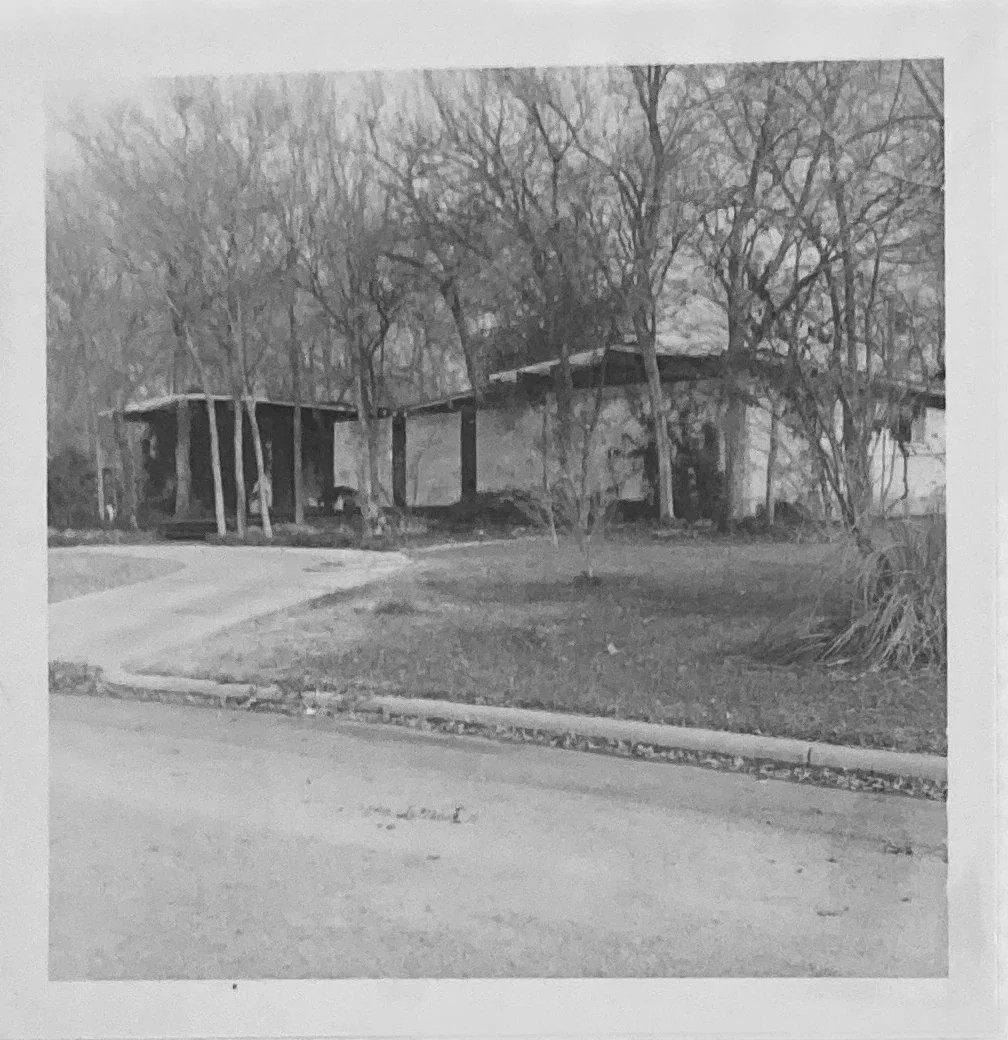
Early photo of the “Hoierman Home, architect Ju-Nel, 1962, Sylvania Dells” on Capri Drive.
Richard and Jane Hoierman built this home to accommodate their growing family. They lived next door and commissioned this home when they were expecting their fourth child.
Jane Hoierman was a hands on client with high standards who dedicated a portion of her time each day to monitor construction progress, much to the consternation of Ju-Nel architects Lyle Rowley and Jack Wilson who often complained to her husband Richard and pleaded with him to ask her to stand down. Richard would respond that everything would be fine if they gave her exactly what she wanted…
Richard and Jane Hoierman lived in the home for more than four decades, they enjoyed entertaining guests and hosting holidays in their home. Both Richard and Jane were accomplished golfers who earned countless championships which were proudly displayed in the home.
Photograph: Hoierman Home, 1963, courtesy of David Hoierman - Highland Meadows Preservation Foundation
Towne Home
Photograph of the recently completed “Towne Home, architect Fred Talmadge Towne III, 1957, Sylvania Dells.”
Fred Talmadge Towne III went to great lengths to protect almost every tree when he built his home along East Prong Dixon Branch. His extensive tree survey is included in the original plans for the home, a testament to his commitment to the philosophy of living with nature.
The Towne Home was minimal in design and employed the most current technologies including a speaker / intercom system, and all electric appliances. The kitchen, dining room, and living room were open with no interior walls. The bedrooms were oversized with large full wall length closets. There was also a home office / library.
The home boasted oak hardwood floors, moss green slate pavers, paneled walls, , turquoise formica countertops and colorful wallpaper in selected areas.
Fred TalmadgeTowne III
Photograph: Towne Home, 1957, courtesy of Mary Towne Wade - Highland Meadows Preservation Foundation
Moore Home
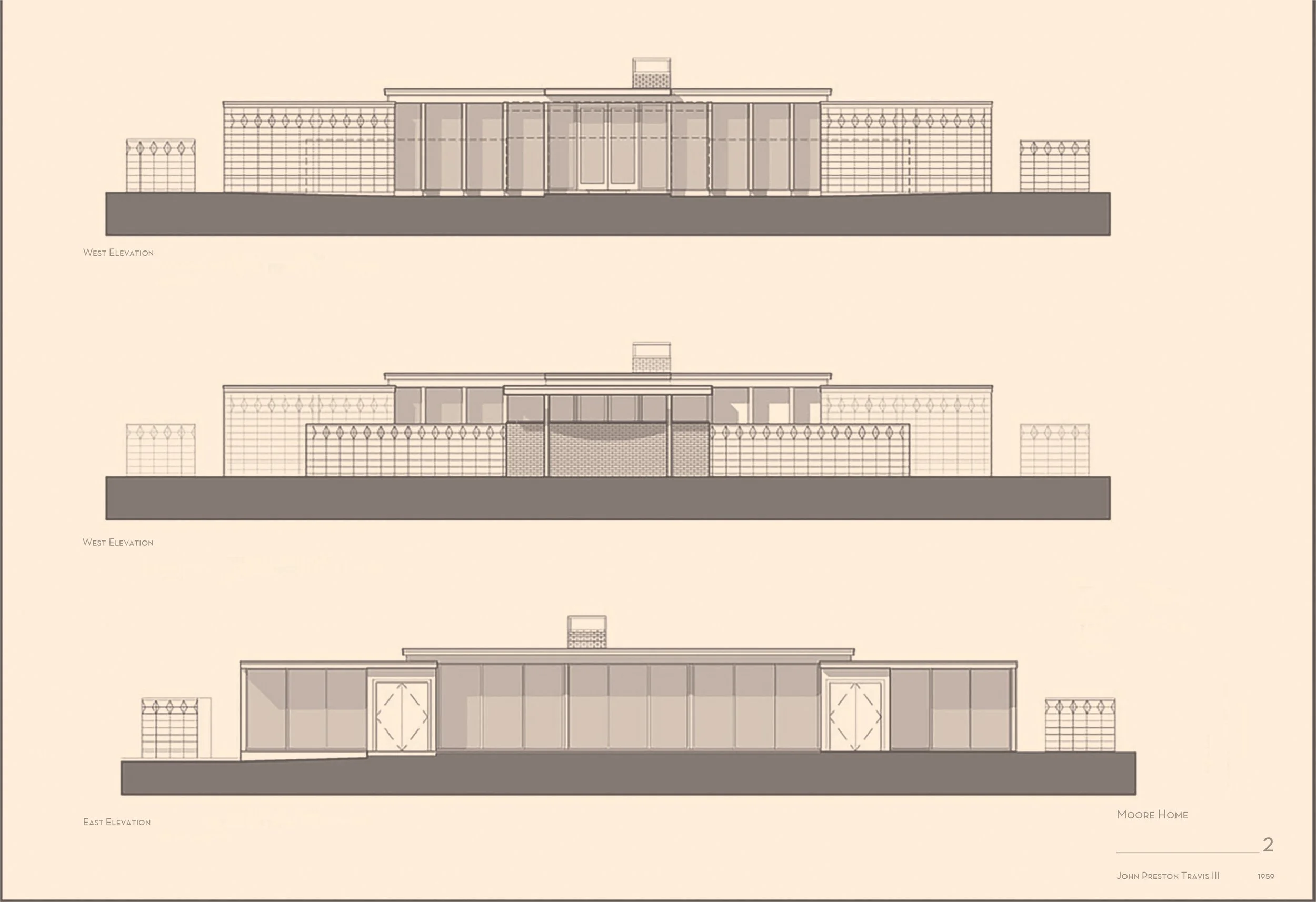
Elevation “Moore Home, John Preston Travis III architect, 1959, Mediterranean Gardens + Sylvania Dells”
The Moore Home was designed by John Preston Travis III for Plasco G Moore and Yvonne R Moore. The home on Langdale Circle, was deigned using the “Golden Ratio,” an equation that dates back to Euclid. Since ancient Greece, artists and architects have deemed the Golden Ration as being the most aesthetically pleasing, and was employed on temples including the Parthenon.
The home is over 75% glass and sits on a wooded lot along Dixon Branch. In an interview conducted before his death, Travis noted the influence of architects of the International style including Mies van der Rohe, Marcel Breuer, and Richard Neutra, he stated that he considered Langdale House among the homes that he was most proud of.
When the home was being built, Plasco G Moore was the Vice President and Executive Secretary of the Retail Furniture Association of Texas. Shortly after its completion Moore became entangled in a scandal and charged with embezzling money from the Retail Furniture Association’s pension and insurance fund. He was convicted on ten counts of wilful embezzlement and sentenced to prison for 13 months.
Elevation, Moore Home, 1959, - Highland Meadows Preservation Foundation

Rooth Home
Early photograph of the “Rooth Home, architect Carl H. Rooth, 1961, Sylvania Dells.”
Carl H. Rooth was a successful architect who specialized in commercial projects including Love Field Terminal, Collins Radio Campus, First United Methodist Church Richardson, and Temple Shalom.
In 1961 he designed a home for his family on Eden Roc in the Sylvania Dells section of Highland Meadows and commissioned Ju-Nel to build his home.
Photograph: Rooth Home, 1960’s, courtesy of Linda Rooth Bass - Highland Meadows Preservation Foundation
McCandless Home
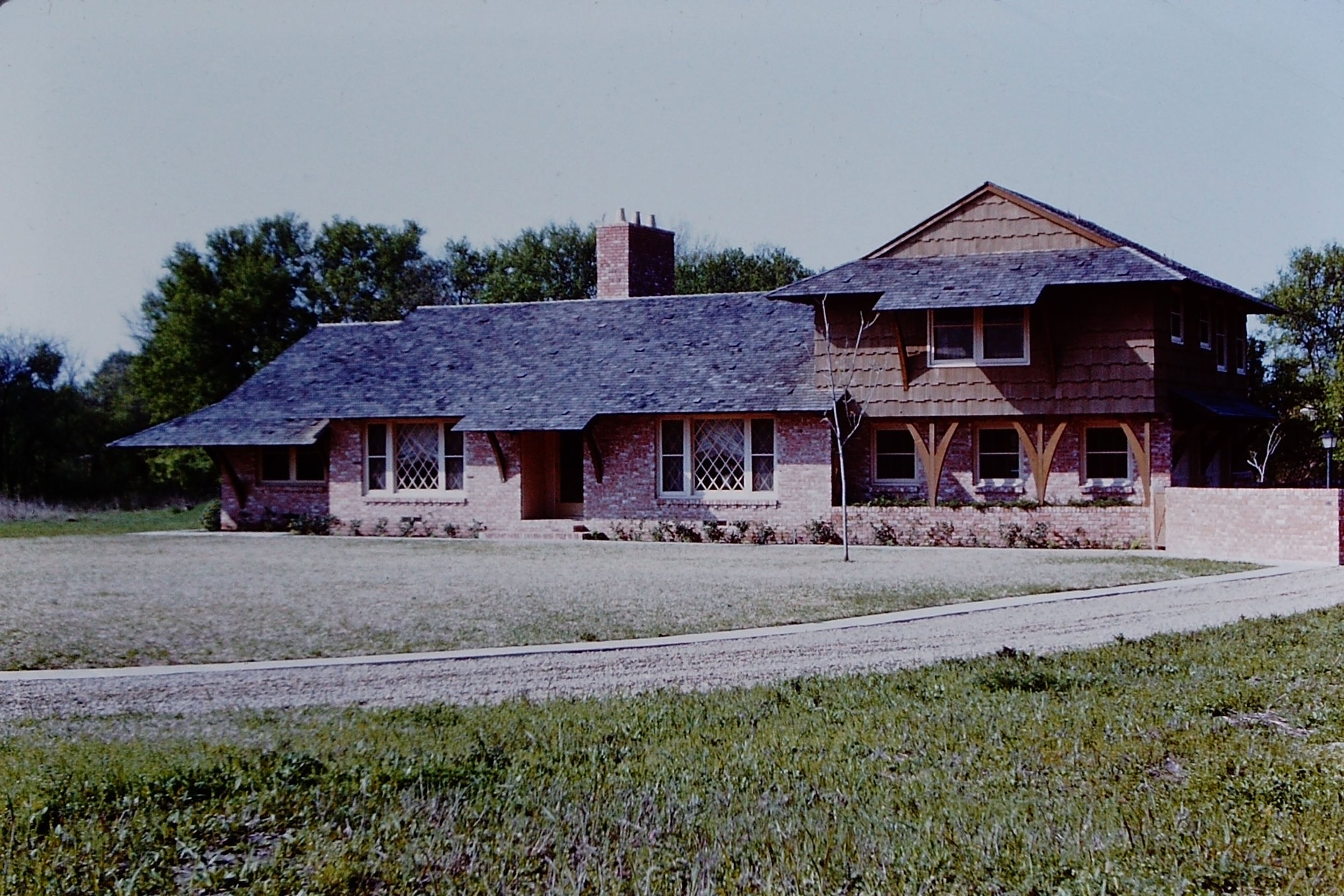
Early photograph of the “McCandless Home, architects W.E. Bennett + R.E. Richardson, 1955, Mediterranean Gardens.”
Hermon R. McCandless Jr and Ruth King McCandless approached the successful design firm of Richardson & Bennett in 1954 with opposing design opinions. One wanted a traditional home, the other wanted something more modern. Designers W. E. Richardson and R. E. Bennett delivered a Storybook Mid-Century home that fulfilled the needs of both Hermon and Ruth and three consecutive generations of their family.
Photograph McCandless Home, 1958, courtesy of Kevin McClendon - Highland Meadows Preservation Foundation
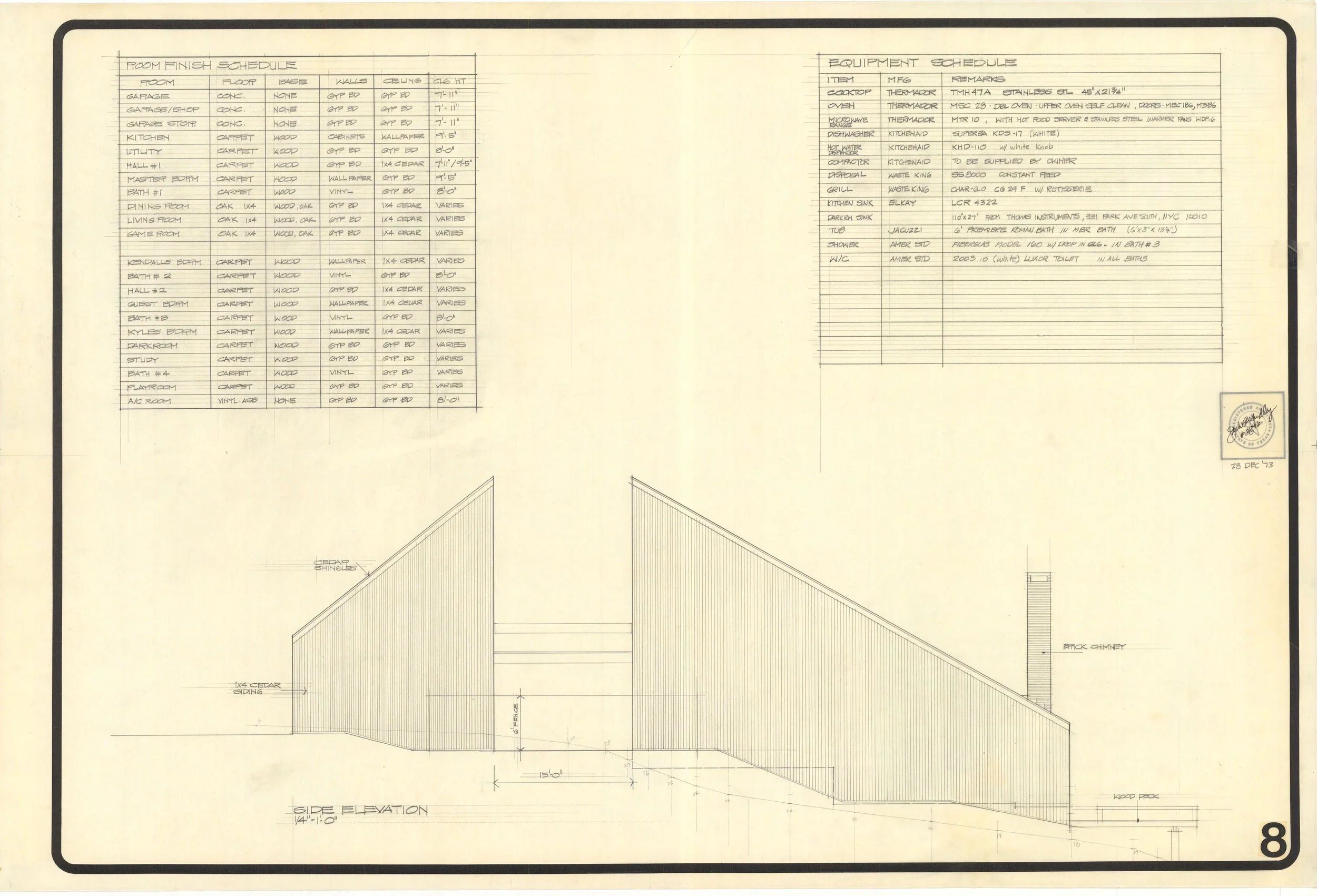
Yardley Home
Elevation “Yardley Home, architect Jack Yardley, 1974, Mediterranean Gardens + Sylvania Dells”
Jack Yardley is internationally recognized architect who is credited with designing numerous significant buildings including Reunion Arena, Plaza of the Americas,
Jack Yardley began construction on his home on Plano Parkway in the Mediterranean Gardens + Sylvania Dells section of Highland Meadows in 1974. Jack was at that time was Partner In Charge of HKS Architects, and overseeing projects around the world. The home he built consists of two buildings; onecontains garages, office, library, and dark room. The second building contains bedrooms, living room, dining room, kitchen and open entertaining space. The site specific, the home includes large expanses of glass and a vast terrace overlooking Dixon Branch.
In addition to the “Yardley Home” on Plano Parkway, Yardley also designed and built the “Mother In Law Home" on an adjacent property on Langdale Circle in 1976.
The homes designed by Jack Yardley are among the last of the Mid-Century homes built in Mediterranean Gardens + Sylvania Dells.
Elevation, Yardley Home, 1974, Mediterranean Gardens + Sylvania Dells, courtesy of Jack Yardley - Highland Meadows Preservation Foundation
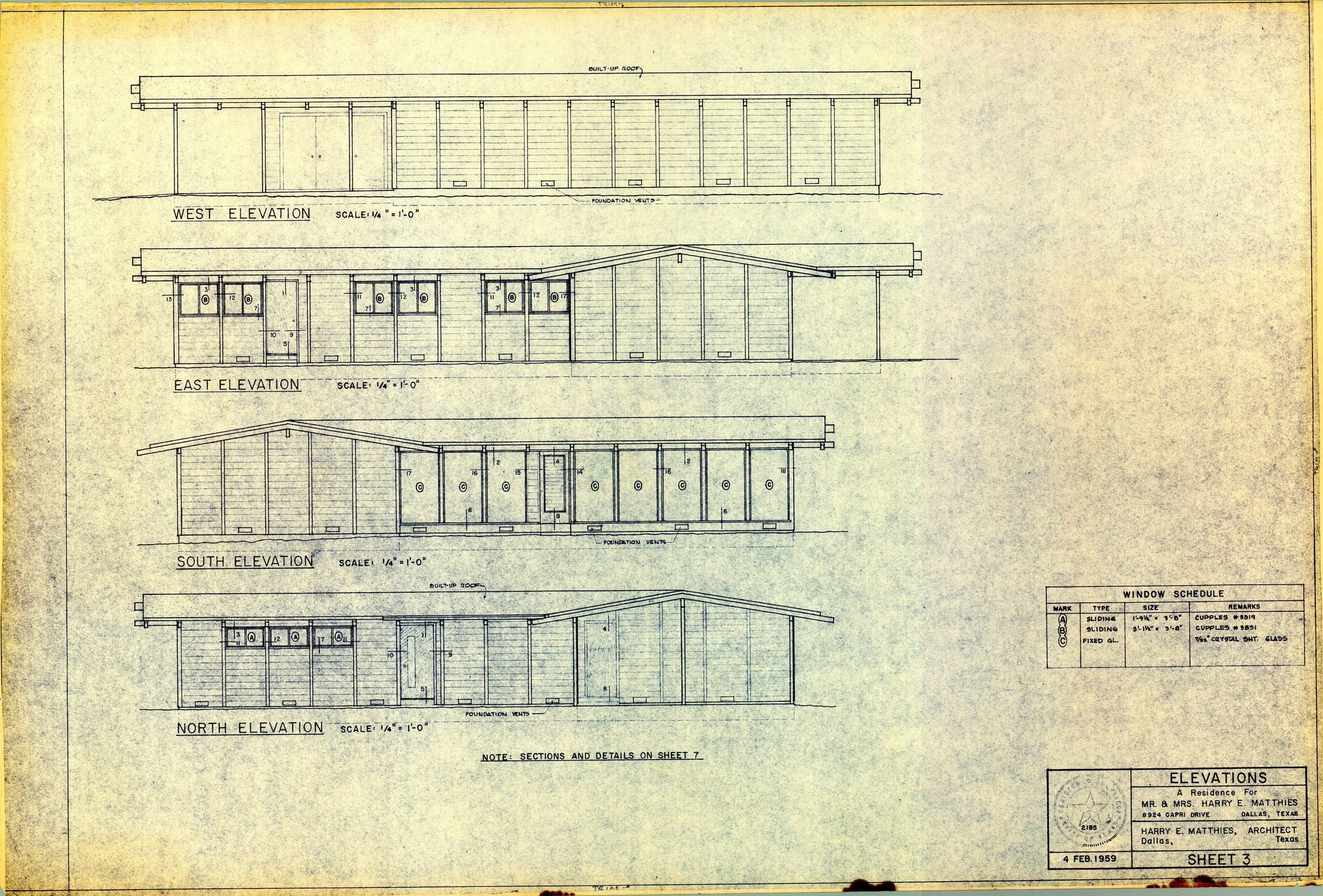
Matthies Home
Elevations “Matthies Home, architect Harry E Matthies, 1959, Mediterranean Gardens + Sylvania Dells”
Architect Harry Matthies designed his personal home on Capri Drive in 1959. Inspired by his years living in Japan post World War II and a passion for Japanese architecture, he designed a home using 4×8 grid format that fused traditional Japanese design with Mid-Century Modern aesthetics.
The home incorporated Japanese decorative elements like shoji screens, tatami rugs, and floor based wabi sabi furnishings. A wooden veranda called an engawa, runs along the perimeter of the home and serves as a transitional area between the homes interior and the garden.
Elevations, Matthies Home, 1959, courtesy of Harry E. Matthies Archive - Highland Meadows Preservation Foundation
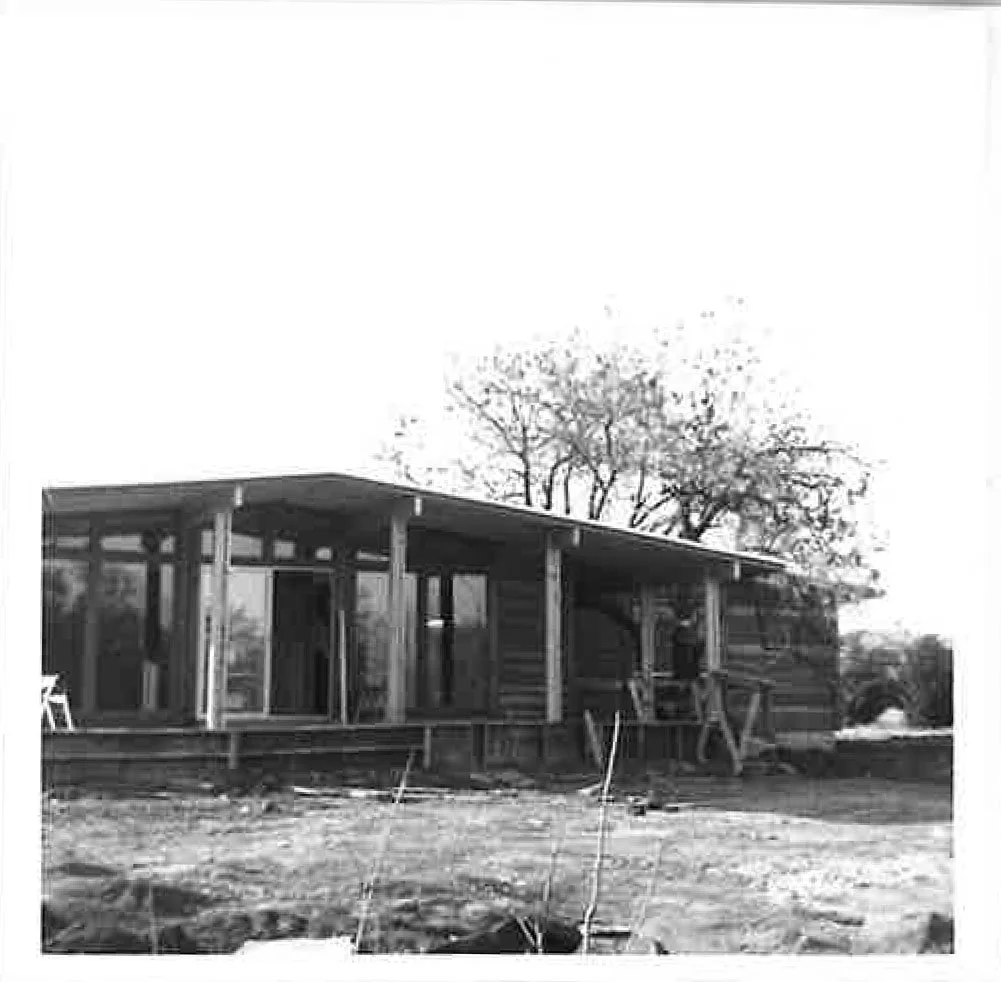
Hershey Home
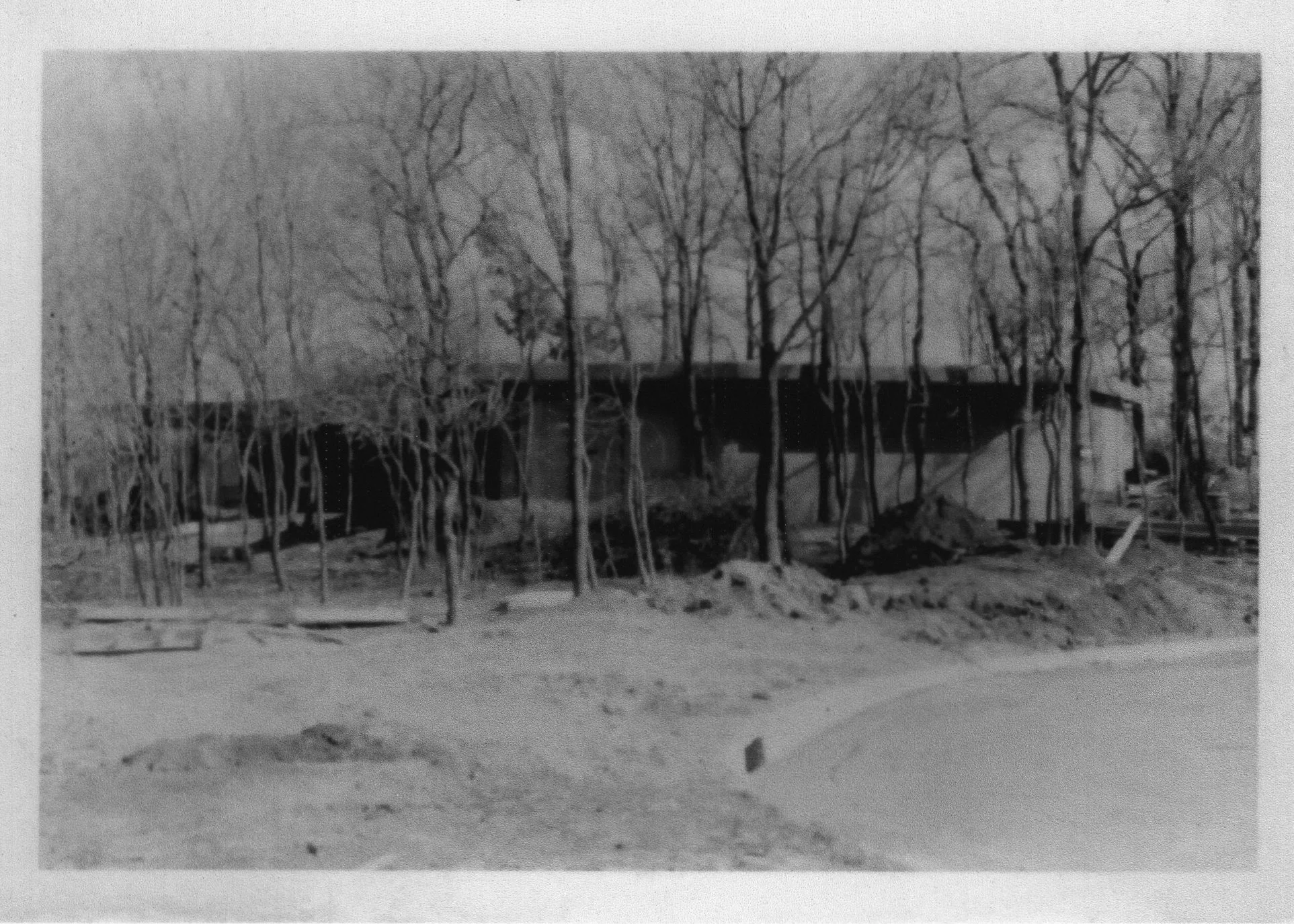
Early photograph of the “Hershey Home, Ju-Nel, 1965, Mediterranean Gardens”, East elevation facing Dixon Branch, taken when it was under construction.
R. Keith Hershey was a successful advertising executive for companies including Zales, Woolco, Greene Webb Associates Inc., and also had his own advertising firm. Keith met his wife Remy when he was working as a retail account manager for the Dallas Times Herald and Remy was working in the Times Herald’s Art Department. They were married in 1951 and a few years later were joined by their daughter Emily-Louise.
R. Keith Hershey and Remy Hershey commissioned the architecture firm Ju-Nel to design and build their home on Plano Parkway in 1965. The Hershey Home had all of the signature details you would expect in a Ju-Nel; including, sloped roof-lines, redwood clad exterior, interior paneled walls, quarry tile floors, large expanses of of glass facing nature, and thoughtful site-specific design. Rem’s green thumb cultivated a “Garden of Eden” of plants and trees that embraced the property and added to the property’s allure. The Hershey’s lived in the home they built and loved until Remy passed away in 2003 followed by Keith in 2007.
The Hershey Home was sold after Keith’s death and subsequently demolished by the new owners in 2009. Ju-Nel homes are very rare with only 147 homes built, making the loss of this architecturally significant home is especially painful.
Photograph: Hershey Home under construction,1965, courtesy of Emily Louise Hershey Philp - Highland Meadows Preservation Foundation
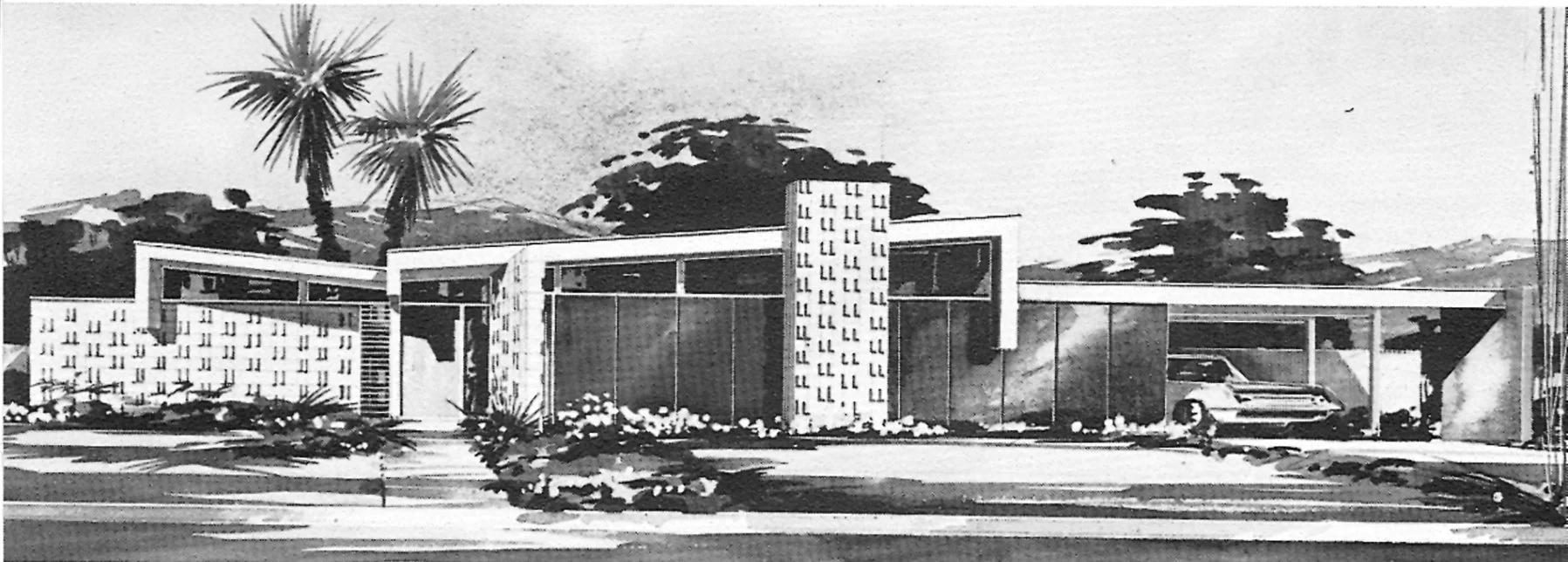
McDonald Home
Completed in 1958, the McDonald Home, by architect William Krisel, was built for Wilbur “Tex” McDonald and his wife Elizabeth McDonald. Wilbur was the “son” in Wilbur McDonald and Son Furniture which operated a showroom at the Dallas Market Hall, Elizabeth was a successful interior designer who was nationally recognized.
Illustration: “McDonald Home, architect William Krisel, 1958, Mediterranean Gardens” - Highland Meadows Preservation Foundation
Box Home
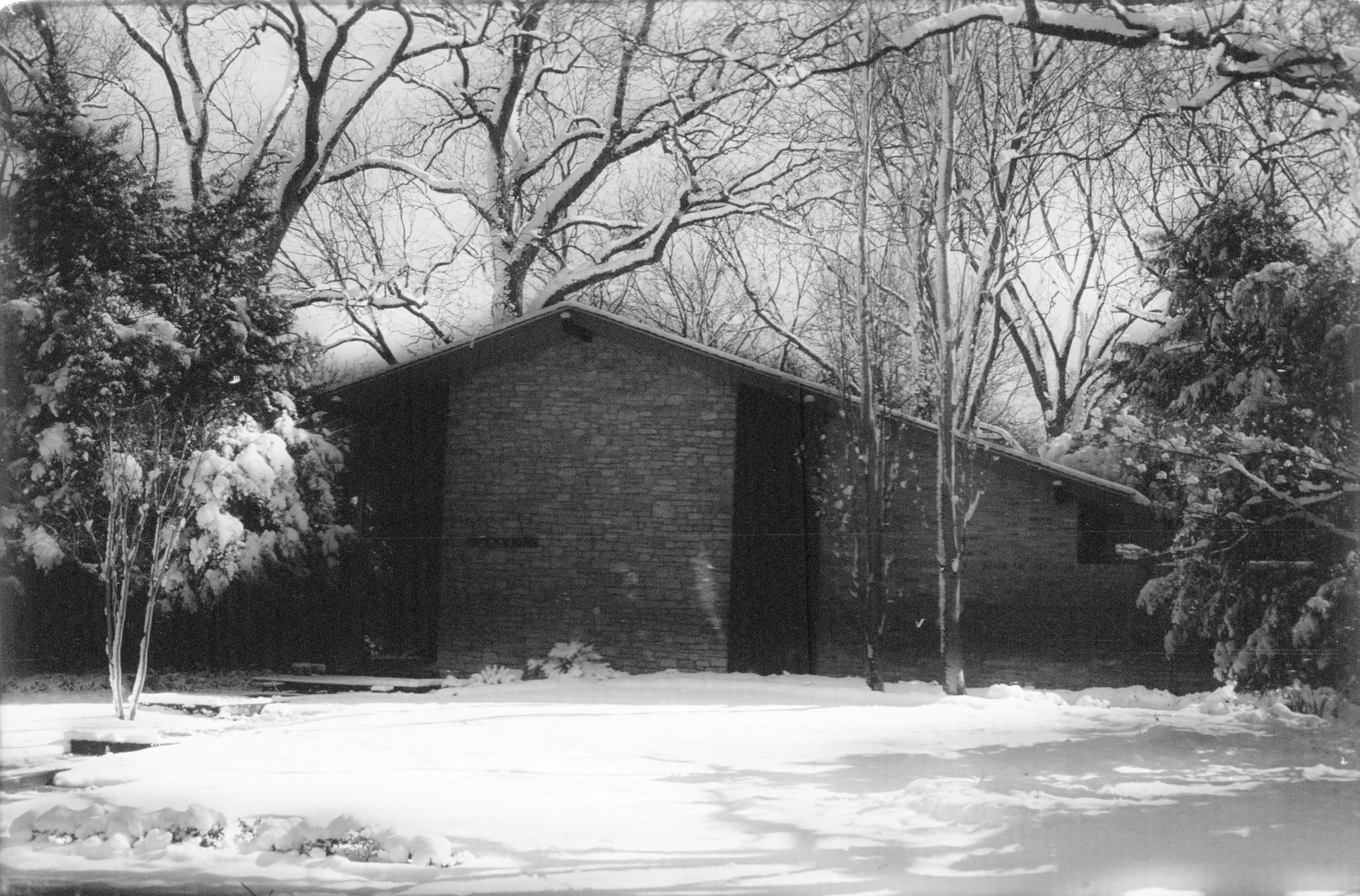
The Box Home was designed and built by Max Wieland in 1961 for Euel and Betty Box.
Max Wieland was born in Dietingen, Germany and immigrated to Texas in 1956, where he started a successful home building business.
The Box Home, is regarded as one of his most significant designs. The home includes flagstone floors, Texas sandstone block walls, exposed Canadian fir beams and large expanses of glass.
Photograph of Box Home, 1966, by Kent Broyhill, courtesy of Debby Gray and Brad Broyhill - Highland Meadows Preservation Foundation
Broyhill Home
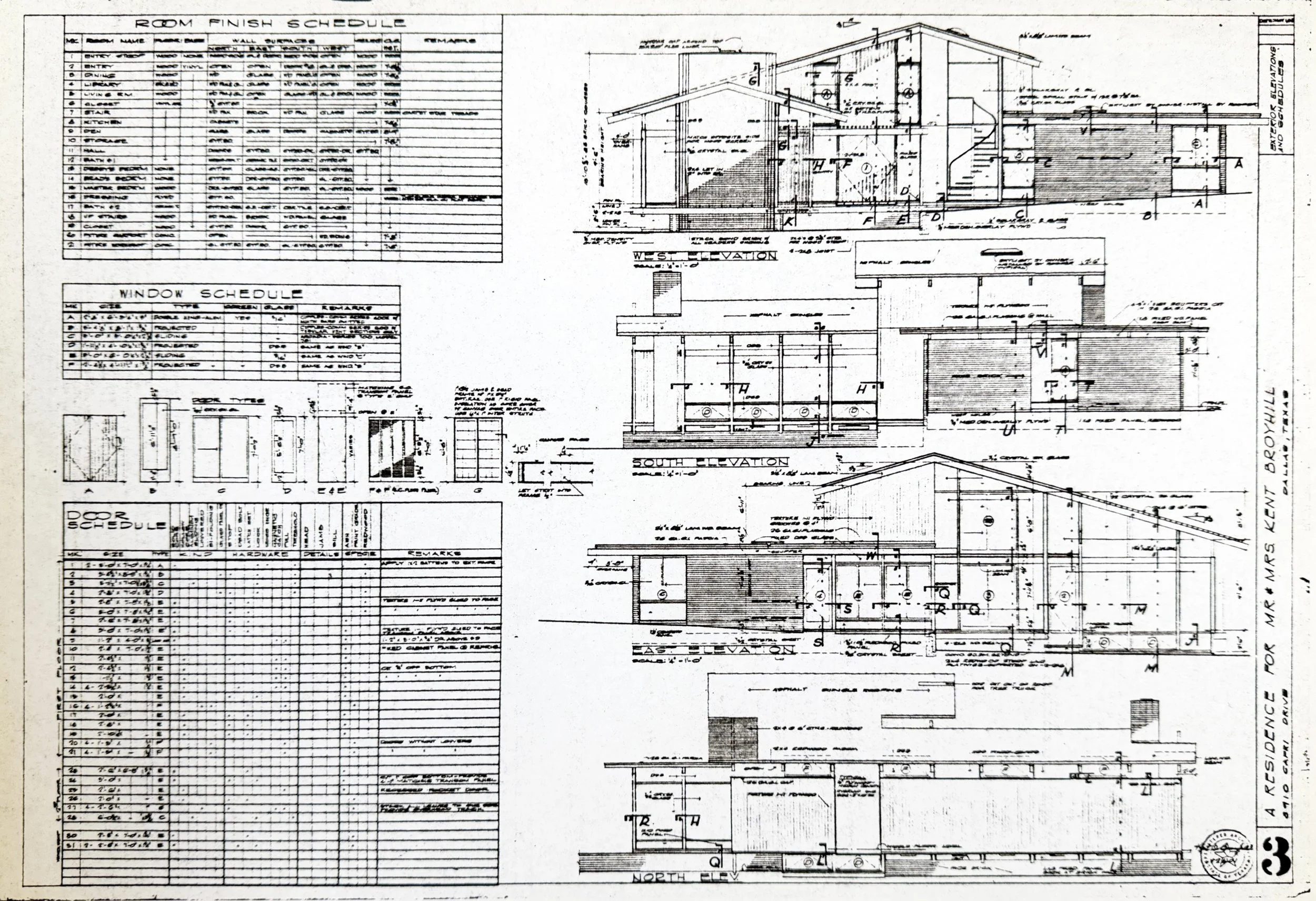
Architect Kent Broyhill designed the Broyhill Home in 1966 for his family. Broyhill lived in the home with his family until the early 1970’s when they moved to Hong Kong where he had accepted a commission to work on the Taikoo Shing, which was the worlds largest residential development at that time.
The Broyhill Home has been described as “a Japanese lantern that floats among the trees.” Broyhill painstakingly designed the home around each tree on site and went to great lengths to preserve each one.
The house boasts a shallow basement which was the result of an over aggressive foundation crew… Broyhill embraced the mistake and went one step further, hiring six grave diggers to further excavate the “basement.”
A unique feature of the home is a trap door under the massive living room fireplace that allows for ashes to be emptied directly into the basement.
In keeping with the times, during the late 60’s the Broyhill Home hosted many parties for artists and architects with live music and dancing.
Broyhill always considered the 1966 Broyhill Home to be one of his greatest designs.
Elevations, “Broyhill Home, Architect Kent Broyhill, 1966, Sylvania Dells”, courtesy of Debby Broyhill Grey - Highland Meadows Preservation Foundation
Innocenti Home
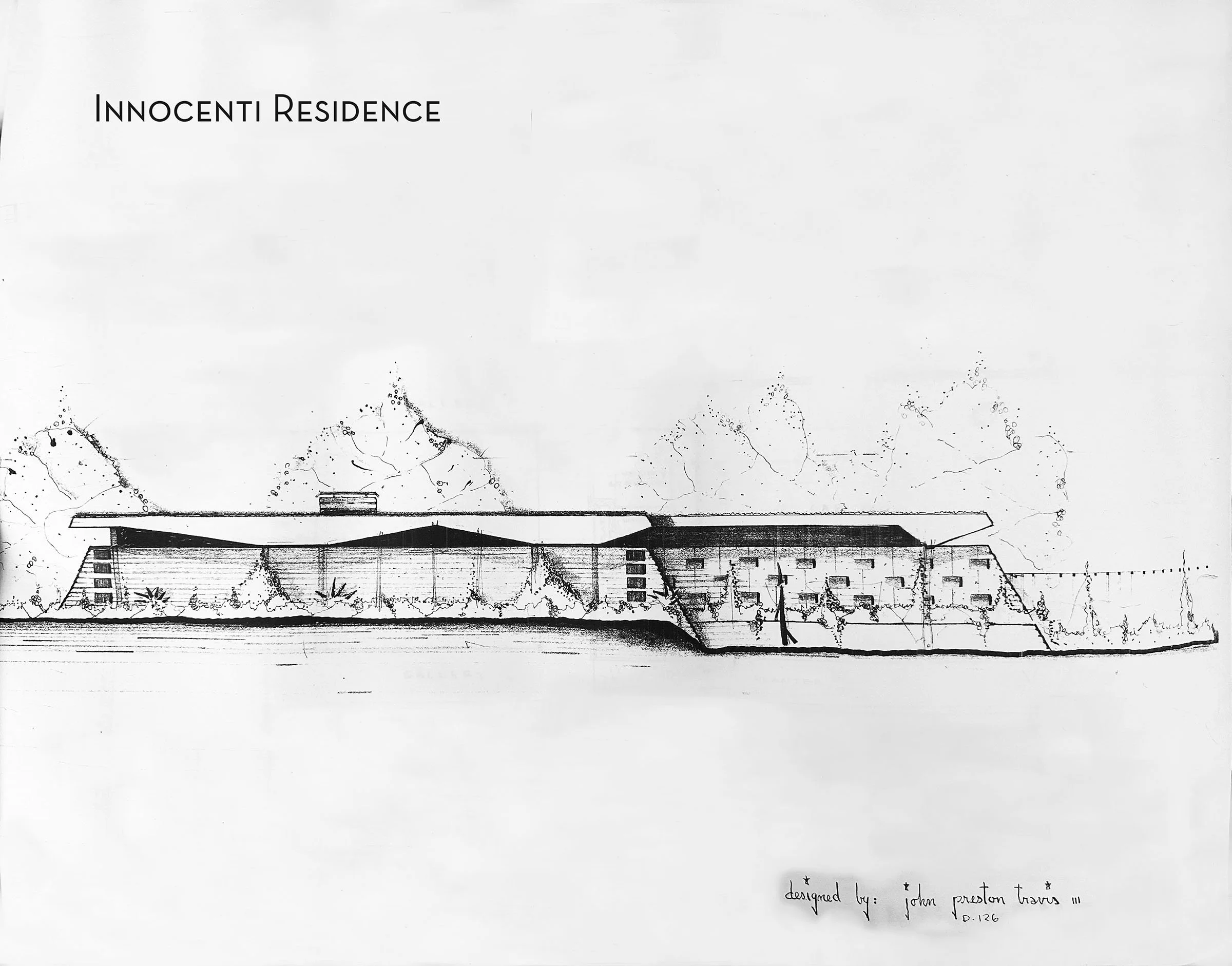
Innocenti Home was built and designed in 1959 by John Preston Travis III for clients Albert and Gladys Innocenti and was meant to blend the Innocentis love of modern architecture and respect for Asian design . The result was lauded for its innovative concept and was warmly received in the press and celebrated by architects, designers and editors of the day. The home incorporates a great variety of materials including glass, concrete tile, breeze block, plastic, wood, mosaic tile, pink terrazzo, vibrant colored paint, and Mexican brick.
Original Illustration of the “Innocenti Home, Architect John Preston Travis III, 1959, Sylvania Dells,” courtesy of Brian & Katherine Bishop - Highland Meadows Preservation Foundation
Mullin Home
J.M. Zollicoffer & Associates designed the Mullin Home in 1966 for Charles W Mullin Jr and his wife Patricia Mullin.
Zollicoffer garnered recognition throughout the 19050’s for homes he built with both Leland Lee and Ike Harris. Newspaper articles from the day describe his homes as comfortable and modern. Luxury multi family followed in Dallas and Irving solidifying Zollicoffer’s reputation as an innovative designer.
Charles Mullin Jr was a wholesale furniture representative and Patricia was a passionate about gardening, birds, and butterflies.