
A Letter From President Lyndon Johnson, October 1967
A Letter from President Johnson to Texas Architects, The Texas Architect, October 1967
I extend greetings to the architects of the Americas: the artists and the builders who create and sustain the cities of the New World.
We have learned - too often through the hard lessons of neglect and waste - that if man brutalizes the landscape, he wounds his own spirit; if he raises buildings which are trivial or offensive, he admits to a poverty of imagination; if he creates joyless cities, he imprisons himself.
And we have learned that an environment of order and beauty can delight, inspire and liberate men.
It is your responsibility as architects to communicate these essential truths.
You determine, in large part, the shape of our cities. Those cities, in turn, determine the shape of our lives - so profoundly that future generations will ponder our architecture and learn our deepest values.
Your work, therefore, has meaning which endures beyond the life of the most lasting buildings, and you have a great task: to influence men to use their technical and commercial power to beautify the earth - not to blemish it.
May you pursue that task with energy and vision. May your success be so great that when judgement of the future is made, ours will be remembered as an Age of Beauty. - Lyndon B. Johnson, President of the United States, June 7, 1965
Source: The Texas Architect, 1967 - Highland Meadows Preservation Foundation
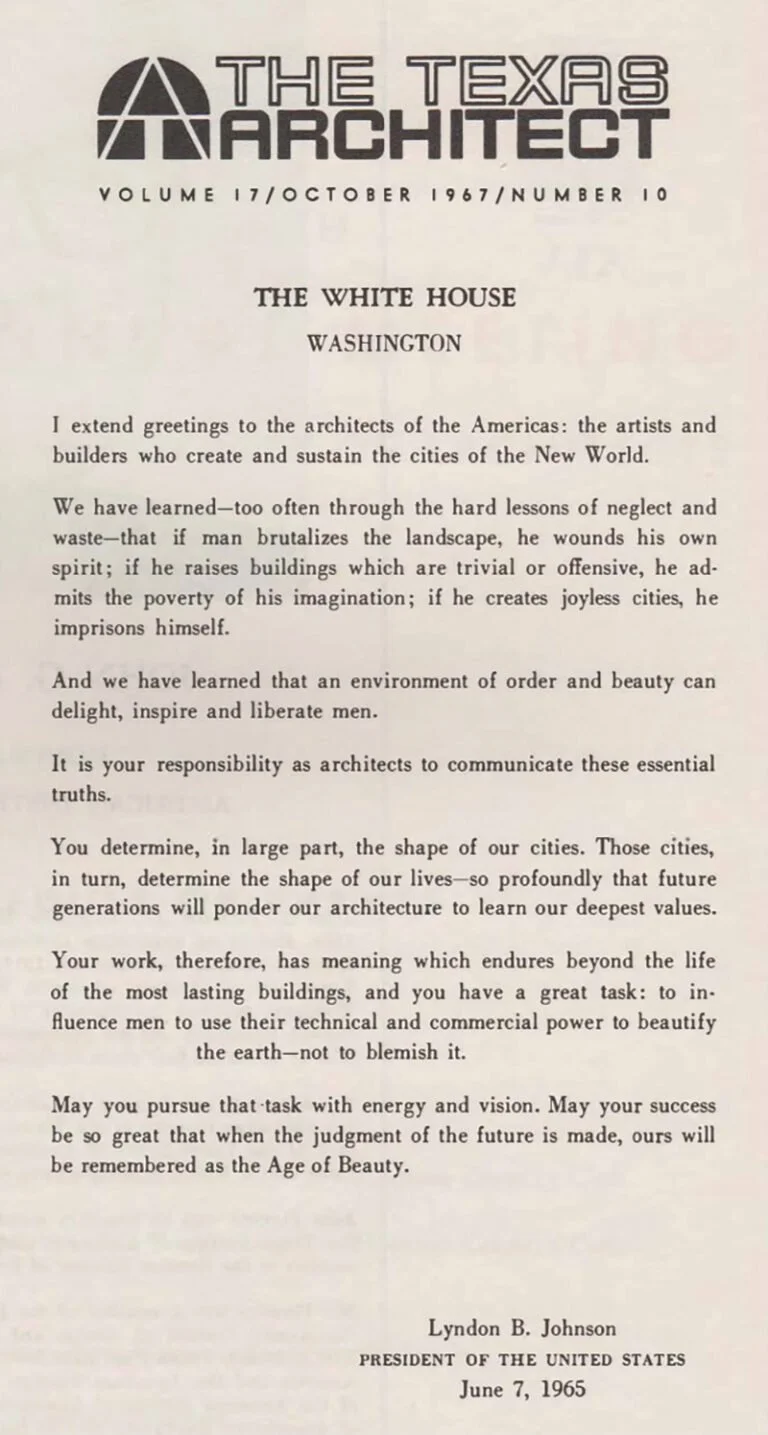
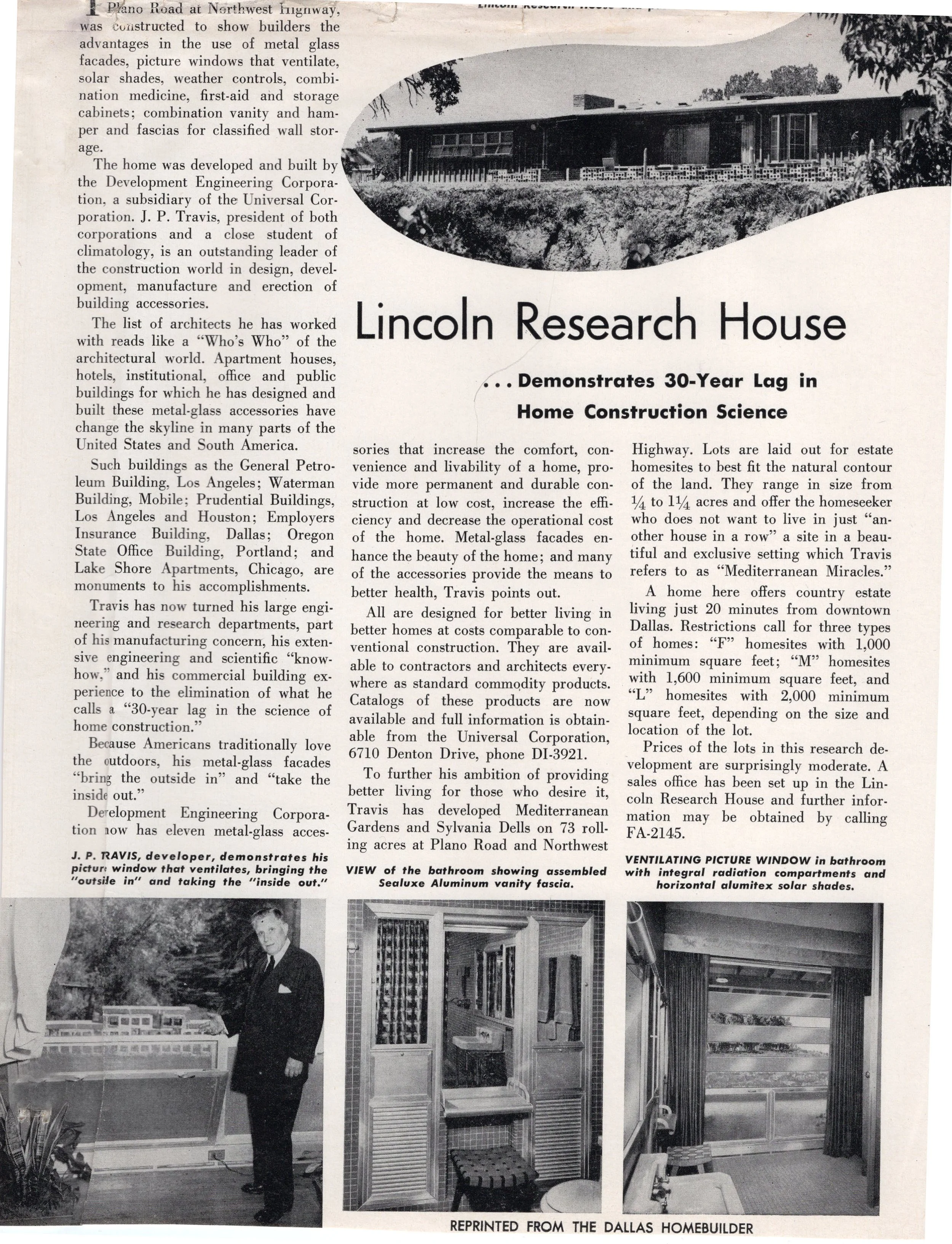
Lincoln Research House - Demonstrates 30-Year Lag in Home Construction Science
from Dallas Home Builder, 1951
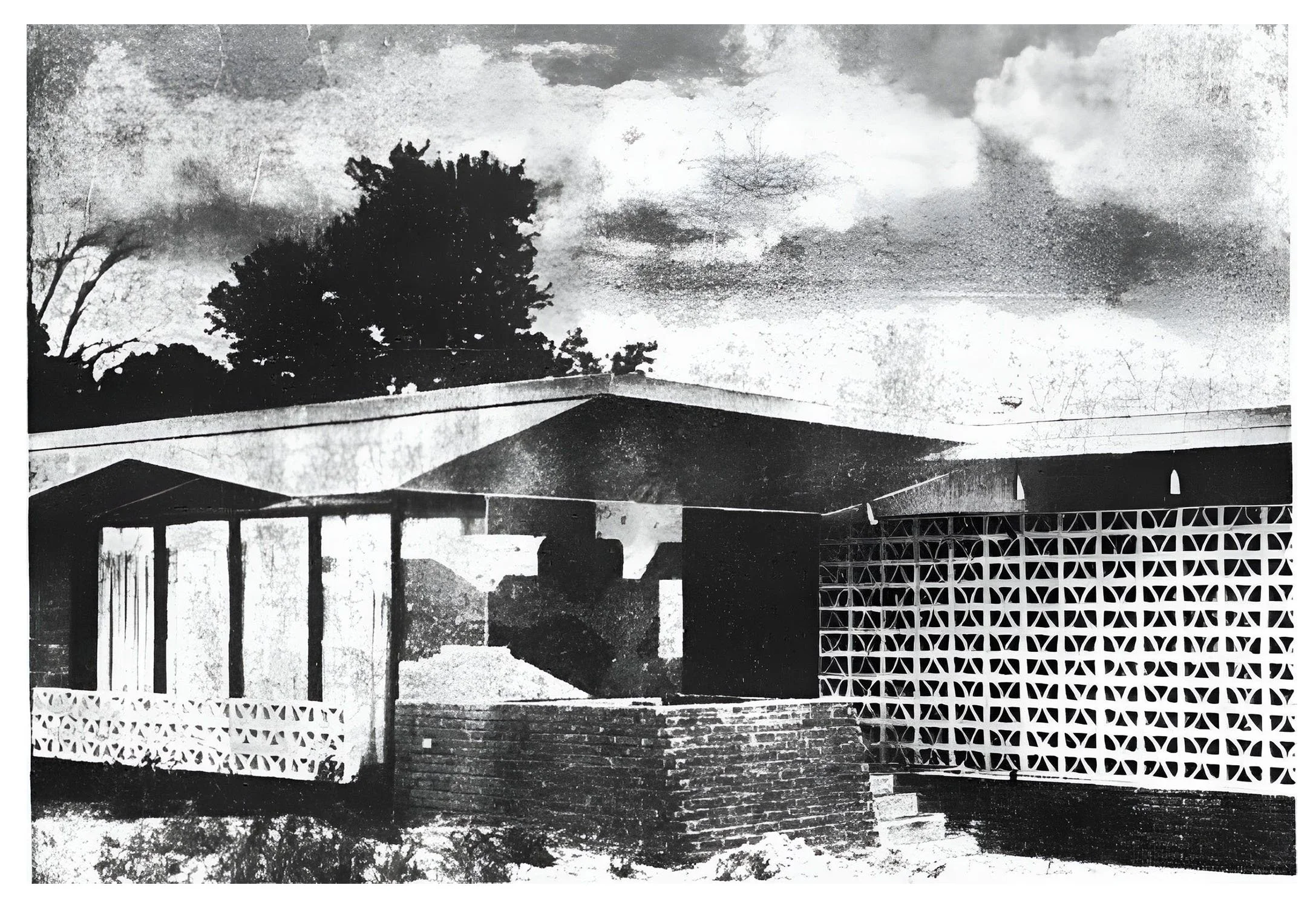
The Lincoln Research House, Plano Road at Northwest Highway, was constructed to show builders the advantages in the use of metal and glass facades, picture windows that ventilate, solar shades, weather controls, combination medicine, first aid, and storage cabinets; combination vanity and hamper and fascias for classified wall storage.
The home was developed and built by the Development Engineering Corporation, a subsidary of the Universal Development Corporation. J. P. Travis Ii, president of both corporations and a close student of climatology, is an outstanding leader in the construction world in design, development, manufacture and erection of building accessories.
The list of architects he has worked with reads like the “Who’s Who” of the architectural world. Apartment houses, hotels, institutional, office, and public buildings for which he has designed and built these metal-glass accessories have changed the skyline in many parts of the United States and South America.
Such buildings as the General Petroleum Building, Los Angeles; Waterman Building, Mobile; Prudential Buildings, Los Angeles and Houston; Employers Insurance Building, Dallas; Oregon State Office Building, Portland; and Lake Shore Apartments, Chicago, are monuments to his accomplishments.
Travis has now turned his large engineering and research departments, part of his manufacturing concern, his extensive engineering and scientific “know how.” and his commercial building experience to the elimination of a “30-year lag in the science of home construction.”
Because Americans traditionally love the outdoors, his metal-glass facades “bring the outside in” and “take the inside out.”
Development Engineering Corporation now has eleven metal glass accessories that increase the comfort and livability of a home, provide more permanent and durable construction at low cost, increase the efficiency and decrease the operational cost of the home. Metal-glass facades enhance the beauty of the home; and many of the accessories provide the means to better health, Travis points out.
All are designed for better living in better homes at costs comparable to conventional construction. They are available to contractors and architects everywhere as standard commodity products. Catalogs of these products are now available and full information is obtainable from the Universal Corporation, 6710 Denton Drive, phone DI-3921.
To further his ambition of providing better living for those that desire it, Travis has developed Mediterranean Gardens + Sylvania Dells on 73 rolling acres at Plano Road and Northwest Highway. Lots are laid out for estate homesites to best fit the natural contour of the land. They range in size from ¼ to 1 ¼ acres and offer the homeseeker who does not want to live in just “another house in a row” a site in a beautiful and exclusive setting which Travis refers to as “Mediterranean Miracles.”
A home here offers country estate living just 20 minutes from downtown Dallas. Restrictions call for three types of homes: “F” homesites with 1,000 minimum square feet; “M” homesites with 1,600 minimum square feet; and “L'“ homesites with 2,000 minimum square feet, depending on the size and location of the lot.
Prices of the lots in this research development are surprisingly moderate. A sales office has been set up in the Lincoln Research House and further information may be obtained by calling FA-2145.
Dallas Homebuilder Magazine, 1952, courtesy of Lincoln Research House - Highland Meadows Preservation Foundation
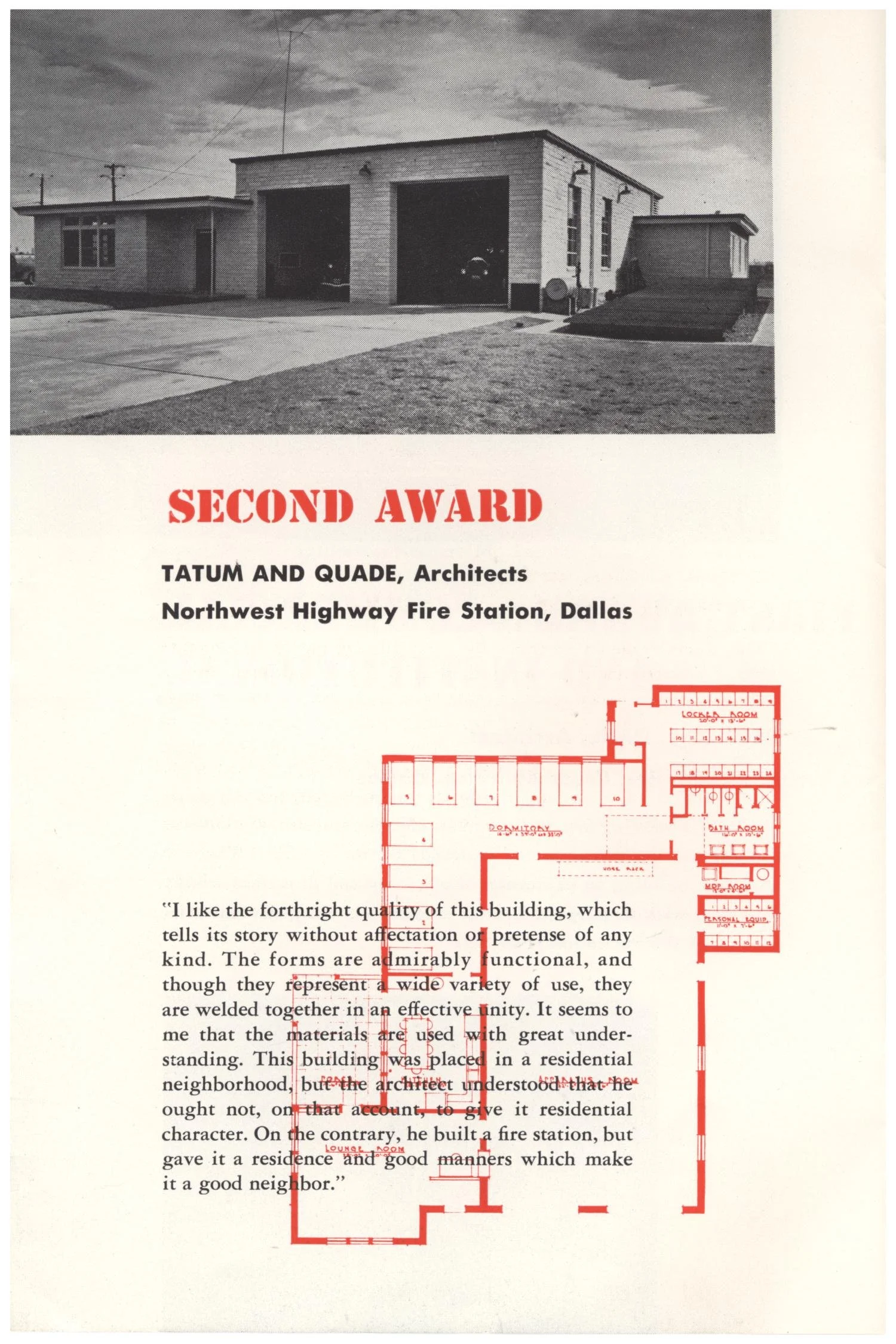
Fire Station no. 48
Fire Station no. 48, which serves Highland Meadows, was honored upon its completion in 1950 in an exhibition of drawing, photographs and plans by members of the Dallas Chapter of the American Institute of Architects. The exhibition, held at the Dallas Museum of Fine Arts, recognized station no. 48 that was designed by the firm Tatum + Quade: “I like the forthright quality of this building; which tells its story without affectation or pretense of any kind. The forms are admirably functional, and though they represent a wide variety of use, they are welded together in an effective unity. It seems to me that the materials are used with a great understanding. This building was placed in a residential neighborhood, but the architect understood that he ought not. on that account, give it a residential character. On the contrary, he built a fire station, but gave it a residence and good manners which make it a good neighbor.
Exhibition Catalog: Architecture 1950, Dallas Museum of Art - Highland Meadows Preservation Foundation
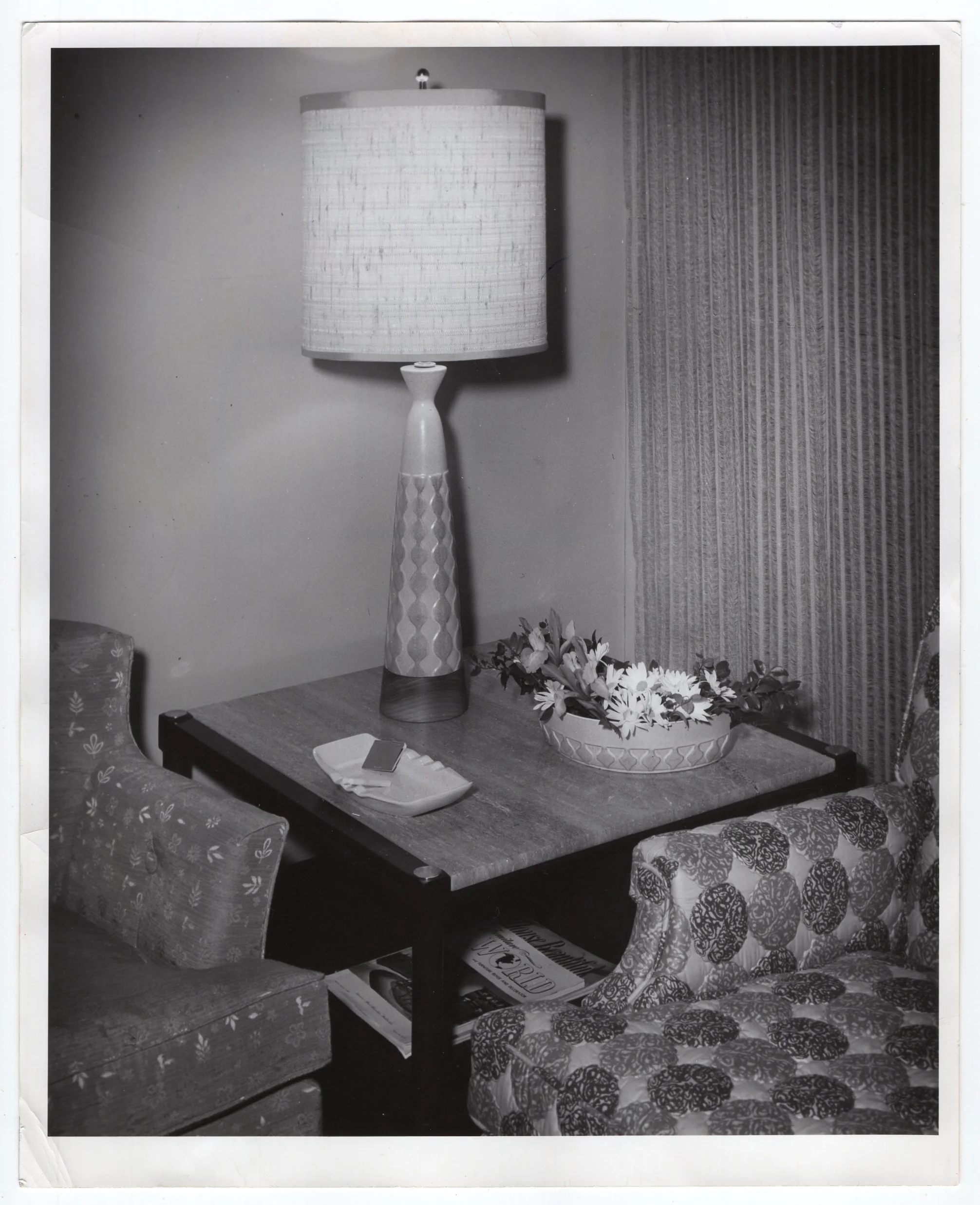
Successful Handling of an Open Plan
by Jeanne Barnes - Home Editor of The News / October 27, 1958
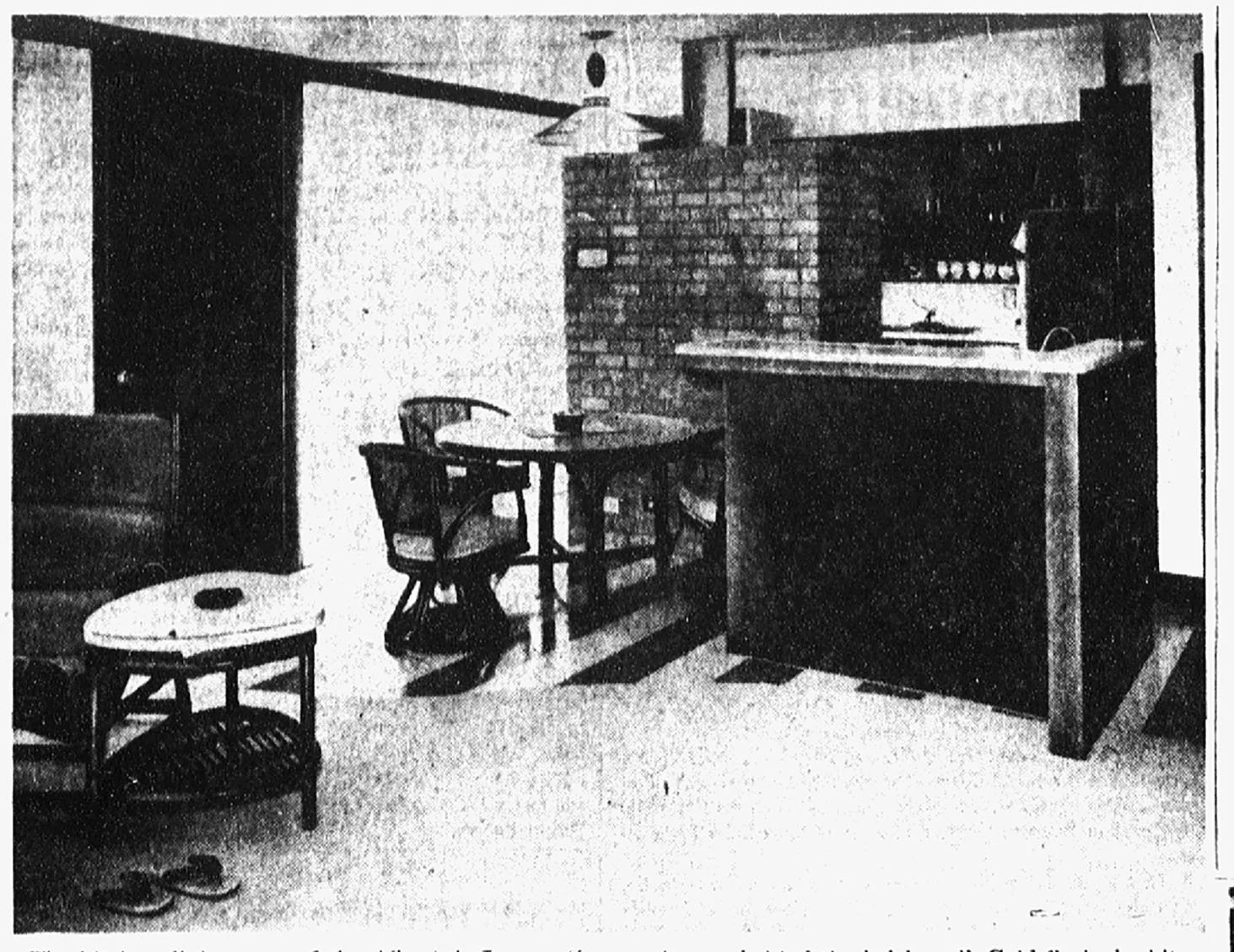
A small house designed on the so-called open plan offers as great a challenge to decorating as a large one with many rooms.
For in a small area must be accomodated sufficient seating space, comfortable viewing of TV , conversation or reading groups, and dining space.
Such a problem, successfully handled, is found in the home of the C. C. Kirkpatricks, 8612 Rolling Rock Lane, in the Lakeland Hills area off Northwest Highway. It was solved by Miss Joyce K Winn, AID, of Anderson’s Studio.
The first steps in decorating the living area were to paint all of the walls and ceiling in a pale celadon green and carpet the area in an oatmeal textured wool. Matching green silk gauze draperies cover the two large and one small windows in the area.
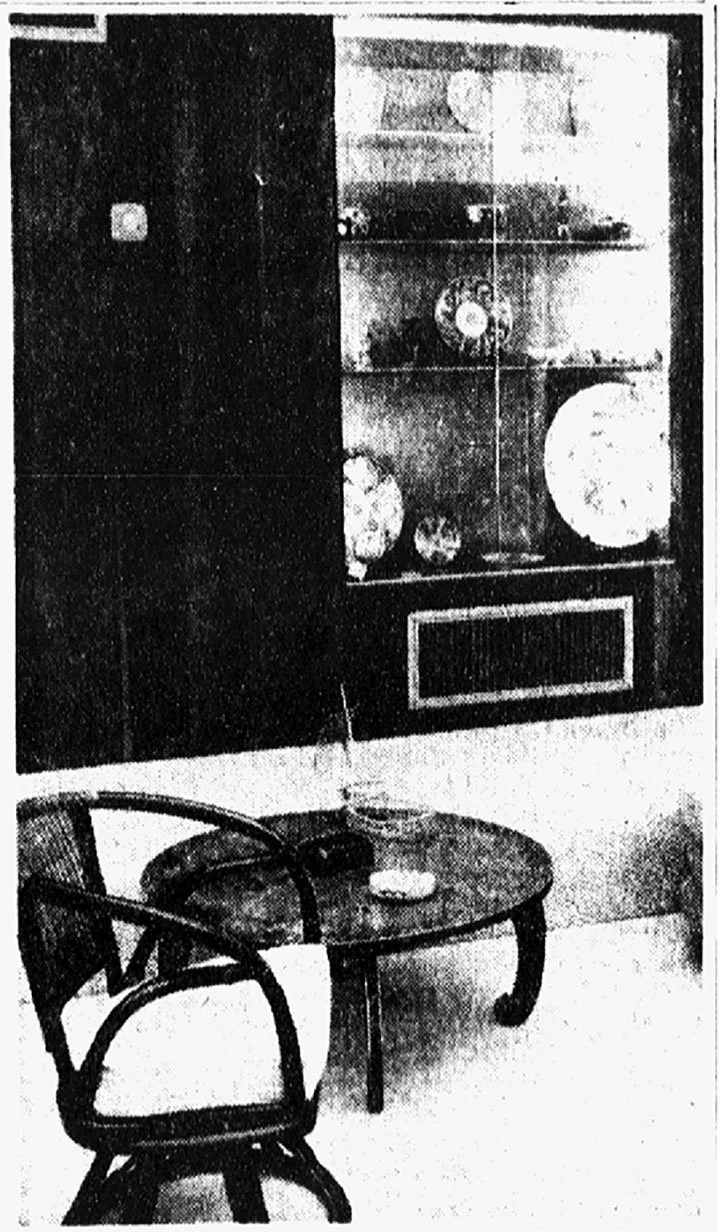
A walnut and cane, four panel screen divides the kitchen also painted green, from the dining area. The dining room is furnished in Duncan-Phyfe-styled mahogany with an embroidered effect fabric in peacock and white covering the chair seats.
The West wall of the living room, actually the front wall of the house facing the street is brick, forming an interesting textured background for the 3-cushion beige sofa. Above the sofa hangs a horizontal painting of Gothic court figures in processional. It is done in gold, black, and persimmon color.
A pair of square tables, on either side of the sofa and a square-topped cigarette table under the window provide an unusually large amount of table space. One of the square tables has a travertine inset top and a cane bottom shelf, which gives an interesting texture contrast.
The TV is placed against the storage wall between the living room and kitchen, facing the sofa. At right angles to the sofa is a low, square loubge chair covered in peacock and olive on white print. Facing the sofa is a peacock upholstered walnut chair and its mate sits at the end of the long walnut table by the window.
Behind the chair, against the wall, is a mahogany record cabinet. Above it hangs a group of colorful Spanish cith paintings in wide white frames. Facing the front door is an unusual 4-foot-high teak placque to which peacock enamel on copper disks are attached and at the top, an electric clock with copper face.
The house has an unusual bathroom, one unit opening from the hall, the other from the master bathroom; the two are adjoined by the tub area. In the opening from the hall, folding wood doors conceal laundry equipment. The whole area is carpeted in yellow cotton.
Photograph: Living Room Styled with Simplicity, by Nowell Ward, 1958 - Highland Meadows Preservation Foundation
My Mid-Century Modern Home
by Steve Chambers, Architect
When I heard that Preservation Texas inaugurated its first ever Texas Modern Month, being celebrated the entire month of April 2011, I wanted to share my experience in the Mod-Century Modern home in which I lived from the age of six until I left home for college. I grew up in Dallas in a Mid-Century Modern home built by my parents and designed by the late architect, Joe Gordon, in 1952. I called the land on which it was built, “d’Cowboy land, because at this time in East Dallas, there were very few houses with wide expanses. We had over 50 pecan trees on the lot and plenty of land to dig a maze of tunnels in which I got lost in my imagination.
On long summer days, my mother packed a lunch for me and I didn’t see her again until it was almost dark. Our home was perfect for our family of four: informal, few walls, lots of light, several changes in ceiling height. This home was unusual in that it was designed by an architect and that it was very modern for its time. I remember looking over the blueprints and being amazed that a person could communicate with flat drawings and create a three dimensional object in which people could live so efficiently, yet remain so comfortable. Still, for me, it was just my house. I did not understand the influence it had on my life until much later, both in selection of a career as an architect and the development of a personal aesthetic and visual vocabulary of design.
The home is still in our family, and though my parents kept it in good shape, it required loving restoration by my sister and her husband. They removed what my mother called “wall to wall” carpet and refinished the beautiful oak strip flooring below it. It still has the original trim details, floor to ceiling glass (something that seems difficult to execute today), steel casement windows, generous redwood overhangs, and the salmon colored common brick. Even then, architects somehow understood the shading effect that generous eaves could provide to reduce the heat load of the hot Texas sun. This was prior to the “new” sustainability movement, it was just intelligent design.
Inspired by Houston Mod, Preservation Texas and partners organized the Texas Modern Month concept to raise awareness of the need to preserve locally, regionally, and nationally significant examples of modern buildings, sites, and neighborhoods in Texas. Preservation Texas hopes all communities take time to celebrate architecture, and landscape design of the 1950’s, 1960’s, and 1970’s. Mush of this unappreciated architecture is often torn down to make way for bigger developments and larger homes. - Steve Chambers, Architect
Source: Steve Chambers - Highland Meadows Preservation Foundation
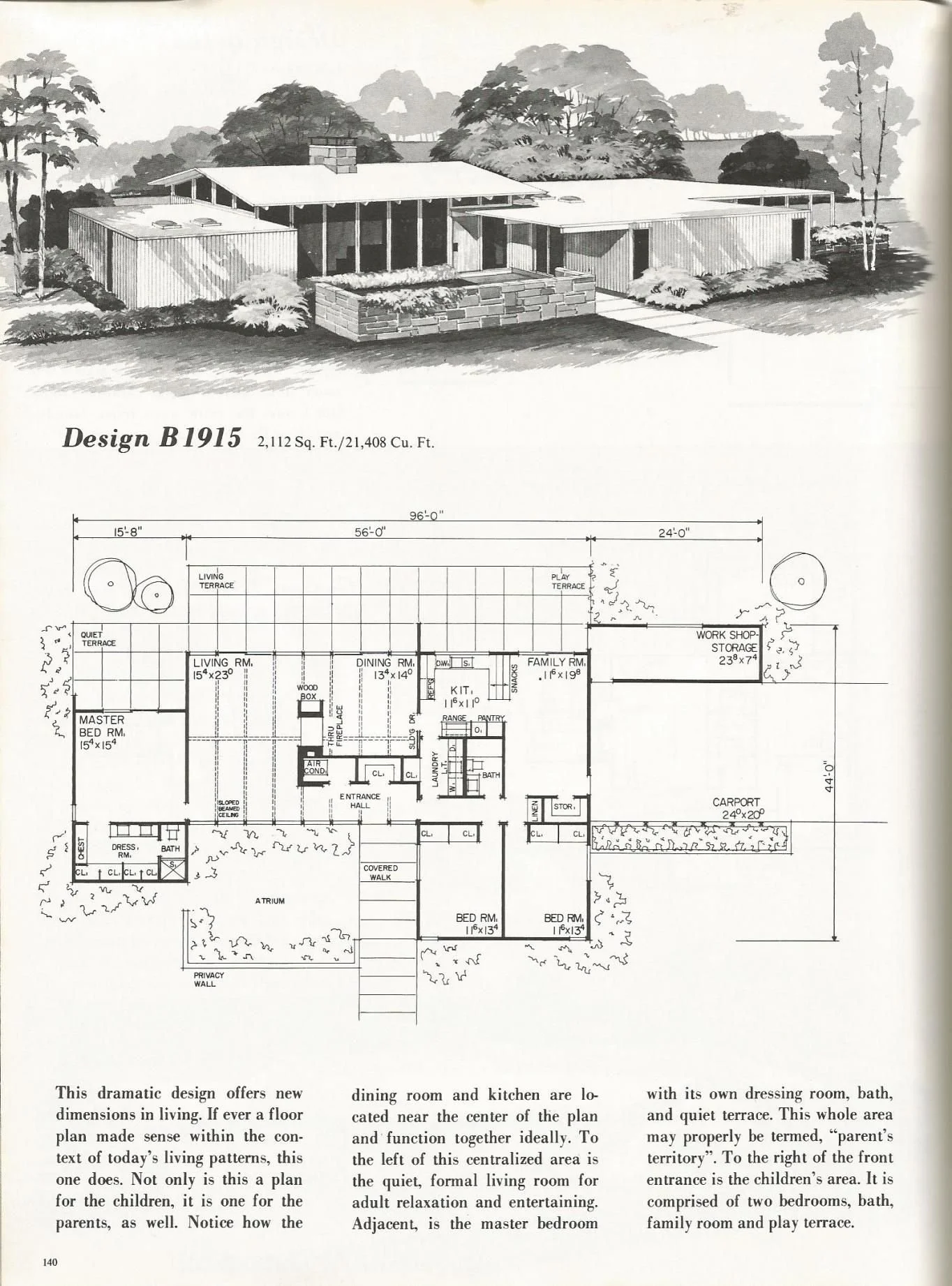
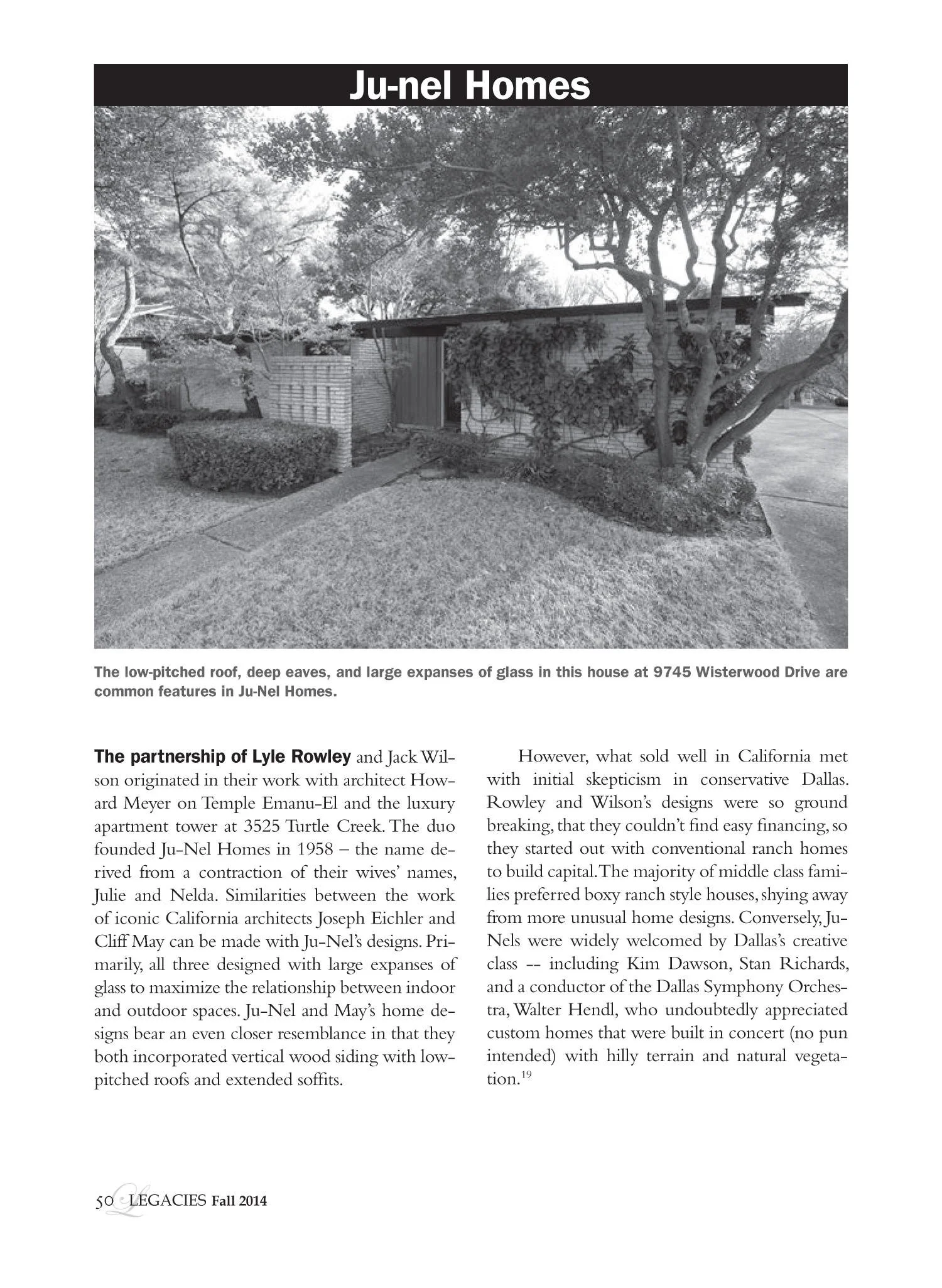
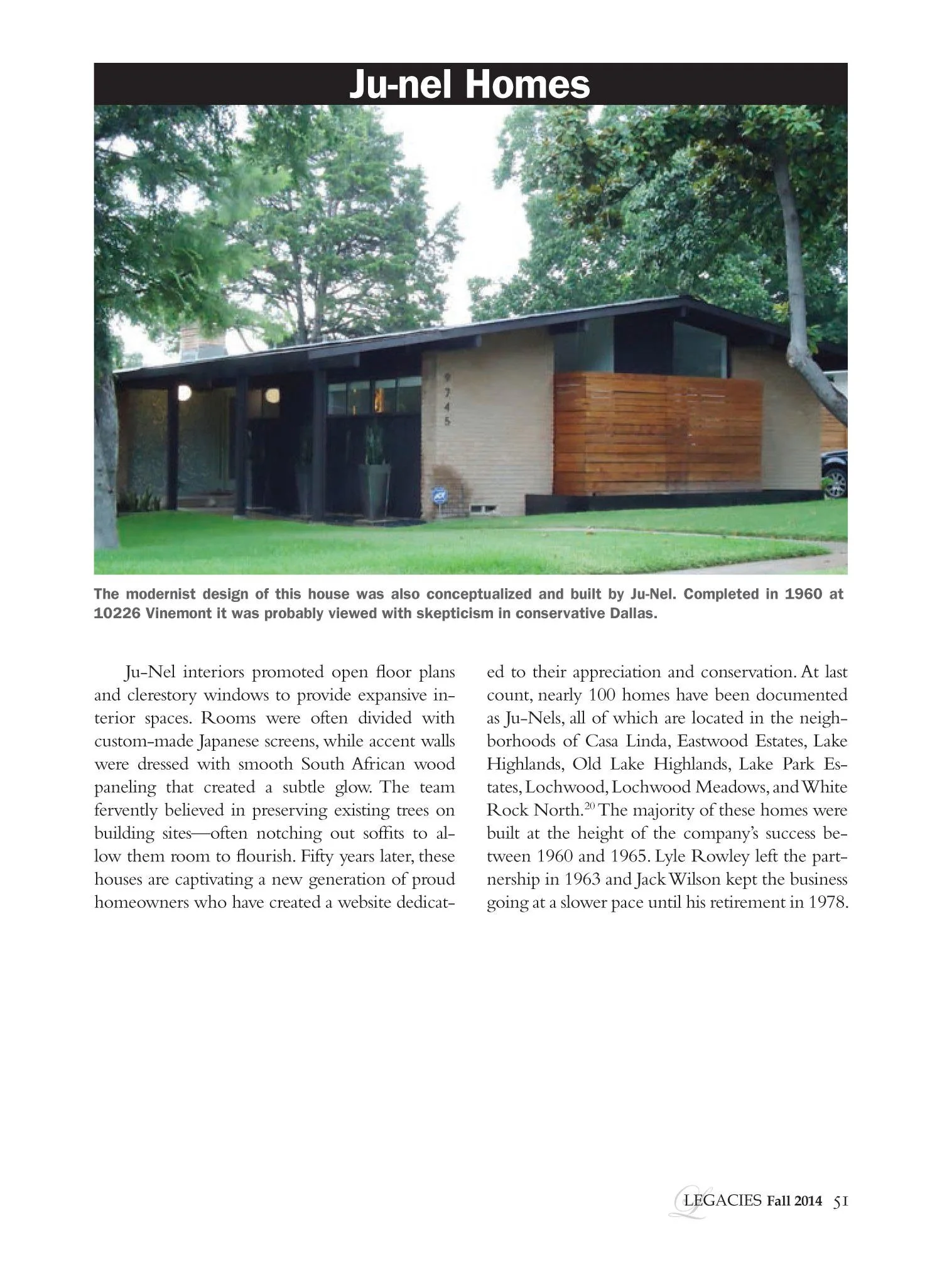
Ju-Nel Homes
“The partnership of Lyle Rowley and Jack Wilson originated in their work with architect Howard Meyer on Temple Emanu-El and the luxury residential tower at 3525 Turtle Creek. The duo founded Ju-Nel Homes in 1958 - The name derived from a contraction of their wives names, Julie and Nelda. Similarities between the work of iconic California architects Joseph Eichler and Cliff may can be made in Ju-Nel’s designs. Primarily all three designed with large expanses of glass to maximize the relationship between indoor and ourdoor spaces.Ju-Nel and May’s home designs bear even more resemblance in that they both incorporated vertical wood siding with low-pitched roofs and extended soffits.
Ju-Nel’s were widely welcomed by Dallas’ creative class - including Kim Dawson, Stan Richards, and a conductor of the Dallas Symphony, Walter Hendl, who undoubtedly appreciated custom homes that were built in concert (no pun intended) with hilly terrain and natural vegetation.
Ju-Nel interiors promoted open floor plans and clerestory windows to provide expansive interior spaces. Rooms were often divided with custom-made Japanese screens, while accent walls were dressed with smooth South African wood paneling that created a subtle glow. The team fervently believed in preserving existing trees on building sites - often notching our soffits to allow them room to flourish.” - Kerry Adams
The majority of Ju-Nel Homeswere built between 1960 and 1965. Lyle Rowley left the partnership in 1963 and jack Wilson kept the business going at a slower pace until his retirement in 1978.
Source: Legacies Fall 2014 - Highland Meadows Preservation Foundation
Varied Contemporary Exterior
by Jeanne Barnes - Home Editor of The News, July 20, 1959
Plastic, concrete tile, grasscloth, glass, wood, brick - a great variety of materials - are pleasingly combined in the contemporary home of the Albert A. Innocentis, 10742 Eden Roc, designed by John Preston Travis III.
The varied materials, both inside and out, provide chief decorative features of the house, with the addition of oriental objects collected by the Innocentis while living in Japan.
Concrete grillwork screens the garage from the front entrance and is repeated in a small fence outside the guest room window wall.
Mosaic tile decorates the wall adjoining the double walnut front door. This mosaic is in several colors: blue, aqua, orange, and white. Inside the front entry is a wall area built in corner pool in aqua blue mosaic.
The wall to the right of the entry and continuing into the kitchen area is paneled in walnut, as are the kitchen cabinets. Around the corner from the pool the wall leading to the guest bedrooms is papered with an iridescent blue-green grasscloth.
Lighting, dramatically decorative and highly efficient, is one of the keynotes of the Innocenti House. More than 22,000 feet of wiring was used by Mr. Innocenti, who wired it.
The sunken living room has a solid ceiling of light, recessed behind white architectural bamboo squares. Similar squares are used, spaced apart, over the bedroom dressing tables. Solid plastic rectangles hold kitchen lights and walnut panels provide reflected light in the bedrooms.
Spotlights, a pole lamp in one corner of the informal living room area and a drop light over the dining table provide other inside lighting for dramatic effect.
Glass walls of the living area are curtained in woven plastic panels, which reflect both natural and electric light. This wall opens to a terrace which drops to a creek lined with trees in the back.
Fenced patios are built outside two bedrooms and the master bath. The fence around the latter is painted bright blue, to blend with the decor of the bath.
Tubs in both baths are built in the corners, of pink terrazzo. The same material used on the floors.
Bright color is used lavishly in furnishing the house. The sofa in the sunken living room is gold, styled with round bumper ends. Two contemporary sofas are used in the informal living area, foam rubber covered in bright turquoise on walnut frames. The wall behind one of these is painted coral pink, picking up the stripe of the kitchen floor opposite. Deeper tones of coral are used for the rattan chaise and table in this area also.
One of the guest rooms is painted pale blue, and has violet carpet and spread.
A luxury feature of the extensive electrical wiring is a switch in the master bedroom which turns on the coffee pot in the kitchen! All lights may be operated from a master panel in the walnut wall. An FM radio is built into this wall, too, and music from it can be piped throughout the house.
Photograph: Innocenti Home, The News, 1959 - Highland Meadows Preservation Foundation

White Rock Commuter Rail Station
by Paula Bosse, Flashback Dallas
Strategically located, Lakeland Hills advertised its close proximity to the newly opened Santa Fe Railroad’ White Rock Station.
The White Rock passenger station - the Santa Fe railroad’s first suburban train station depot built in the Southwest - opened on December 5, 1955 on Jupiter Rd, about a quarter mile south of Kingsley, a few miles northeast of White Rock Lake. It was the culmination of a $7,000,000 construction project in which two depots were built and 49.3 miles of new track was laid between Dallas and Denton. (or, more specifically, between Zacha Junction - the area near Northwest Highway and Garland Road - and Dalton Junction , an area Northwest of Denton).
The new track - touted by a Santa Fe ad as being “the longest main line construction over new territory by any railroad in 25 years” - was important because it offered passengers from Dallas the ability to travel for the first time directly to Chicago without having to change trains. It also reduced freight line distances by 65 miles. The swanky streamlined Texas Chief shuttled passengers between Dallas’ Union Station and Chicago in about 19 hours - travel time between Union Station and the new White Rock Station was 25 - 30 minutes.
The Santa Fe Railroad’ White Rock Station was demolished in 1968.
Photograph of White Rock Station and the Santa Fe Railroad Texas Chief, 1956, by Glen Brewer - Highland Meadows Preservation Foundation
A New Era of Living: Mid Century Modern in Dallas
by Edward Avila, Architectural Historian
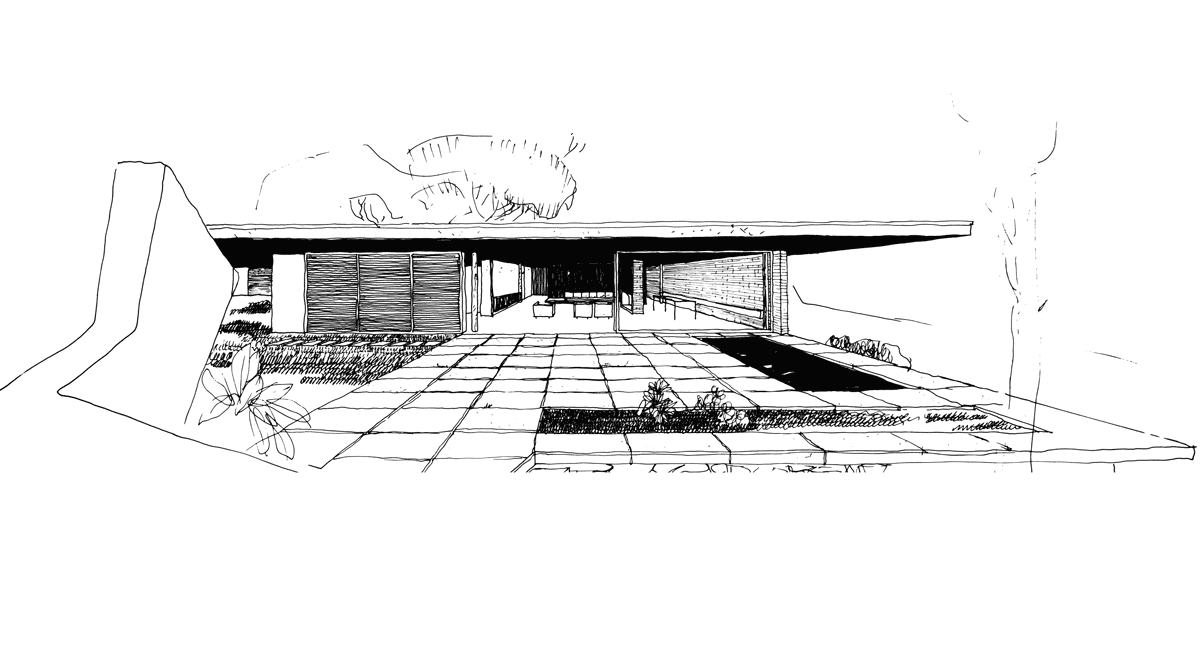
“The 20th century brought to the fore a veracious desire to supplant the old and embrace the new and exciting ideas, causing a break from the previous model and context in design. In turn, new materials increased the freedom of architecture and design. This welcomed into the view of the architect a new splendor of form, brought forth by the developments in the application of concrete, glass, and steel.
In a push to keep up with the migration of companies to Dallas, a boom in residential architecture began to evolve. Many architects - David Braden, George Dahl, Hershel Fisher, Grayson Gill, E.G. Hamilton, Howard Meyer, Arch B. Swank, Jack Wilson, Lyle Rowley, and countless others - provided the design of modern homes during this period, developing neighborhoods surrounding downtown Dallas. With respect for the local environment, these architects developed designs that utilized honest building techniques and materials to create site specific homes.” - Edward Avila
Illustration - Highland Meadows Preservation Foundation
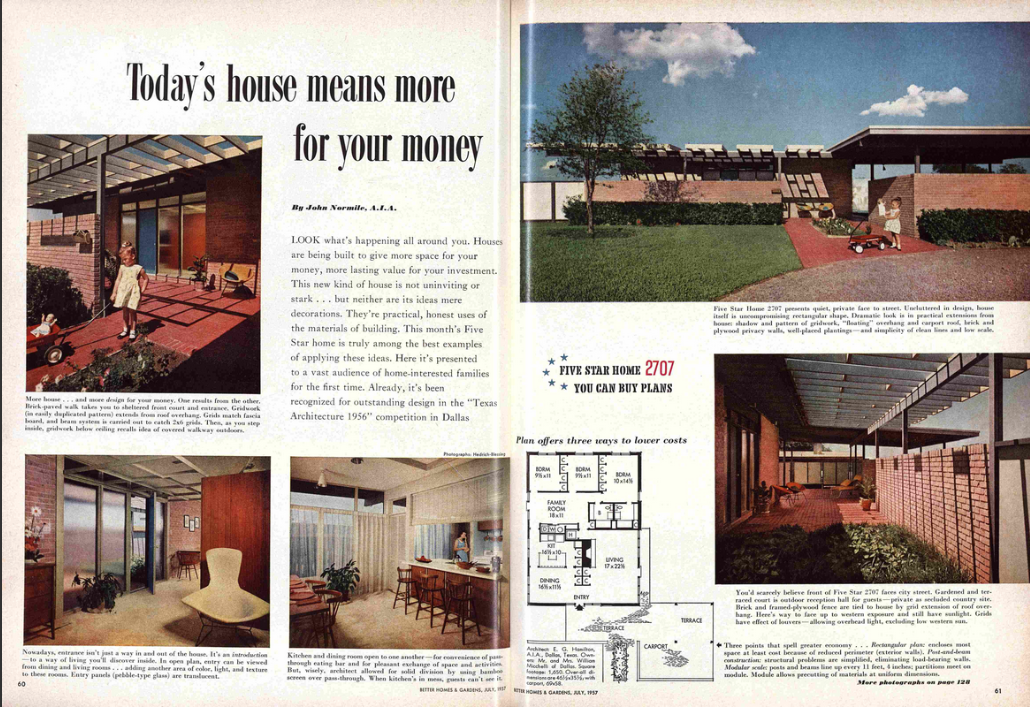
Today’s House Means More For Your Money
by John H. Normile, AIA
Better Homes and Gardens July, 1957
Look what’s happening all around you. Houses are being built to give more space for your money, more lasting value for your investment. This new kind of home is not uninviting or stark… but neither are its ideas mere decorations. They’re practical, honest uses of the materials of building. This month’s Five Star home is truly among the best examples of applying these ideas. Here it’s presented to a vast audience of home-interested families for the first time. Already, it’s been recognized for outstanding design in the “Texas Architecture 1956” competition in Dallas.
Better Homes & Gardens, July 1957 - Highland Meadows Preservation Foundation
The Walls Are Rising - Dallas, 1967 - A Plea For Urban Planning & Design
In 1967, American Institute of Architects Dallas and the Greater Dallas Planning Council unveiled a project they had been working on for over a year - “The Walls Are Rising,” a film created from slides depicting scenes from Dallas. The goal of the film was to create awareness of the immediate need to design for livability in Dallas, with a focus on transportation, development, and the Trinity River. Upon its initial release, the film was screened for many civic and community groups, and widely covered in the press.
After a series of jarring images of the rapidly expanding city, the second half of the film provides suggestions for improving the livability of the city from AIA Dallas and GDPC. These suggestions include some that have been adopted, like a hike and bike trail from Turtle Creek to Riverchon Park, a rapid transit system, and downtown parks. However many suggestions, like freeway planning designed for the driver rather the automobile, awareness of the pedestrian in designing downtown and neighborhood streets, and the development of the trinity River and its levees, continue to be debated today.


Penny Whistle Park - Indoor Amusement Park
Penny Whistle Park was an iconic indoor family amusement center located within the boundaries of Highland Meadows at 10717 E Northwest Highway. Known for its retro carnival atmosphere complete with calliope music, it operated from 1967 until it closed in January 1995.
A Dallas Morning News article from 1980 described Penny Whistle Park as “an indoor amusement arena geared toward the under 12 set, brightly colored rides beckon youngsters, while ice cream parlor chairs provide a spot for mothers to relax and watch their offspring. ‘This is like a mother’s day out,’ sighed one parent, ‘It’s really an ideal spot because you can sit back and talk and since all the rides are for small kids you don’t have to worry about big kids pushing and shoving.”
A 1993 article from the Dallas Morning News states that the indoor amusement park was “clean and pleasant, and the carnival rides with lots of flashing lights harken back to a weekend festival at the fairgrounds.”
In 2018 Elvia Lemon wrote in an article for the Dallas Morning News, “Penny Whistle Park became a Dallas favorite soon after it opened at 10717 E Northwest Highway and Plano Road in 1967. The park’s attractions included an aluminum merry-go-round, a ladybug ride, a ball crawl complex and its Ottaway steam train.
Fun Fact: In 1987, the cast and crew of the CBS hit nighttime drama Dallas filmed a scene at Penny Whistle Park.
Video footage of Penny Whistle Park
Photograph of Penny Whistle Park entrance, date unknown, courtesy of Josh Miller - Highland Meadows Preservation Foundation
Big D
15 Women, 3 Raccoons, and 1 Opossum
Article by Paul Crume
Morning News, February 8, 1966
Jim Laughead, the photographer, went out the other day to speak to a small garden club (Mediterranean Gardens Women’s Club) at the home of the Julius R. Dannemillers on Capri Drive.
While regaling the garden club with his knowledge and wit, Jim looked out into a glass in porch and found that he was being watched by three raccoons and a opossum.
He stopped his projector, indicated the outside audience and asked, “What goes?”
“Oh,” said Mrs. Dannemiller casually, “they’re friends of ours. They live in the woods behind the house, and every day we split a half a loaf of bread with them. They’re very congenial.”
Laughead went back to his projector and his speech, but he says it was one of his more unusual experiences.
“It’s the first time,” he later said, “that I ever spoke to 15 women, 3 raccoons and 1 opossum.”
Photograph of Paul Crume, 1968, artist unknown - Highland Meadows Preservation Foundation

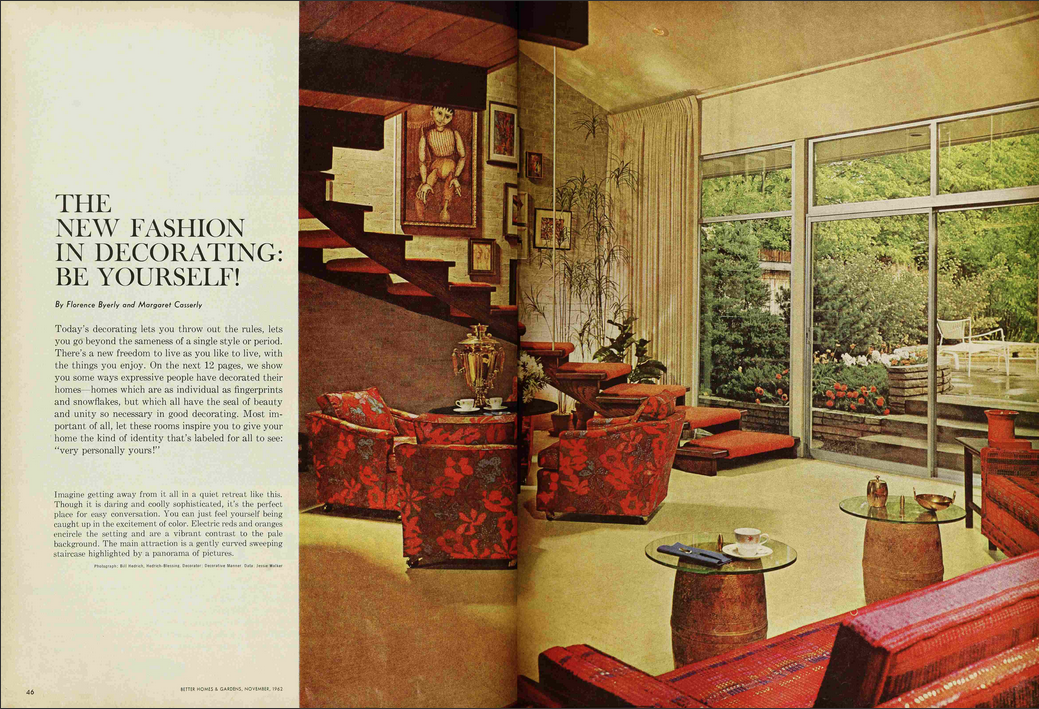
The New Fashion In Decorating: Be Yourself!
Better Homes & Gardens, November, 1962
By Florence Byerly and Margaret Casserly
Today’s decorating lets you throw out the rules, let’s you go beyond the sameness of a single style or period. There’s a new freedom to live as you like to live, with the things you enjoy. On the next 12 pages, we show you some ways expressive people have decorated their homes - homes which are as individual as fingerprints and snowflakes, but which all have the seal of beauty and unity so necessary in good decorating. Most important of all, let these rooms inspire you to give your home the kind of identity that’s labeled for all to see: “very personally yours!”
Imagine getting away from it all in a quiet retreat like this. Though it is daring and coolly sophisticated, it’s the perfect place for easy conversation. You can just feel yourself being caught up in the excitement of color. Electric reds and oranges encircle the setting and a vibrant contrast to the pale background. The main attraction is a gently curved sweeping staircase highlighted by a panorama of pictures.